
Newsletter Signup
Join Our Community!
Stay updated with the latest news, exclusive insights, and more.
Stay updated with the latest news, exclusive insights, and more.
To see how we may use your information, take a look at our privacy policy.

%20(1).png)
In the final part of our animal series, we focus on breeders and producers, with a particular look at horses in Japan—from their long history alongside humans to modern horse racing, breeding, ownership, and even horse-assisted therapy
In Japan, horses are now primarily associated with horse racing, tourism, ceremonies, and leisure. Modern Japanese horse racing is generally traced to the late 19th century, when Western-style racing was introduced to the foreign settlement in Yokohama. Their influence can also be seen in Japanese culture.
One example is the kiba-sen, a common event at Japanese elementary school sports festivals. In the game, four students form a team, with one student riding on top while three others form the "horse." The rider typically wears a hat or hachimaki (headband), and teams compete to knock off their opponents' hats while keeping their own rider upright. The name kiba-sen is associated with mounted warriors and the image of cavalry battles.
%20(1).png)
Japan's relationship with horses also extends to food. While horse meat is generally considered taboo in countries such as the United Kingdom, Ireland, and the United States, it has a long history as part of the cuisine of Japan, as well as countries including France, Mongolia, and China.
One of Japan's best-known horse-meat dishes is basashi, thinly sliced raw horse meat traditionally served with condiments such as ginger and soy sauce. Kumamoto is particularly famous for the dish and is a major center of horse-meat production in Japan.
In recent years, horses have also found a role in healthcare and education. Equine-assisted therapy has attracted increasing attention. Through activities such as riding, grooming, and caring for horses, people with disabilities and others can work on physical, psychological, and social skills. Compared with therapy involving dogs or cats, horse-assisted programs can combine elements of healthcare, education, exercise, and sport.
The relationship between humans and animals is not limited to horses. For people interested in producing animals commercially, Japan has specific regulations governing breeding and sales.
People who breed and sell puppies or kittens in Japan generally need to register as a Type 1 Animal Handling Business. This requirement applies to businesses that, for profit, breed, sell, keep, rent out, train, exhibit, or act as agents for the sale or transfer of animals. Japan's Ministry of the Environment: Animal Handling Business regulations.
%20(1).png)
Businesses must appoint at least one Animal Handling Supervisor. Depending on the circumstances, this role can be filled by someone with qualifications such as being a veterinarian or licensed animal nurse. Certain routes also require relevant practical experience, and the precise requirements and documentation can vary between local governments.
Type 1 businesses must comply with a range of standards covering animal welfare and business operations. These include requirements concerning breeding facilities, the number of animals that can be kept, cage and living conditions, restrictions on breeding female dogs, online sales, microchipping, and face-to-face explanations before an animal is sold.
There are also restrictions on the age at which puppies and kittens can be sold or exhibited. In principle, dogs and cats cannot be sold or displayed for sale before they are 56 days old.
For anyone considering becoming a professional dog or cat breeder in Japan, therefore, breeding is not simply a matter of owning animals and selling their offspring. It is a regulated business requiring appropriate facilities, knowledge, personnel, and ongoing compliance with animal-welfare standards.
Horse breeding is a very different proposition, particularly when it comes to thoroughbred racehorses.
Producing racehorses requires substantial land and facilities, including a farm, broodmares, stables, grazing areas, and feeding facilities. The scale of the investment means that becoming a professional racehorse breeder is considerably more capital-intensive than starting a small dog or cat breeding operation.
Japan's thoroughbred breeding industry is heavily concentrated in Hokkaido, particularly in areas such as Hidaka, Iburi, and Tokachi. Breeders may also become involved with industry organizations and local breeder associations, including the Japan Bloodhorse Breeders' Association (JBBA). Japan Bloodhorse Breeders' Association.
.png)
There are several ways to participate in the racehorse business. Some owners breed horses and retain ownership, while others breed horses specifically to sell them at auction. Other owners do not breed horses themselves and instead purchase them through auctions. There are also owners who acquire horses through inheritance.
For those who want to own racehorses that compete in Japan's central racing system, registration with the Japan Racing Association (JRA) involves strict financial and eligibility requirements. Japan Racing Association
Japan's local racing system, operated under the National Association of Racing (NAR), has different ownership structures, with requirements administered through local racing organizations. National Association of Racing
Full ownership is not the only way to participate. For people who want to experience racehorse ownership without purchasing an entire horse themselves, shared-ownership clubs offer a more accessible alternative. These arrangements, sometimes referred to as "one-share ownership," allow participants to purchase a share connected to a racehorse and enjoy the experience of being part of its ownership.
Japan's horse-racing industry has also attracted increasing international attention. Japanese-trained horses continued to make their mark on the international racing scene, while Japanese horse racing received an additional boost in popular culture in recent years.
The TV drama The Royal Family, based on the novel by Kazuma Hayami, was broadcast by TBS in autumn 2025. The series depicts the world of horse breeding, training, and ownership and was produced with cooperation from the JRA. Its portrayal of the industry offered audiences, including viewers overseas, another window into the culture surrounding Japanese horse racing.
The country's international racing ambitions are also reflected in the growing number of Japanese horses competing abroad. Japanese breeding, training, jockeys, and ownership have become increasingly visible on the international stage, helping to raise the profile of Japan's thoroughbred industry.
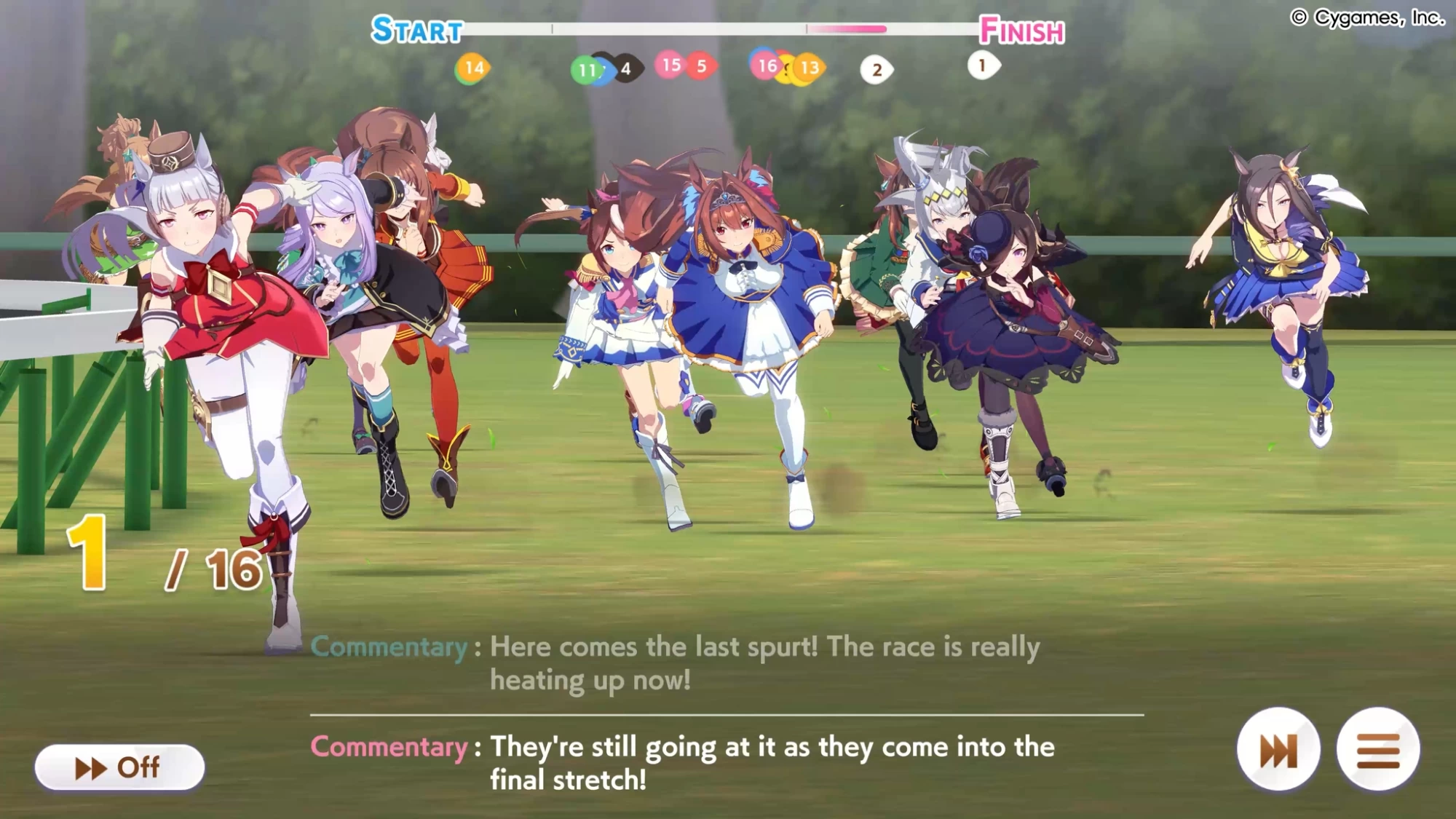
Another major cultural phenomenon helping Japanese horse racing reach a global audience was Uma Musume: Pretty Derby. Developed by Cygames, the multimedia franchise features anime-style characters based on real racehorses and incorporates elements of their actual careers, races, trainers, and rivalries. While the game was originally released in Japan in 2021 and had already become a major hit across Asia, its English version launched worldwide on June 26, 2025. By that point, the franchise had surpassed 30 million downloads across Asia. The global release introduced international audiences to famous Japanese racehorses and the stories behind them, with the game's popularity even encouraging some fans to learn more about and visit the real horses that inspired its characters. Due to (In spite of?) its weird premise, it became a global sensation, having grossed over $2.5 billion in sales over all of its games, media, and merchandising.
The role of horses in human society has changed dramatically over time.
Once essential for transportation, agriculture, and warfare, horses today occupy very different roles. They are athletes competing at some of the world's most prestigious races, valuable breeding animals, companions for recreational riders, participants in tourism and cultural traditions, and partners in therapeutic and educational programs.
Japan's horse industry reflects this broader evolution. From the historic relationship between humans and horses to modern breeding farms in Hokkaido, racehorse ownership, shared ownership clubs, and equine-assisted therapy, horses continue to occupy a surprisingly diverse place in Japanese society.
For people interested in becoming involved, the path can range from professional breeding and full racehorse ownership to simply participating in a shared-ownership club or spending time with horses through riding and therapy programs. The modern horse industry may look very different from the world in which horses were essential to everyday transportation—but the relationship between humans and horses remains remarkably strong.


%20(1).png)


.png)