
Newsletter Signup
Join Our Community!
Stay updated with the latest news, exclusive insights, and more.
Stay updated with the latest news, exclusive insights, and more.
To see how we may use your information, take a look at our privacy policy.

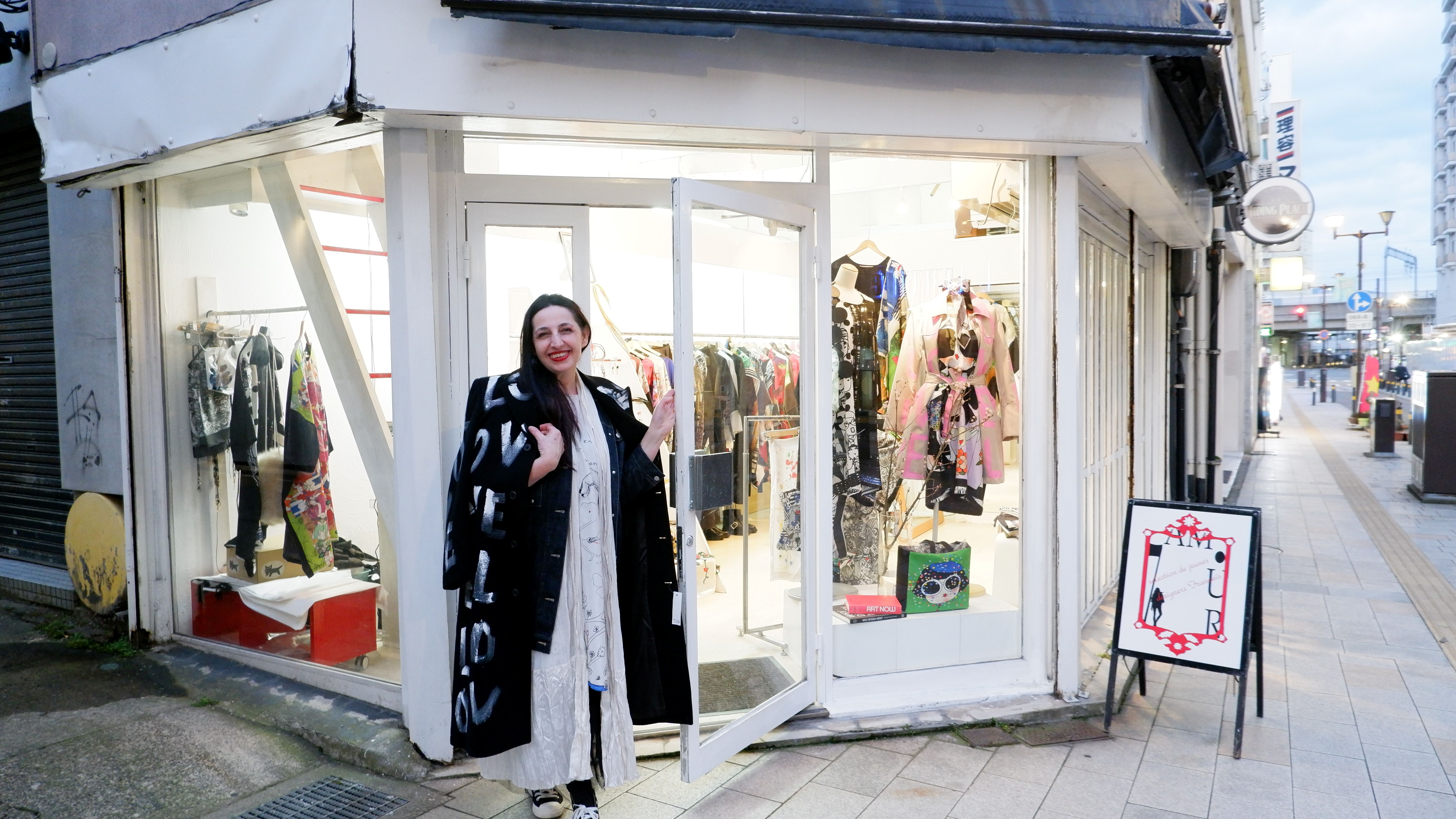
Japanese fashion is often described in terms such as quiet, minimal, and restrained.
But step into 7amour, a select shop in Fukui run by French artistic director Virginie Lefevre, and that image begins to shift. There is color here—bold color. There are free, expressive lines. There are lively motifs that feel less like decoration and more like movement captured on fabric.
What stands out most is not simply the look of the clothes, but where they come from. A garment here is not born from trends. It begins with a simple drawing of emotion. A line is pulled across paper. Color is layered in. Feeling is translated by hand before it becomes textile, then form, and finally something a person can wear. In Lefevre’s world, fashion is not a commercial exercise first and an artistic one second. It is an expression from the beginning.
I originally came to Japan for what was supposed to be a one-year stay. That one year quietly became more than twenty.
Before Japan, I had already built my foundation in fashion—training and working in Paris, and gaining experience in London and the United States. Japan was not part of a long-term plan; it was simply a place to explore.
But something here stayed with me.
In Europe, fashion often emphasizes structure. It follows the body. It defines presence. In Japan, I discovered something else: The air between cloth and skin; The beauty of what is not filled; The meaning in what is left unsaid.
This idea of ma —the space between things—changed how I think about clothing. Instead of insisting, it suggests. Instead of defining everything, it allows room. That shift reshaped not only my design approach, but also how I understand expression itself.
One of my strongest early impressions of Japan came from Harajuku in the early 2000s. On Sundays, the streets were filled with people who dressed not to follow fashion, but to express themselves. There was exaggeration, yes—but also conviction. People were not trying to look acceptable. They were trying to be seen.
That moment stayed with me.
I realized that clothes are not just aesthetic objects. They are a language. They communicate identity, emotion, resistance, playfulness—even vulnerability. What we wear can speak from the inside out.
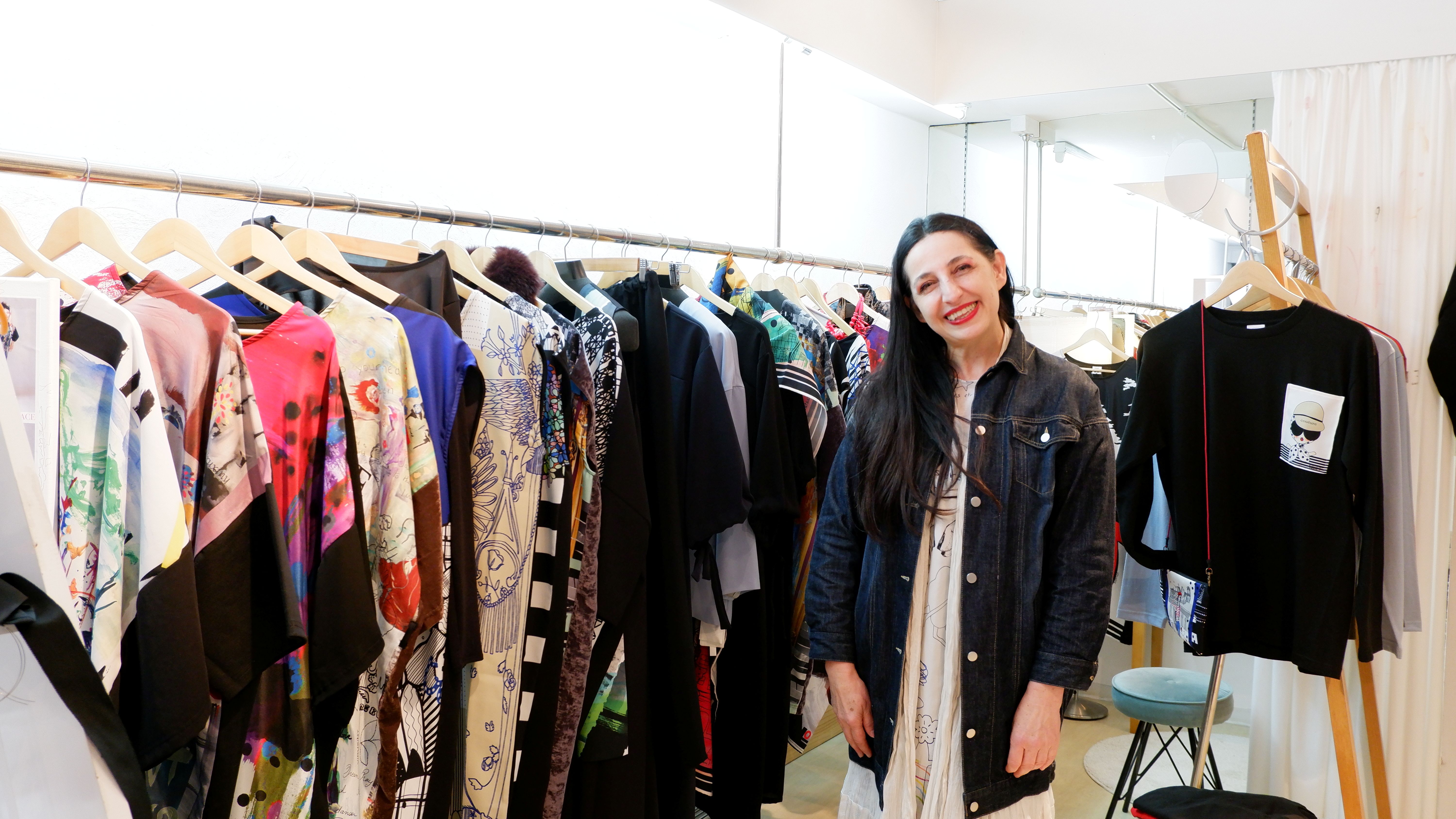
Later in life, after getting married, I began to think more seriously about the kind of environment I wanted. Tokyo gave me energy, but not always balance. Fukui offered something different—it gave me space to breathe.
At first, I didn’t choose Fukui because of its textile industry. That understanding came gradually. Over time, I discovered the extraordinary depth of craftsmanship here. Fukui is quiet, but highly capable. Its textiles have supported global luxury brands like Louis Vuitton.
For a designer, proximity matters. Being close to the people who create the fabric, print the patterns, and construct the garments changes everything. It allows dialogue. It shortens the distance between idea and reality. It makes experimentation—and trust—possible.
I started with a select shop, introducing overseas brands to local customers. But the industry changed. Fast fashion expanded. Online shopping reshaped how people discover and buy clothes. The ground beneath small independent retail shifted.
So I shifted too.
Instead of relying on external brands, I began creating my own designs. Today, they are at the center of what I do. My process still begins by hand. Not on a screen, but on paper. Drawing is how I find emotional truth. It allows me to understand what I am really trying to say. The hand is part of the thinking. That is why the final pieces carry something personal. They are not anonymous. They retain the trace of the person who created them.
Building independently means learning through experience—sometimes difficult ones. Production is never simple. Japanese factories offer incredible quality, but at a cost. Overseas production can reduce expenses, but introduces uncertainty.
I once placed an order of around 500 garments and suffered a significant loss. Moments like that can break a brand. For me, it clarified what I needed to change.
I began building closer relationships with smaller factories in Fukui—partners who could work in smaller volumes, with flexibility and with direct communication. Now, much of my process happens locally. From fabric to printing to sewing, it is connected. This is not just efficient. It is aligned with my values.
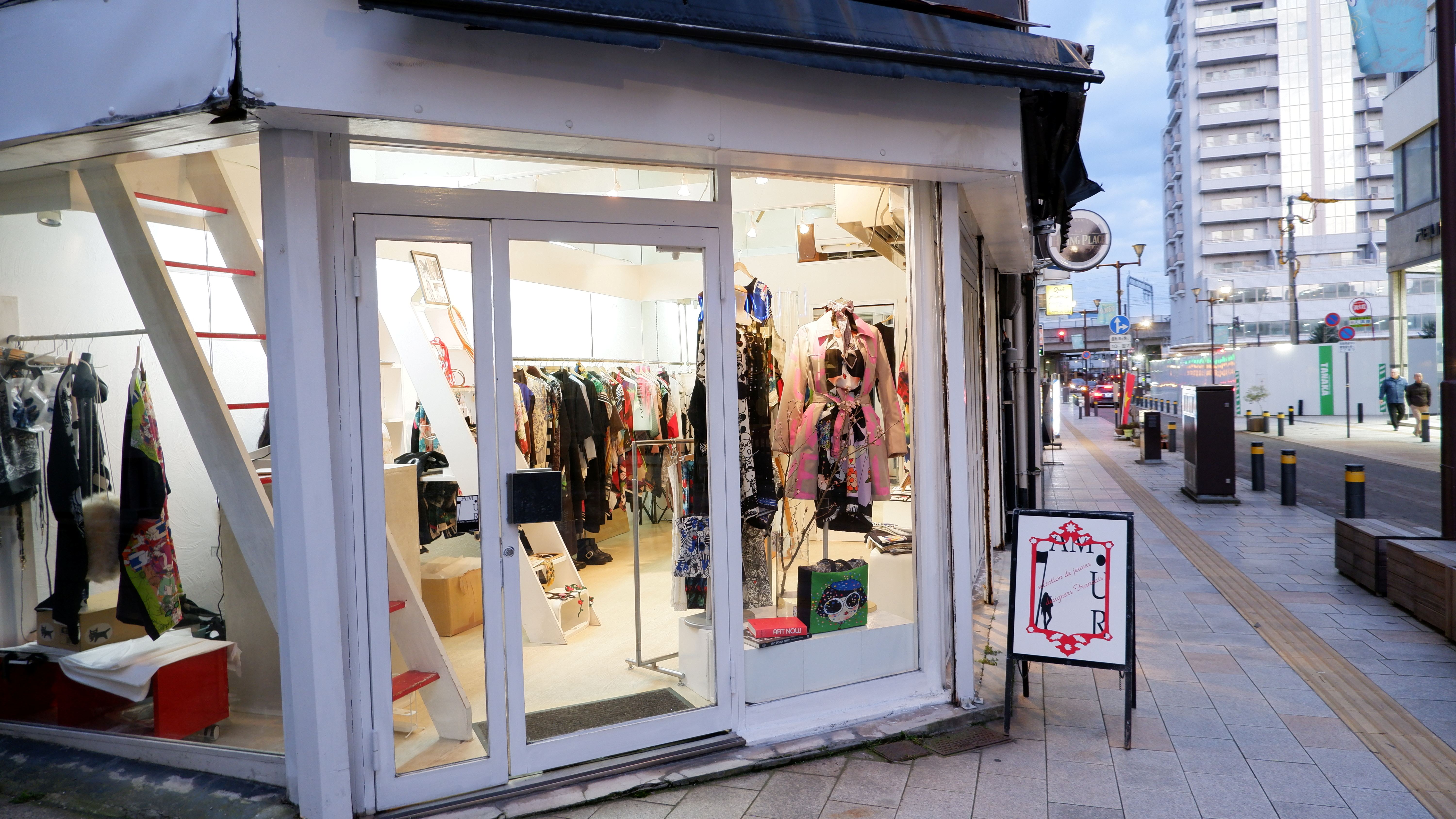
I often return to a phrase that defines my work: Art is Love and Peace.
Since the pandemic, I have noticed how public spaces have become more monochrome—black, gray, and white. I wanted to move in the opposite direction. Color, for me, is not decoration. It is emotion. Red, yellow, pink—these are invitations. They create warmth. They soften people. They open space for connection.
That is why my goal is not only to sell clothes. I want to share emotion. Yes, I want to grow. I want my work to reach more people around the world. But not at the expense of what matters.
I believe in an ethical way of making—wearable art, an art of living, respectful production, and a human pace of work. Growth should never erase meaning.
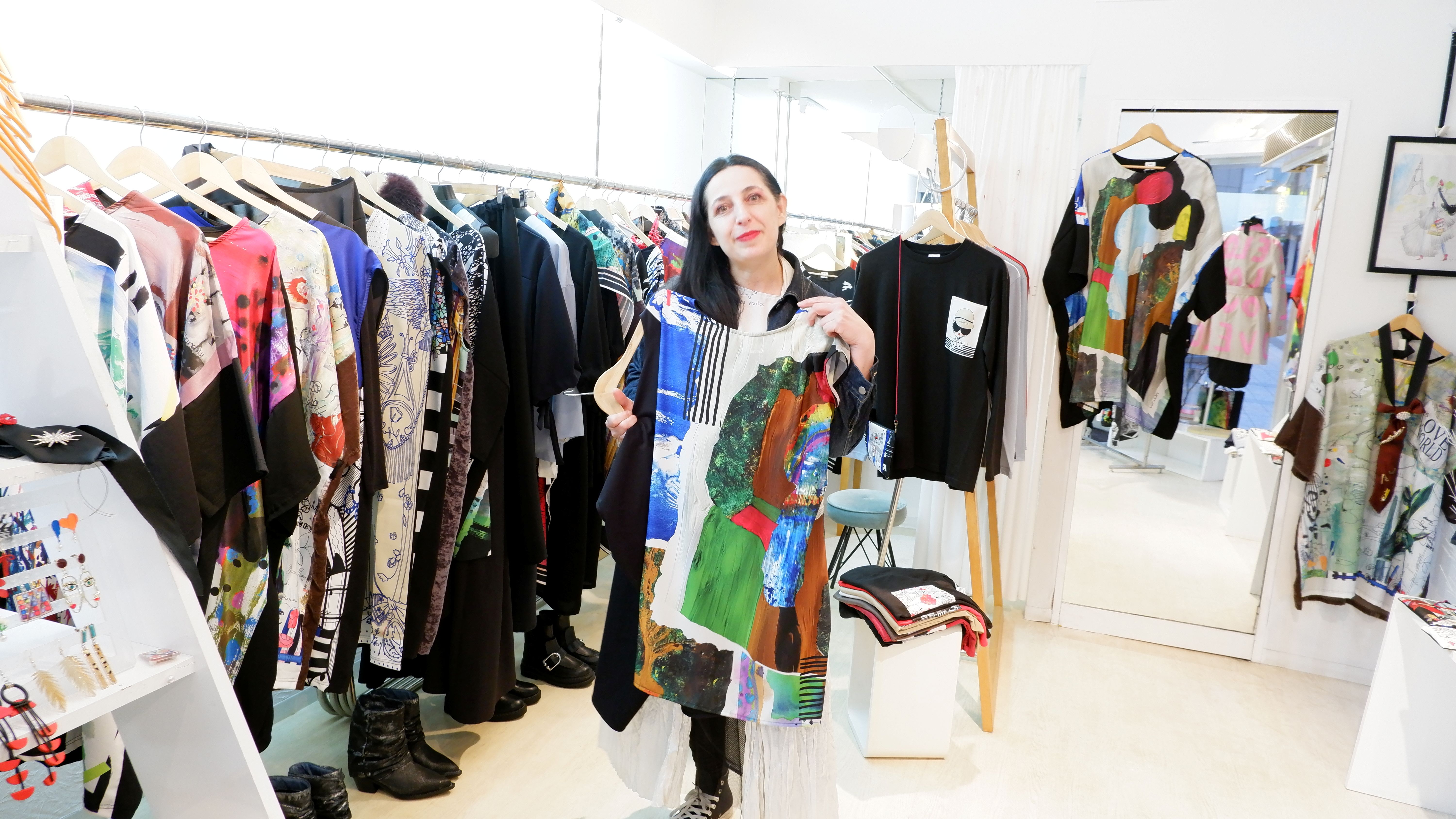
Fukui is not a compromise for me. It is what makes my work possible. It offers closeness between design and production. It offers dialogue. It offers time. It allows a line to exist clearly on paper before it becomes something real.
My clothes are not designed to dominate the market. They are meant to move something in the person who wears them; a shift in mood. A spark of courage. A little more openness. A little more joy.
Drawn by hand, placed on fabric, and shaped into form—this is my process. But it is also my philosophy. Clothes are products, yes, but they are also works of art. And beneath everything, the message remains the same:
Love and Peace.


.png)
.jpg)


.png)