
¥100 million in one Night: inside the business of Japan's kyabakura
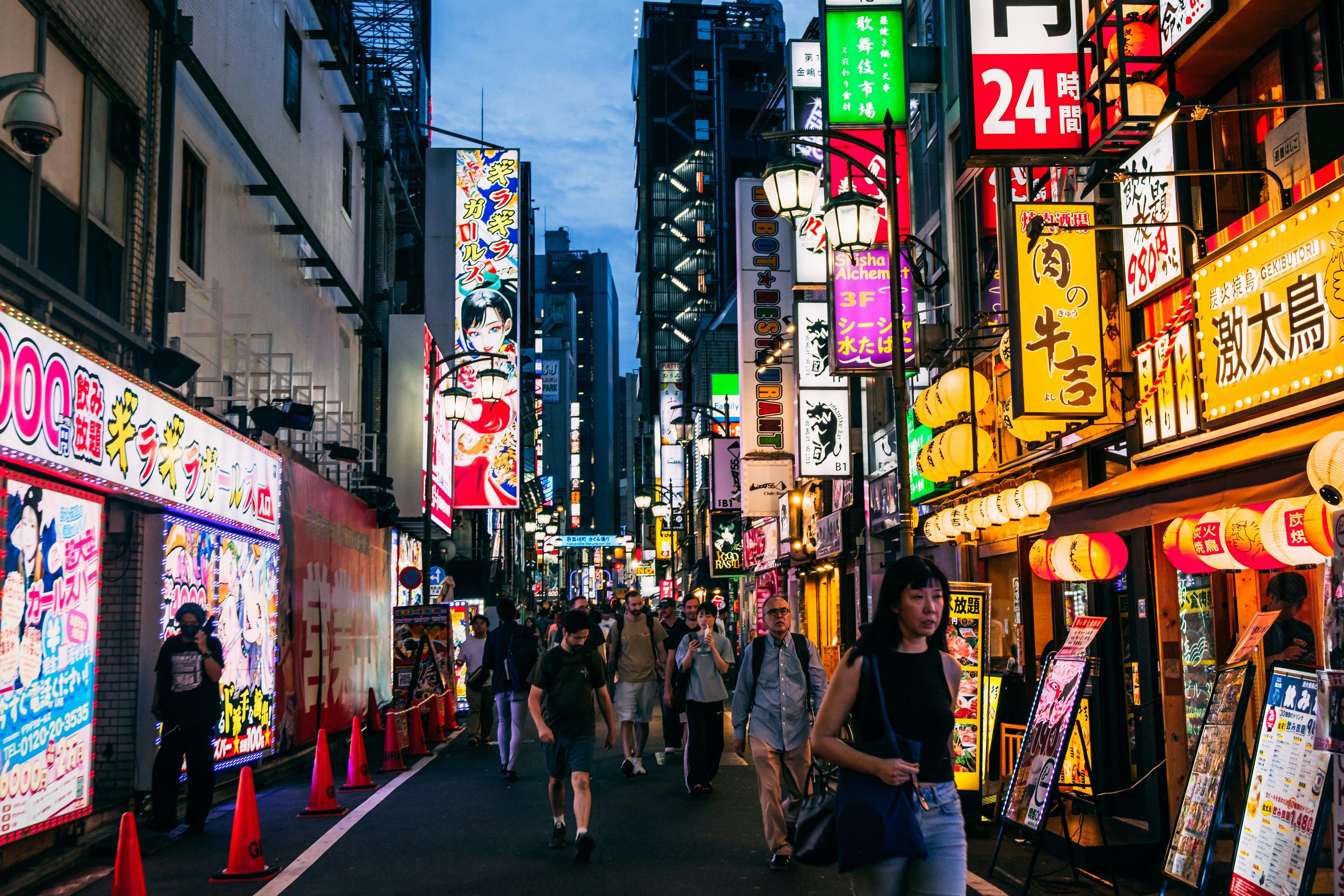
In December 2024, a cast member at a Roppongi club held a two-day birthday event. By the end of the first night, sales had passed ¥100 million, roughly $650,000, in a single day (Modelpress, December 2024). Every year, top cast in Tokyo and Osaka hold events on this scale.
What makes this striking is what is being sold. A kyabakura, or hostess club, offers drinks and conversation. It is not part of the adult entertainment industry, and Japanese law treats it as a separate, licensed form of hospitality. Adult entertainment exists in almost every country, yet a business built on conversation alone has rarely grown into a mass-market industry anywhere else.
So how does conversation become a business where ¥100 million can change hands in a night? This piece looks at how a kyabakura makes money, what guests are really paying for, and why this model works in Japan.
Market overview: a national industry built on conversation
A kyabakura is a licensed bar where hostesses, called cast, sit with guests, serve drinks, and lead the conversation. There is no stage show or dancing. It sits in the middle of Japan's hospitality market, above neighborhood snack bars and below the exclusive Ginza clubs that serve executives. Host clubs use the same model with male hosts.
No official statistic counts kyabakura on their own. The closest measure is the National Police Agency's count of "Type 1" hospitality licenses, which covers kyabakura together with clubs, lounges, snack bars with seated service, and host clubs. At the end of 2025 there were 59,675 such licenses, roughly one for every 2,000 people in Japan (National Police Agency, April 2026). About 1,100 of them are host clubs (National Police Agency, April 2025).
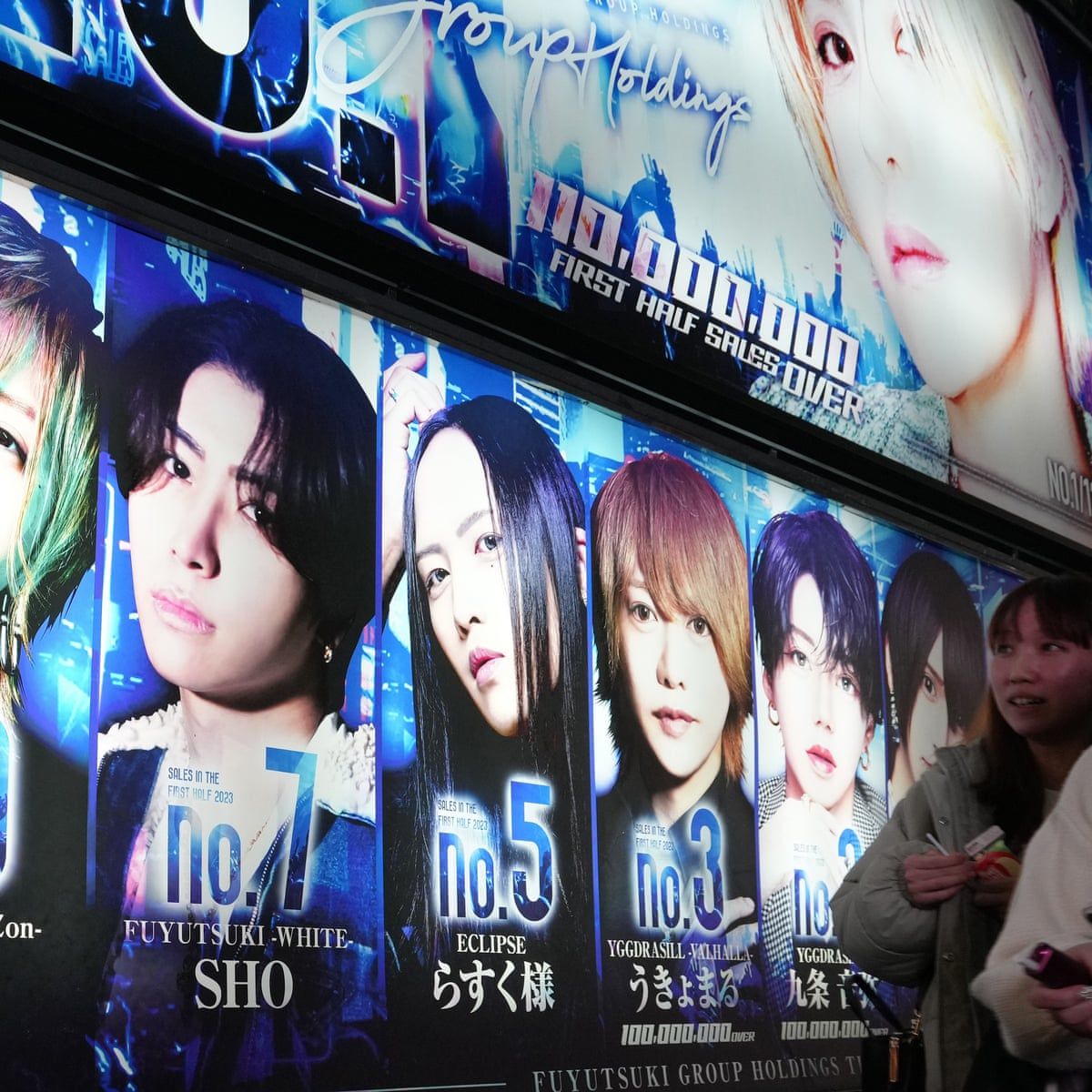
The industry's peak moments show its scale. Besides the Roppongi event above, a Rikkyo University student working at a Roppongi lounge passed ¥100 million in birthday sales two years in a row (ABEMA TIMES, January 2025). A cast member at Club A in Osaka's Kitashinchi district recorded ¥100 million at her 2020 birthday (Modelpress, November 2021). In her words, a whole year of work shows up on that one day. These are peaks, not averages, but they show how much value a single relationship-based business can capture.

Why it formed in Japan
The kyabakura took shape in the 1970s and 80s, when four conditions came together.
1: A history of hospitality venues. Japan's postwar cabaret was its own format. The first one opened in November 1945 in a Ginza department-store basement, combining a dance hall with hostesses (Weblio Encyclopedia, "Cabaret"). As large cabarets with live bands became costly to run, the kyabakura kept the hospitality and dropped the band. One Ikebukuro venue that calls itself the first kyabakura described its concept as more refined than a cabaret and more casual than a club (TV Tokyo, December 2002).
2: A clear legal category. Japan's Entertainment Business Act, first passed in 1948, defines "hospitality" (settai) as its own licensed business, separate from adult entertainment. Venues hold a license, close hospitality service at midnight as a rule, refuse minors and accept police inspections.
3: Business entertainment and tax. Entertaining clients is a long-standing part of Japanese business. Companies with capital of ¥100 million or less can deduct up to ¥8 million a year in entertainment expenses (Ministry of Finance), and about 2.48 million small companies used the rule in FY2024 (Ministry of Economy, Trade and Industry).
4: A culture of attentive service. Omotenashi, anticipating a guest's needs, is a point of pride in Japanese service. The kyabakura applies it to conversation.
The price ladder
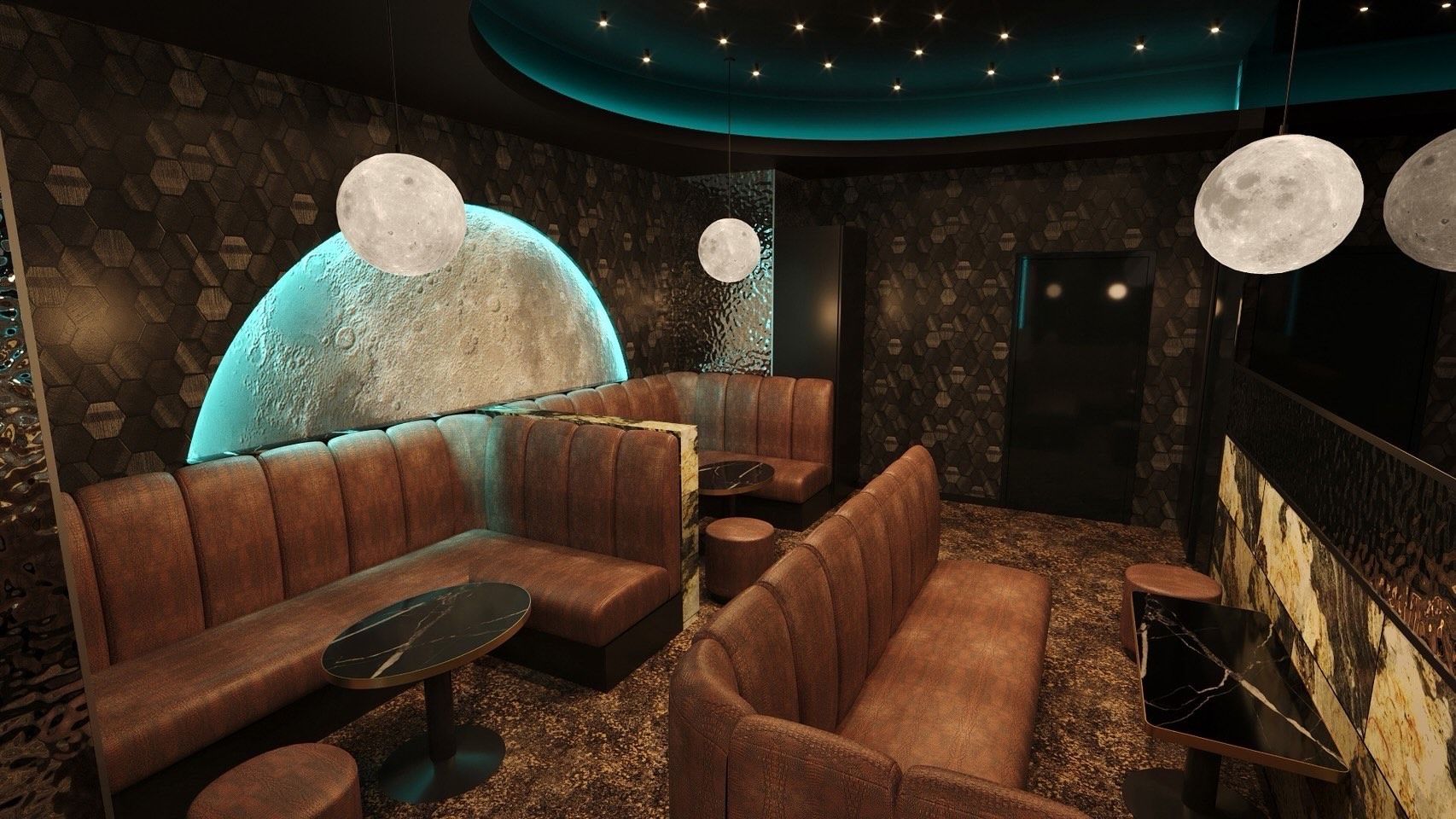
Kyabakura pricing is a ladder that lets each guest decide how far to climb. A visit starts with a time-based "set" of usually 40 to 60 minutes, often with house drinks included. From there, every step is optional: requesting a specific cast member (shimei, or nomination), buying drinks for her, ordering a bottle, extending the visit, and, on special nights, champagne. The entry price is clear and moderate, but the ceiling is open.
This design solves a basic problem. Conversation has almost no material cost, but it also has no natural price. A fixed fee would cap revenue at the number of hours a cast member can work. The ladder instead lets the price of an evening rise with how much a guest values it. A first visit might cost tens of thousands of yen. A regular's birthday-night bottle can cost far more. The ¥100 million nights are the top of this same ladder.
The cost structure
The product is people, and the cost structure shows it. Industry operators estimate that cast pay takes around 40–55% of sales, and that all labor together, cast and staff, takes around 60% (Trust Operation, 2026). Drink costs are about 10% and rent about 5%, leaving a target operating margin of around 20%. An industry recruiting site estimated that a typical kyabakura or members' lounge in greater Tokyo takes ¥40–50 million a month (Men's Job Magazine).
The implication is simple. Because most of the money flows to the people who build the relationships, the business only works if those relationships generate high, repeated spending. Everything else in the model, from nomination to birthday events to the management system, exists to make that happen.
What guests are paying for
If the product were only drinks and small talk, no one would spend millions of yen on it. The spending makes sense once you see the four kinds of value a guest receives.
1: Being known
A good cast member remembers a guest's name, his work, his tastes and what he said last time. In most of daily life, people are customers, colleagues or subordinates. Here, they are recognized as individuals. That feeling is hard to buy anywhere else, and it grows with every visit.
2: A relationship that builds over time
Because the guest returns to the same cast member, each visit adds to a shared history. This creates something close to loyalty: the longer a guest has visited, the less a cheaper bar down the street can replace it. In business terms, the nomination system turns a one-off purchase into a high lifetime value relationship.
3: Supporting someone
The birthday event works the same way as oshikatsu, Japan's culture of supporting a favorite idol, actor or character. Oshikatsu spending reached about ¥3.8 trillion as of March 2025 (Nomura Research Institute, August 2025). Supporters spend not only for themselves, but to help the person they support succeed. A champagne tower at a birthday event is a visible, shared contribution to her biggest night of the year.
4: A social stage
A kyabakura is also a place to host. A guest can bring a client or colleagues, and the evening reflects well on him as a host. Ordering a bottle or celebrating a cast member's milestone is seen by others in the room. Spending becomes part of how a guest presents himself.
None of these four values is physical. All of them grow with repetition. That is the key to understanding why the business can scale.
Built on conversation, and that is why it scales
Adult entertainment exists in almost every country, and Japan regulates it as a separate category. So a fair question from overseas readers is: why does a business that offers only conversation become this large? Our answer is that offering conversation alone is not a limitation of the model. It is the reason the model can grow.
1: The relationship has no natural end
A transactional service is complete once it is delivered, and the next purchase starts from zero. Recognition, a shared history and the wish to support someone do not run out in the same way. They deepen with each visit, so the same guest's spending can keep rising for years. That is how one cast member can reach ¥100 million in a night: it is the accumulated value of many long relationships, expressed at once.
2: Legitimacy opens doors that stay closed to adult entertainment
Because a kyabakura is legally hospitality, it can operate in the open. It can advertise, run chains, appear in mainstream media and recruit students and part-time workers who would not consider other kinds of nightlife work. Companies can bring clients there, so part of the demand comes from business entertainment. A larger talent pool, a larger customer base and access to corporate budgets all mean a larger market.
3: Spending has no fixed ceiling
Adult entertainment is usually priced per service, which caps how much one customer spends. A kyabakura prices time and lets guests express their support through optional orders. The ceiling is set by the guest's feelings, not by a menu.
4: It is socially usable
A guest can take colleagues or clients to a kyabakura and talk about it afterward. Few other kinds of nightlife venue work that way. Social acceptability turns the venue into a place for business, celebration and group outings, not just private consumption.
How this looks from overseas.
Elsewhere, the same model often runs into the law. In California, for example, it is illegal for a bar to employ people to solicit drinks for a commission (California Business and Professions Code, Section 25657), which is close to how kyabakura drink commissions work. Singapore licenses nightlife venues, but police actively investigate hostessing at KTV lounges, including a December 2025 raid on Orchard Road (MustShareNews, April 2026). In much of Europe, bars where staff encourage guests to buy drinks are often seen as part of the adult nightlife scene. Japan is unusual in treating conversation-based hospitality as a fully legal, mainstream business, and that legal status is what allowed it to grow so large.
Operations: the kurofuku and incentive design
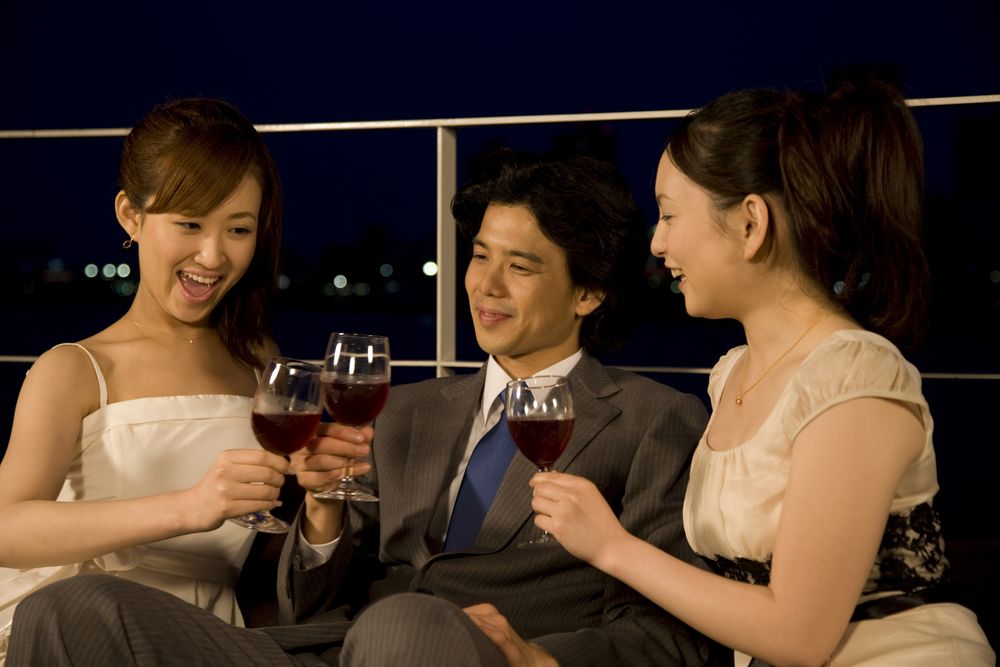
The cast build the relationships. Running the venue is the job of the kurofuku, literally "black clothes," the male staff in dark suits. Their job is to turn individual relationships into a well-run business.
Tsukemawashi: real-time seating. The core kurofuku skill is tsukemawashi, deciding which cast member hosts which table, and for how long. For first-time guests, they introduce several cast members in turn, so each guest can choose whom to request, and the venue gains a potential regular. For popular cast with several regulars present at once, they plan when she moves between tables so that every guest feels looked after. They also read each table to suggest an extension or a bottle at the right moment. It is yield management carried out by people on a busy floor, and it is a major reason two venues with equally talented cast can have very different results.
Pay that rewards relationships. Cast pay combines a base hourly rate with commissions, known as "backs." Typical examples are nomination backs of around 50% of the nomination fee, bottle backs of 10–15%, and backs for douhan, a dinner with a guest before the shift (Baitoru). Many venues also reset the hourly rate each period based on nominations. The design rewards exactly what the business depends on: repeat, nominated relationships.
A career ladder for staff. Kurofuku can rise from hall staff to store manager and group executive without a degree. One venue in Funabashi, near Tokyo, advertises a manager's package of ¥600,000 a month plus ¥400,000 in sales incentives, or more than ¥14 million a year (Indeed Japan, October 2026).
Industry structure: who makes money
The money from a night at a kyabakura flows to three groups.
Cast receive the largest share, often around half of sales through hourly pay and commissions. At the top, cast operate like independent sales professionals with their own client base. Because guests follow the person, established cast can move between venues and take their regulars with them, which gives top cast real bargaining power.
Venues and operating groups provide the license, location, brand, kurofuku team and data. Their margin, around 20% when well run, depends on attracting and keeping cast who can build relationships. Larger groups gain from scale in recruitment, training and management.
A surrounding service economy supports the nightly operation: dress retailers, hair and makeup, drivers who take cast home after closing, florists for birthday displays and beverage suppliers for champagne. A ¥100 million birthday is also a big night for these businesses.
The structure has one clear lesson. The scarce resource is not customers or space but people who can build lasting relationships. That explains why venues compete hardest on recruiting and keeping cast, and why the cast's own visibility now matters so much.
Why cast are stepping into the spotlight
Nightlife professionals now appear well beyond the club. Netflix's dating show Badly in Love, whose cast included nightlife professionals, held No. 1 in Japan for four weeks (Netflix; Tokyo Weekender, 2026), and its second season featured a leading cast member from Kitashinchi (Sakigake Shimpo, August 2026). In 2026, active cast walked at regional Tokyo Girls Collection shows such as TGC Kitakyushu (Modelpress, October 2026).
This follows directly from the business model. Because guests follow the person, a cast member's reach is her sales pipeline, so every new follower is a potential guest. The Roppongi cast member behind the 2024 ¥100 million birthday also models, live-streams and runs a fan club (Modelpress, November 2022). Social media removed the gatekeepers who once decided who became known. Since June 28, 2025, amended rules have also restricted venue advertising that highlights sales rankings or follower counts (Kanagawa Prefectural Police; DIME, June 2025), which shifts promotion from the venue to the individual. And because the scarce resource is talent, a cast member on a runway doubles as a recruiting message. The venue is becoming a platform, and the cast are its stars.
Challenges, and what businesses can learn
The model faces real questions. The 2025 amendment was aimed mainly at problems in parts of the host-club sector, but its rules on sales practices apply to all licensed hospitality venues, and operators are adjusting how they encourage repeat visits. The work involves late nights, alcohol and pressure to meet targets, and cast who share their experiences speak openly about that pressure as well as the rewards. Business entertainment is also changing across East Asia, so future growth depends on reaching new kinds of guests.
Still, the kyabakura offers lessons that travel well beyond nightlife:
- Sell a relationship, not a transaction. Value that grows with each visit, such as recognition and shared history, supports far higher lifetime spending than any single purchase.
- Set a clear entry price and an open ceiling. A simple starting price lowers the barrier, while optional steps let the most committed customers spend as much as the experience is worth to them.
- Let frontline people own the customer, and build operations around them. The nomination system is customer-relationship management built into everyday service.
- Legitimacy is a growth strategy. Operating in the open gives access to corporate budgets, mainstream talent and media attention.
The kyabakura shows that conversation, delivered with skill and structured as a business, can be worth ¥100 million in a single night. What drives that value is relationships that guests care about enough to keep coming back to.
References
National Police Agency, "Status of Entertainment Businesses and Enforcement Against Related Offenses in 2025" (April 2026) and "... in 2024" (April 2025) / Kanagawa Prefectural Police, "Enforcement of the Amended Entertainment Business Act" (June 2025) / DIME, article on the amended Entertainment Business Act and advertising rules for hospitality venues (June 2025) / Ministry of Finance, "Overview of the Non-Deductibility of Entertainment Expenses" / Ministry of Economy, Trade and Industry, "FY2027 Local Tax Reform Request: Extension of the Entertainment-Expense Deduction for SMEs," citing the National Tax Agency's Corporate Sample Survey / Weblio Encyclopedia (from Japanese Wikipedia), "Cabaret (Hospitality Venue)" / TV Tokyo, Adomachikku Tengoku, "THE Ikebukuro" (December 2002) / Trust Operation, "What Is the Right Labor-Cost Ratio for a Kyabakura?" and "Is a Kyabakura Profitable?" (2026) / Men's Job Magazine, "Average Sales and Profit Levels in the Nightlife Industry" / Baitoru, "Is It True Cast Earn More Than Their Hourly Wage?" / Indeed Japan, kyabakura job listings in Funabashi, Chiba (accessed October 2026) / Nomura Research Institute, column on the oshikatsu market (August 2025) / Los Angeles Criminal Lawyer, "California Business & Professions Code Section 25657(a)" / MustShareNews, "Police Raid KTV for Alleged Hostessing in MHA Video" (April 2026) / Netflix, "Unscripted Content Producer MEGUMI Signs Exclusive Partnership With Netflix" / Tokyo Weekender, "Netflix Dating Show Badly in Love Returns for Season 2" (2026) / Sakigake Shimpo (via Oricon), "Badly in Love Season 2: Member Profiles Released" (August 2026) / Modelpress, "TGC Kitakyushu 2026" (October 2026), "Inside the Birthday Event of Roppongi Cast Member Remi" (December 2024), "Who Is Remiremi?" (November 2022), and "Top Cast Member Miyuu's One-Month Documentary to ¥100 Million in Sales" (November 2021) / ABEMA TIMES, CHANCE & CHANGE #23 (January 2025)