
Connecting Japan and Ukraine Through Technology, Talent, and Business

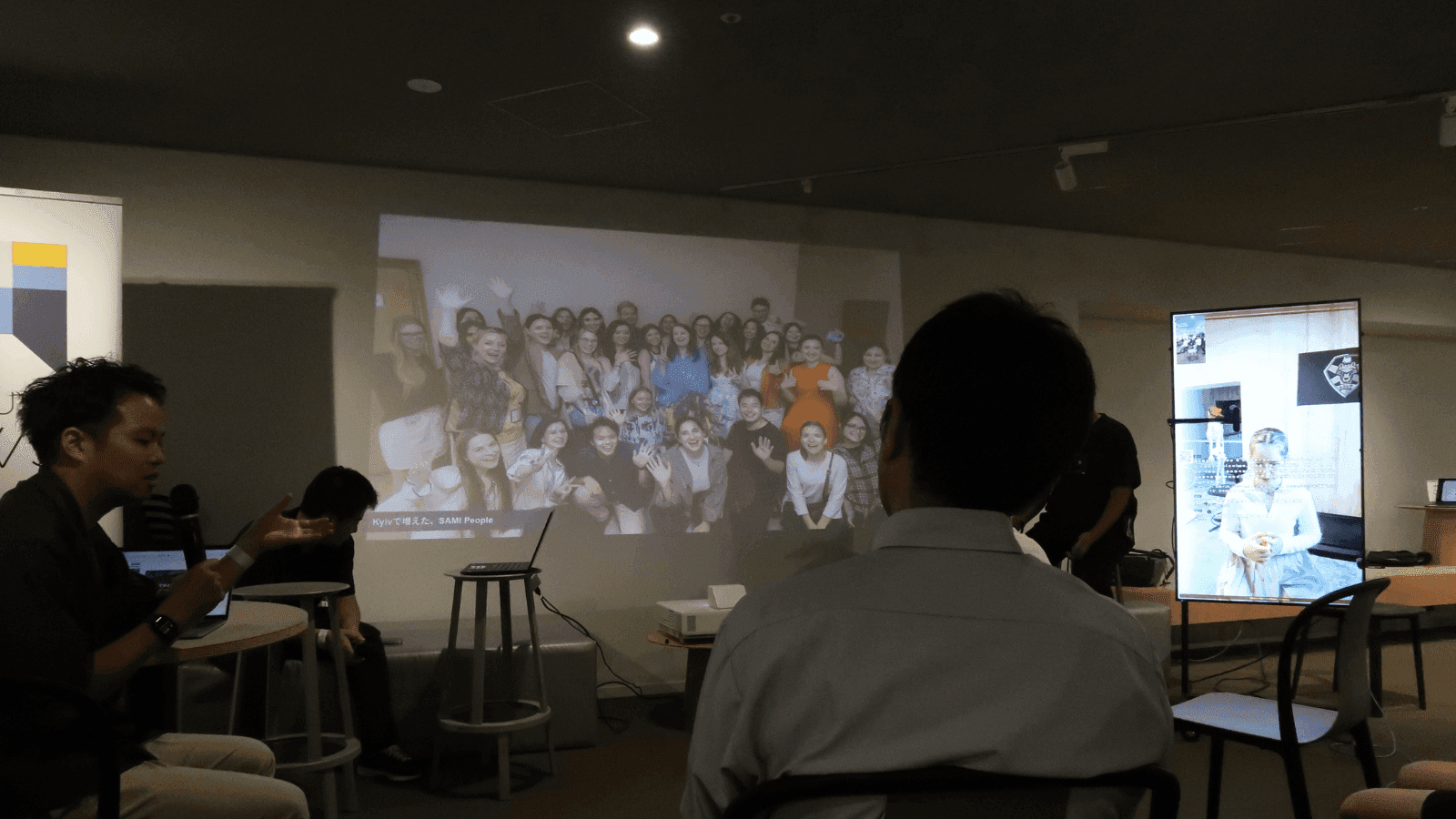
We attended an event reporting on People Cloud and MUSVI’s visits to Ukraine. For People Cloud, this was not their first visit, but it was their first visit under the current severe circumstances as a Green industrial recovery project for Ukraine through technology transfer from and the co-creation of new businesses with Japan’s private industries.
The event highlighted how Japanese companies are exploring new ways to engage with Ukraine through technology, talent development, business opportunities and collaboration with local organizations. Rather than simply bringing Japanese technologies into Ukraine, these initiatives are creating connections between Japanese businesses and Ukrainian people, while also exploring how new businesses can be built together.
When Japan and Ukraine Shared the Same Space
What does it mean for technology to connect people across a war zone?
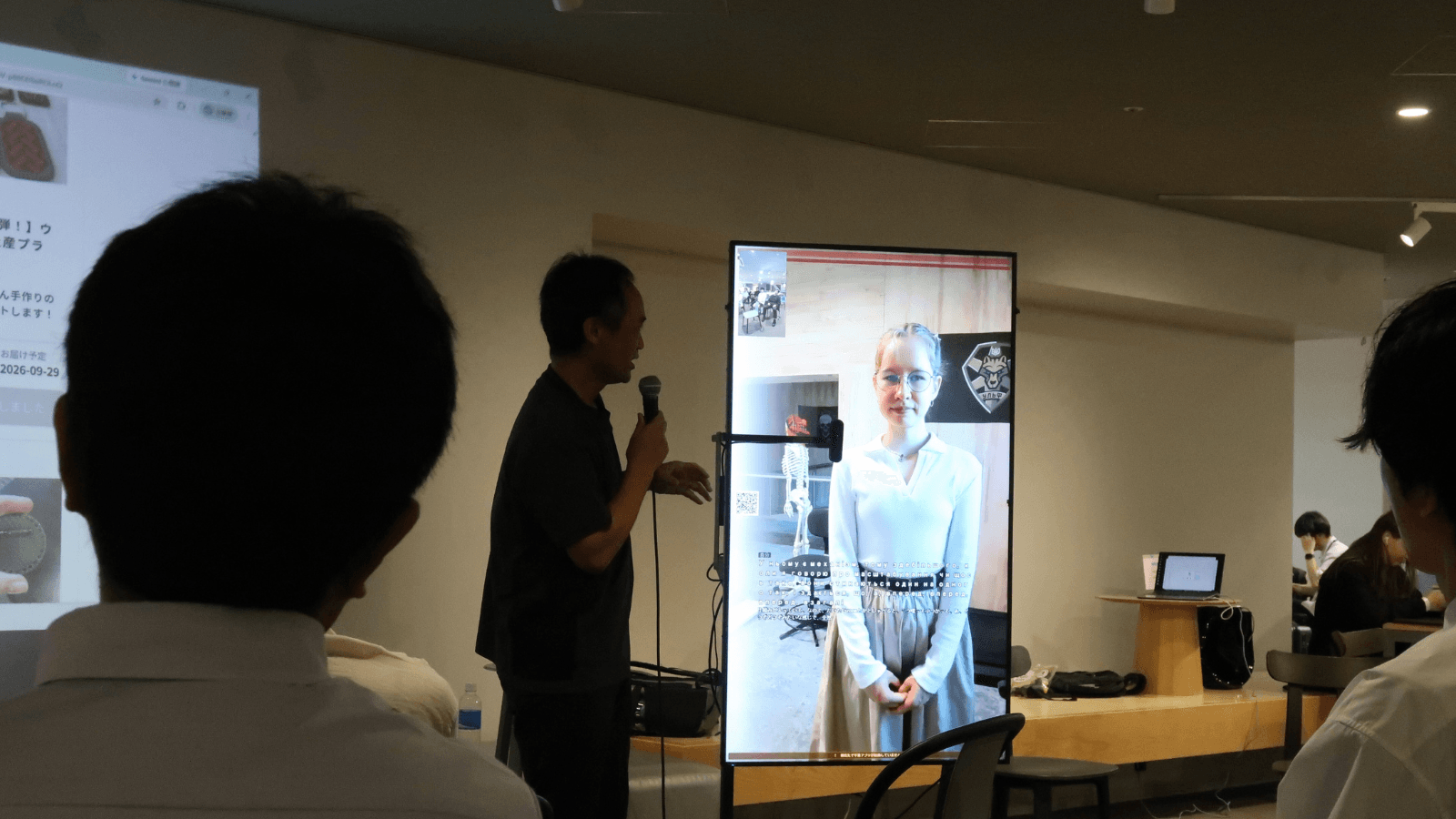
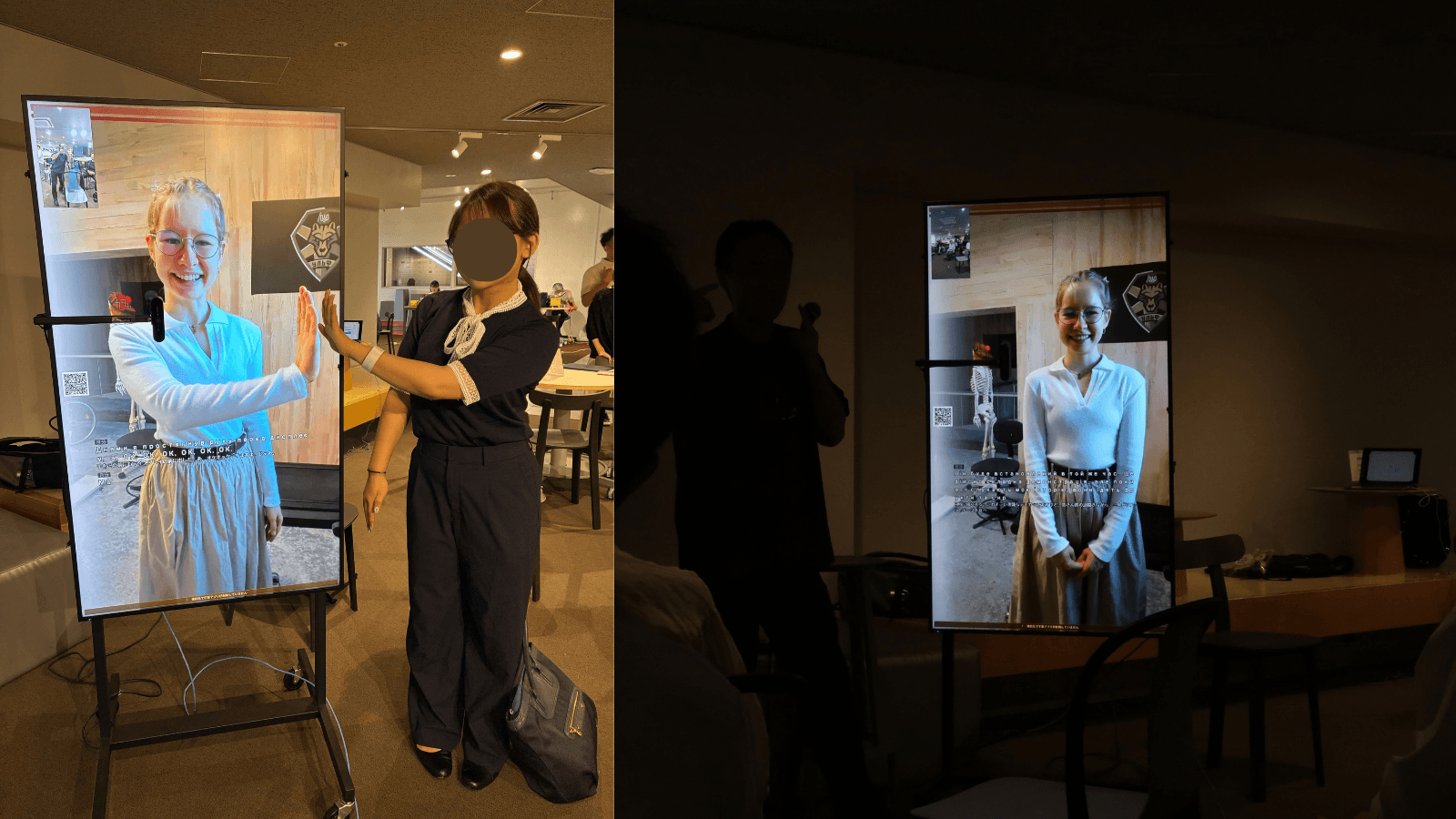
Participants were given a live demonstration of MUSVI’s “Mado,” a communication technology designed to create the feeling of being physically present with someone in another location.
On one side was Japan. On the other was Ukraine.
Rather than simply appearing as faces inside a video-call window, the system is designed to create a stronger sense of presence between people in different locations. During the demonstration, people on both sides were able to speak naturally, creating a sense of being in the same space despite being thousands of kilometers apart.
But the event also offered a reminder of why such technology matters.
One of the planned connections with a university in Kyiv, Ukraine, could not take place because repeated air-raid alerts had prevented a professor from reaching the university that morning.
Technology could vanish the distance between Japan and Ukraine.
For the Japanese companies involved, however, the goal is not simply to demonstrate that their technology works across borders. They are exploring how Japanese technology, business models and expertise can actually be used alongside Ukrainian people and organizations on the ground.
This is part of a broader story that is beginning to emerge: Japanese startups are finding new ways to work with Ukraine, from remote communication and rehabilitation to talent development and business creation.
Japanese Startups Are Bringing More Than Technology
The relationship between Japan and Ukraine is often discussed in terms of support and reconstruction. But the projects introduced at the event showed another side of that relationship.
Japanese companies are not only bringing products or technologies to Ukraine. They are experimenting with ways to connect Japanese businesses, technology and expertise with Ukrainian talent and local needs.
One example comes from People Cloud, which is developing a model around human-resource development and business opportunities between Japan and Ukraine.
The idea starts with a practical challenge. Many Ukrainian professionals cannot simply move to another country, particularly while the war continues. Instead of moving people to where the work is, People Cloud is exploring how work itself can be brought to Ukraine.
The company is developing a program that provides Japanese-language education to Ukrainian talent while creating opportunities for Japanese companies to outsource work to them. The goal is to build a pool of Ukrainian talent that can work with Japanese companies, creating employment in Ukraine while also giving Japanese businesses access to new talent.
The model is designed as a cycle: develop talent, create opportunities for Japanese companies to work with that talent, expand employment, and then continue developing more people.
When the program recruited participants interested in learning Japanese and working with Japanese companies, more than 450 people applied, far exceeding the initial expectation of around 100 applicants.
For People Cloud, this is not simply a language-learning program. It is an attempt to connect education, employment and business in a way that can contribute to Ukraine's economy while creating new opportunities for Japanese companies.
The company has also begun working with the National Linguistic University in Ukraine to provide Japanese-language education together with local Japanese-language teachers.
This approach offers a different way of thinking about international cooperation. It asks:
“How can Japanese companies create opportunities with people who are already there?”
From Remote Communication to Real-World Collaboration
People Cloud’s example shows how Japanese companies can create connections through people and business. MUSVI’s “Mado” shows another side of the same idea: how technology can make those connections possible across physical distance.
At first glance, remote communication technology may seem relatively simple. People can already speak to one another through Zoom and other video-conferencing platforms.
But MUSVI’s approach starts from a different question: what is lost when people communicate remotely?
MUSVI’s technology is designed to recreate a stronger sense of physical presence between people in different locations. During the event, participants demonstrated how people on both sides could speak simultaneously and naturally, while spatial audio helped create a more continuous sense of being together.
The difference is difficult to fully understand without experiencing Mado itself. Rather than simply providing a way to communicate remotely, the technology is designed to make people feel as though the other person is physically present.
That distinction becomes particularly important in fields where simply seeing and hearing someone remotely is not enough.
The event introduced potential applications in areas including education, construction, healthcare and rehabilitation. In one example, Japanese expertise could be connected directly with professionals working at sites in Ukraine, allowing knowledge and skills to be shared remotely.
In this sense, Mado can change the meaning of distance. It does not remove physical distance, but it can create a stronger sense of connection despite it. In other words, there is no concept, distance, wherever they are Mado enable people to exist wherever they want to be.
And Ukraine provides an especially powerful environment in which to explore those possibilities.
A technology that can connect a Japanese specialist with someone working thousands of kilometers away is valuable in many countries. But in a country where physical travel can be difficult or dangerous, the ability to create a meaningful connection remotely can take on an entirely different significance.
It is not only about transferring knowledge. It can also support a sense of presence and connection between people who cannot physically be in the same place.
When Several Japanese Technologies Come Together
MUSVI is one example of how Japanese technology can be used to address challenges in Ukraine. But the event also showed how different Japanese technologies and areas of expertise can be connected around specific needs.
One example discussed at the event involved prosthetics and rehabilitation.
BionicM, a University of Tokyo-originated company developing powered prosthetic technology, was introduced alongside efforts to support rehabilitation in Ukraine. Fitting and maintaining advanced prosthetic devices requires specialized knowledge and professionals who understand how to work with individual patients.
This creates a challenge when specialists and patients are separated by distance. In this context, the value comes not only from the prosthetic technology itself, but from connecting that technology with the people and expertise needed to use it effectively.
The same idea can be seen across the other examples introduced at the event. People Cloud is connecting Ukrainian talent with Japanese businesses. MUSVI is connecting people and expertise across physical distance. Prosthetic and rehabilitation initiatives can connect Japanese technology with professionals working in Ukraine.
Instead of one company simply exporting one product, multiple Japanese capabilities can be combined with Ukrainian people and organizations to address a specific challenge.
That may be one of the most important lessons from these projects. Japanese startups do not necessarily have to enter a foreign market by simply selling a finished product. They can also enter by asking what their technology can do here, and what can we create together.
A New Kind of Japan–Ukraine Connection
Taken together, these examples suggest that a new kind of Japan–Ukraine connection may be emerging. The story of Japanese involvement in Ukraine is therefore becoming broader than support alone.
Japanese startups are bringing technologies into the field. They are developing Ukrainian talent, connecting Japanese businesses with local professionals, and exploring new ways to deliver expertise across borders.
A Ukrainian professional working with a Japanese company without leaving Ukraine. A Japanese rehabilitation specialist advising a Ukrainian practitioner remotely. A startup using technology developed in Japan to solve a problem in Ukraine, while learning from Ukrainian engineers in return. Or Japanese and Ukrainian companies developing a new business model together from the beginning.
These examples show how cooperation can move in both directions. Japanese companies can bring technology, expertise and business opportunities to Ukraine, while Ukrainian professionals and organizations can bring their own knowledge, talent and experience into the relationship.
This creates a model of collaboration that goes beyond simply applying Japanese technology in another country. It opens the possibility of Japan and Ukraine creating new forms of collaboration together.
Japanese startups are often discussed in terms of the domestic challenges they are trying to solve. But the examples emerging from Ukraine show another possibility: technologies developed in Japan can become tools for addressing challenges far beyond Japan's borders. And Ukraine may not only be a place where Japanese technologies are applied.