
How Technology Is Transforming Mobility in Rural Japan
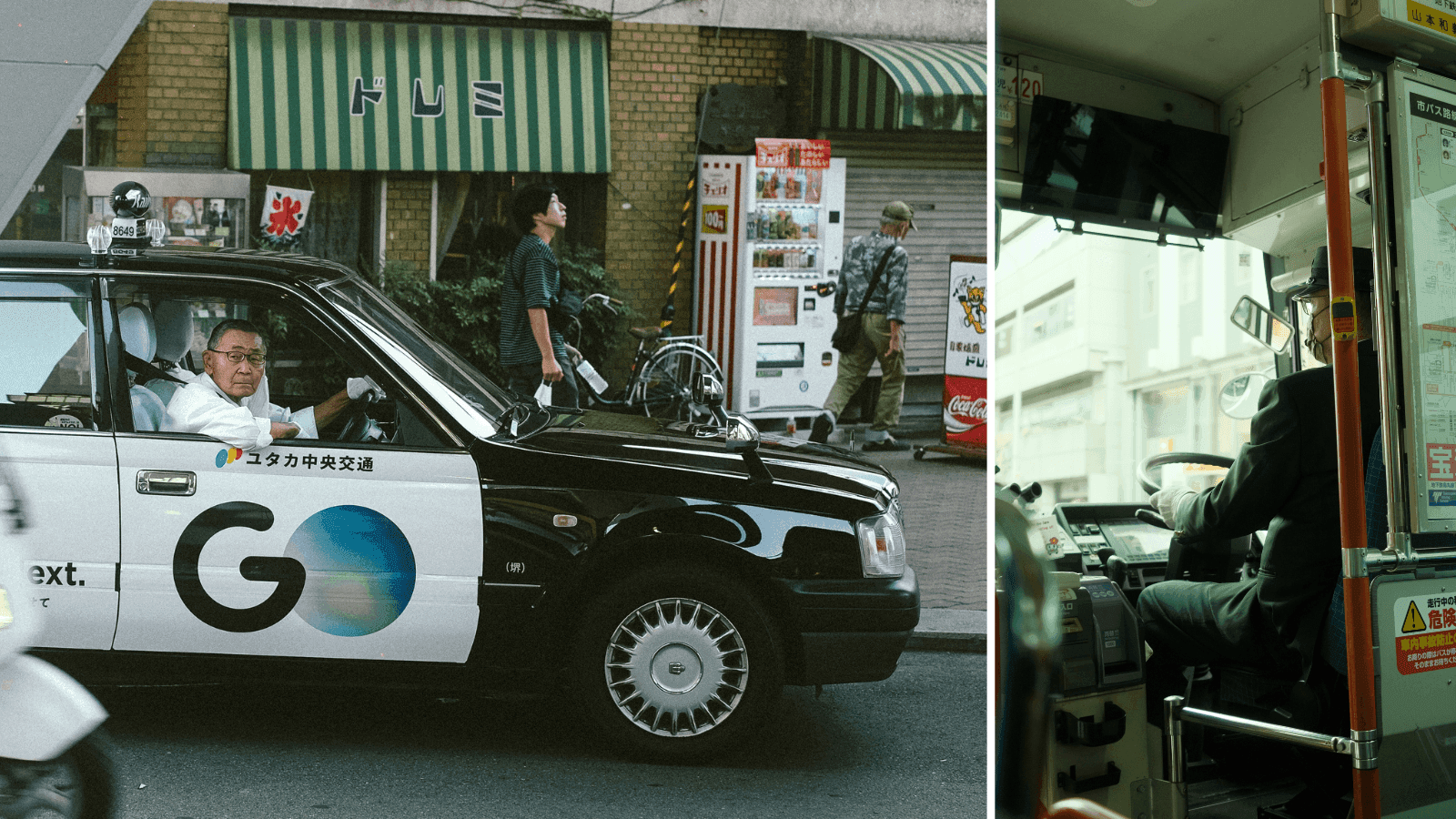
In much of rural Japan, the last bus of the day is no longer a matter of convenience. It decides whether an 80-year-old can see a doctor, buy groceries, or stay in the home she has lived in for decades. As drivers retire and routes disappear, a wave of startups and established companies is betting that autonomous vehicles, AI dispatch, and new business models can keep these communities moving.
This article looks at who is building that future, where it is already running, and what it will take to turn pilot projects into permanent public infrastructure.
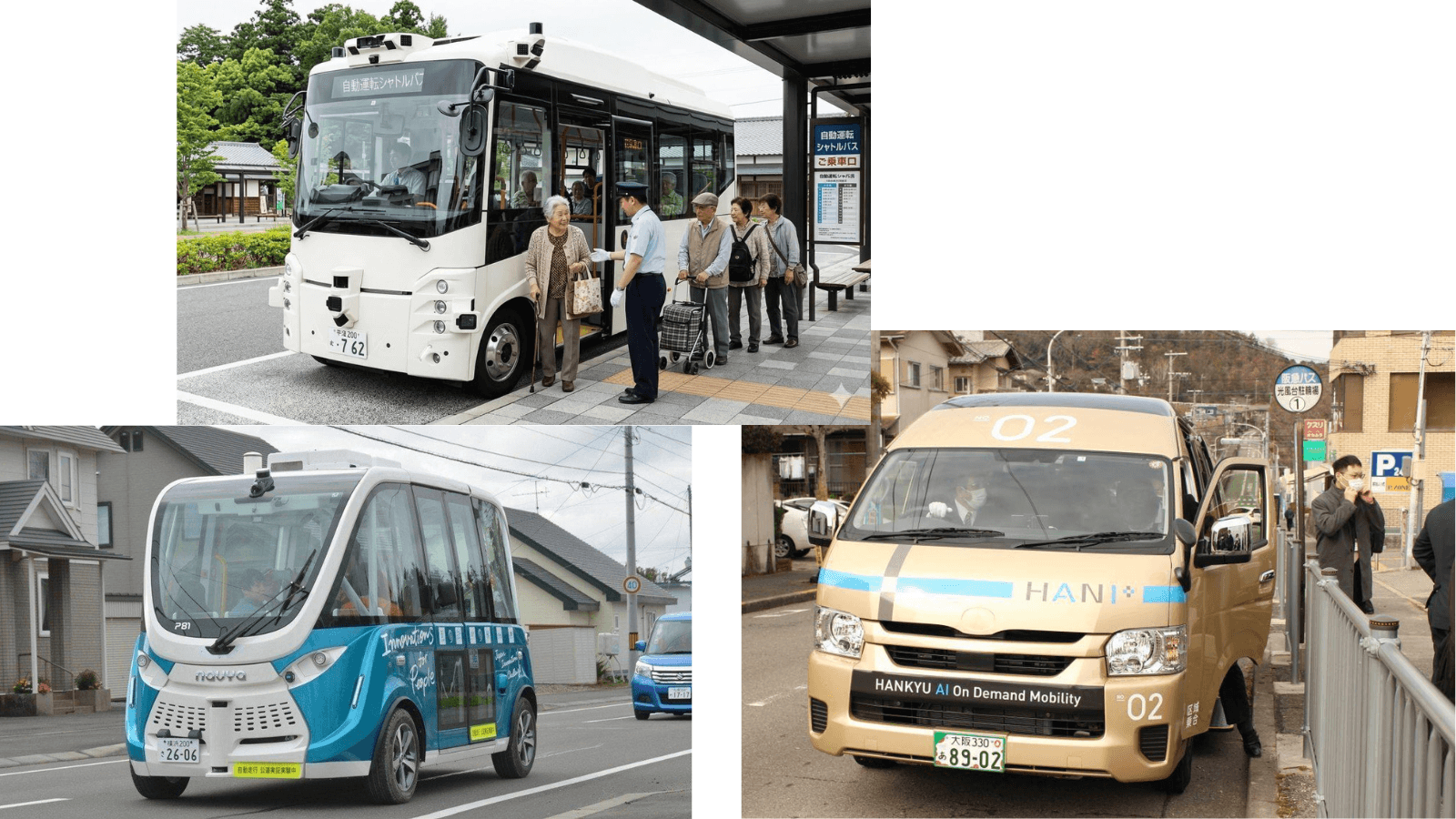
Japan's Rural Transportation Crisis
Japan's regional transport network is shrinking faster than the communities it serves. The core problem is simple: there are not enough people to drive the buses, and not enough passengers to pay for them.
Rural populations are declining and aging at the same time. Fewer riders mean lower fare revenue, which pushes operators to cut frequencies. Fewer buses then push remaining residents toward cars, and the cycle continues.
On the supply side, bus drivers in Japan are overwhelmingly older men, averaging 54 years old (versus 44 across all industries), while earning less and working longer hours. The Japan Bus Association projects that the industry could be about 36,000 drivers short of what it needs by 2030. The Ministry of LIT, citing the same association, estimates the driver pool shrinks by roughly 3,000 people every year.
In April 2024, new limits on overtime and minimum rest periods for professional drivers took effect. The rules were overdue for worker welfare, but they meant the same headcount could no longer cover the same timetable. A Teikoku Databank survey found that around 80% of 127 private bus operators cut or abolished routes in 2023, with nearly all citing driver shortages. Roughly 2,500 km of bus routes now disappear each year.
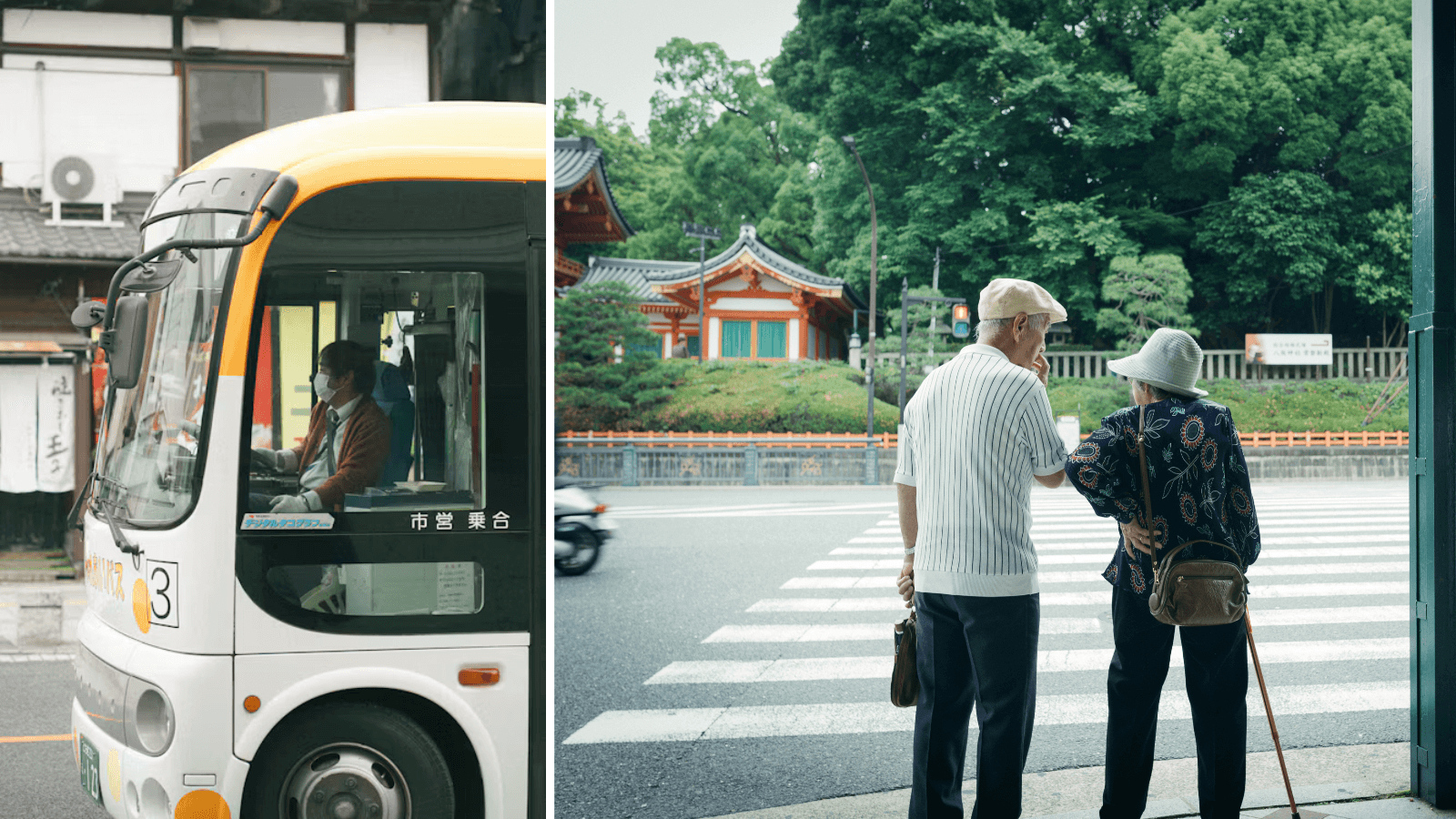
When a route disappears, the impact falls hardest on residents who cannot or should not drive, especially older people who have returned their licenses. For them, the bus is the link to hospitals and clinics, supermarkets, and train stations connecting them to the rest of Japan
This is why rural mobility is not just a question of convenience. It shapes access to healthcare, the viability of local businesses, and whether older residents can keep living independently in their own communities. A town that loses its bus loses a piece of its future.
The Technologies Changing Regional Mobility
Autonomous driving gets the headlines, but it is only one of several tools reshaping rural transport. Each addresses a different part of the problem.
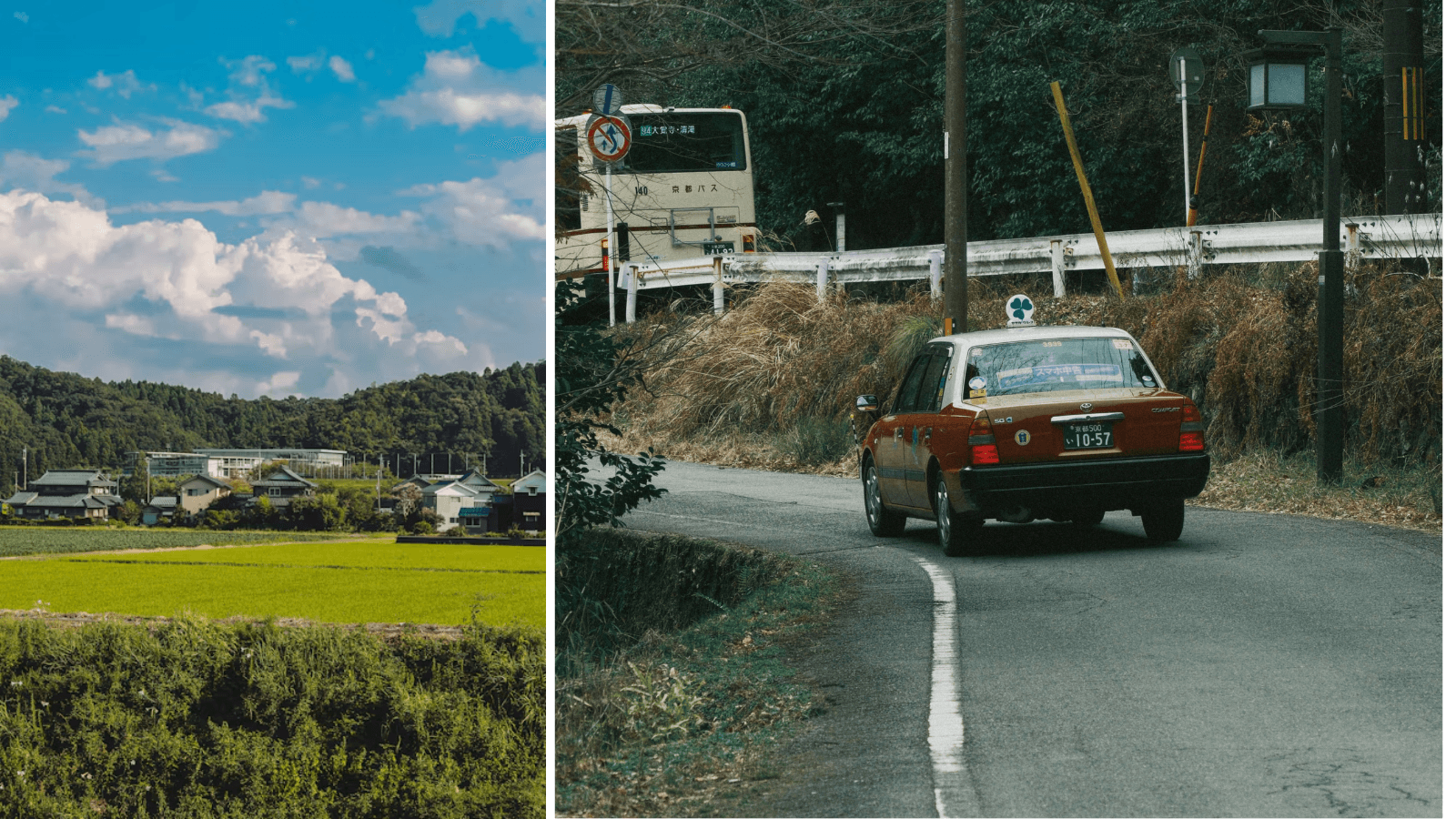
- Autonomous driving can help fill driver shortages by enabling vehicles to operate without a driver or with minimal staffing. It is particularly suited to fixed routes with relatively stable demand, such as shuttle services connecting train stations with hospitals.
- AI-powered on-demand transportation offers a more flexible approach by dispatching shared vehicles according to passenger bookings. This is especially useful in areas where residents are spread out and conventional fixed-route buses often operate with few passengers.
- Mobility as a Service (MaaS) integrates different transportation options, including buses, taxis, and trains, into a single platform for searching, booking, and payment. It is particularly valuable in regions where multiple operators provide services that residents and visitors would otherwise need to coordinate separately.
- AI-powered dispatch systems optimize vehicle allocation and routes based on demand. These systems can help taxi companies and shared-ride operators improve operational efficiency and serve more passengers with fewer drivers.
Together, these technologies offer different ways to address regional mobility challenges, from labor shortages and declining public transportation demand to fragmented transportation networks.
Japanese Startups and Companies Transforming Local Mobility
A small group of startups and corporate spin-offs are doing most of the heavy lifting. They fall into three groups: those making vehicles drive themselves, those making shared rides smarter, and those rebuilding the business model around both.
Autonomous driving
TIER IV
The developer behind the open-source Autoware platform, has partnered with Shiojiri City since 2020. In October 2024, its Minibus received Japan's first Level 4 certification for operation at up to 35 km/h on public roads shared with pedestrians and general traffic, along the route between Shiojiri Station and City Hall.
BOLDLY
BOLDLY, a SoftBank subsidiary, specializes in the operations layer of autonomous vehicles: remote monitoring, dispatch, and working with municipalities on permits.
Its main partner is Sakai, a town of about 24,000 in Ibaraki Prefecture, which in November 2020 became the first municipality in Japan to run a fixed-route, fixed-schedule autonomous bus. The town owns the service and contracts operations to BOLDLY.
By September 2024, the buses had made 22,797 trips and carried 31,632 riders, more than the town's population. Stops include a hospital, supermarket, bank, roadside station, and an expressway bus terminal linking to Tokyo.
AI and on-demand mobility
Mirai Share
Mirai Share was founded in 2016 as a spin-off from Future University Hakodate, building on dispatch-simulation research that began at AIST in 2001. Its Smart Access Vehicle Service (SAVS) combines the flexibility of a taxi with the efficiency of a shared bus: an AI platform continuously recalculates routes so that multiple riders with different origins and destinations share one vehicle. Because the routes are not fixed, operators can serve scattered demand without running empty buses.
KDDI Smart Mobility
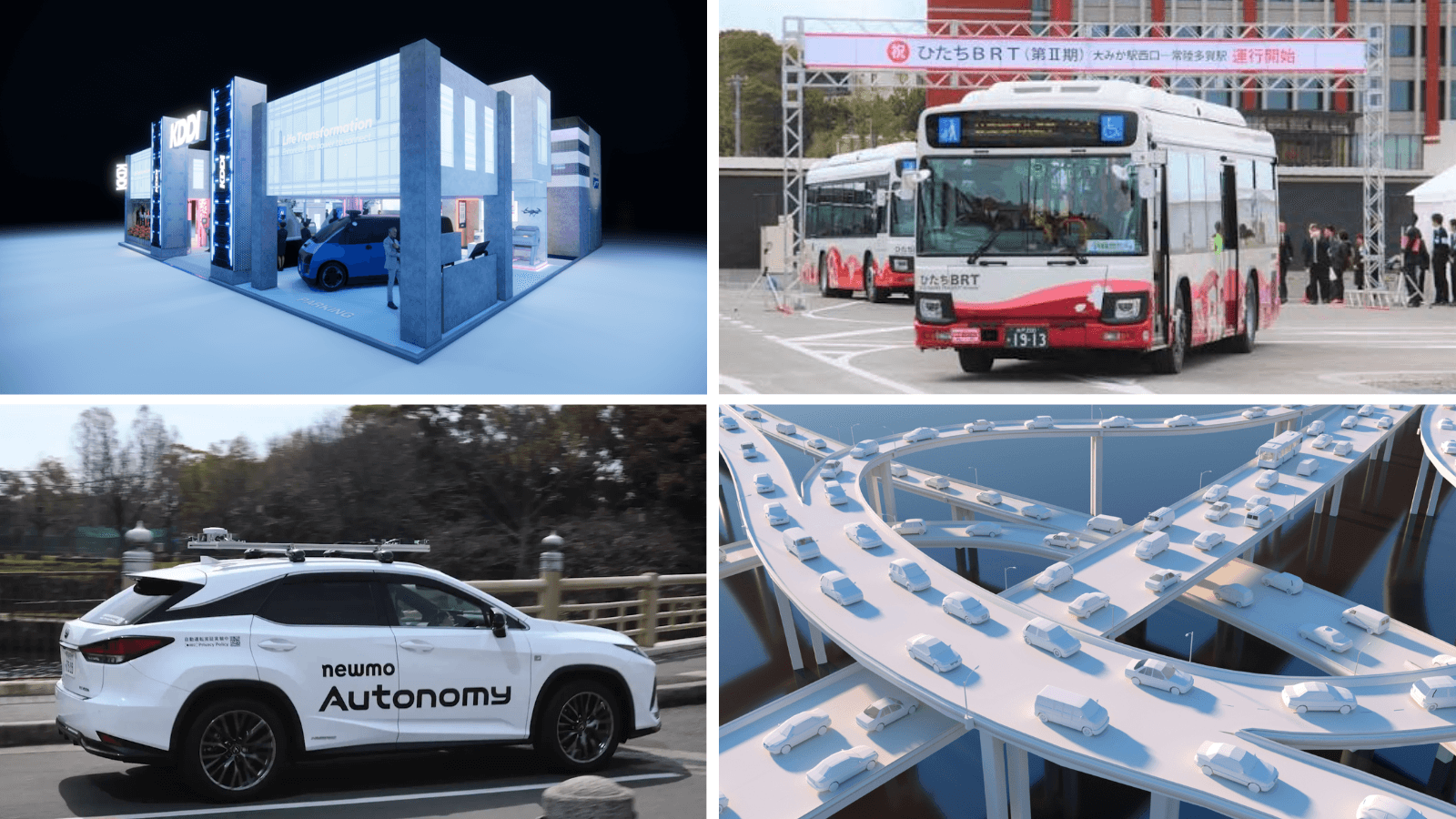
KDDI Smart Mobility runs "mobi," an AI on-demand shared-ride service in Rifu, Miyagi Prefecture. Local bus company Miyako Bus operates the vehicles, two 12-seat vans serving 274 pickup points from 8:00 to 19:00.
The pilot program launched in November 2023. During the pilot, about 54 people rode per day, satisfaction averaged 8.0 out of 10, and roughly two in three riders were repeat users. Most telling, about 47% of residents surveyed said mobi would be their main way of getting around after giving up their driver's license.
On October 1, 2026, Rifu's mobi became a permanent service under Article 4 of the Road Transport Act.
New mobility business models
newmo
newmo, founded in January 2024, took an unusual route to establishment. Instead of starting with technology, it started by buying taxi companies in Osaka Prefecture, giving it a fleet of around 1,400 vehicles nationwide. It partnered with TIER IV in 2025 and signed agreements with Sakai and Osaka. From spring 2026, it began Level 2 tests, with safety drivers aboard, in Sakai's Sakaihama waterfront and Osaka's Maishima district, aiming for Level 4 commercial robotaxi service in 2028. Its current work is urban, but the model of owning operations, drivers, and customer relationships first, then layering automation on top, is directly relevant to regional taxi operators facing the same labor shortage.
What actually changed on the ground
The clearest milestone came in Hitachi, Ibaraki Prefecture. On February 3, 2025, Ibaraki Kotsu began commercial Level 4 service with a mid-sized bus on the Hitachi BRT, the first time the standard vehicle used on Japanese route buses ran Level 4 in paid service. The bus drives itself along a 6.1 km dedicated busway built on a railway line abandoned in 2005, passing 14 bus stops and 11 intersections with ordinary roads. For now, a crew member still sits in the driver's seat.
From Experiment to Reality: What Does It Take to Transform Local Mobility?
The technology is already working in several parts of Japan. The bigger challenge is making these services financially and operationally sustainable beyond the pilot stage. Three factors will determine whether they can become a permanent part of regional transportation.
1. Funding and operating costs. Autonomous vehicles require significant initial investment in vehicles, sensors, high-definition maps, and remote-monitoring systems. Even when driver costs are reduced, maintenance, technology upgrades, and remote operations still require ongoing funding. Many pilot projects rely on government subsidies, raising a critical question: who will cover the costs once that support ends? Municipalities, transport operators, and private-sector partners will need to develop funding models that go beyond passenger fares alone.
2. Regulation and route-specific approvals. Level 4 autonomous driving requires separate approvals under the Road Transport Vehicle Act and the Road Traffic Act. These approvals are tied to specific operating conditions and routes, meaning that expanding a service to new areas can require additional safety assessments and regulatory procedures. This makes scaling autonomous mobility more complicated than simply introducing the same vehicle in another town.
3. Cooperation with local communities and transport operators. Successful implementation depends on more than technology. Municipalities must coordinate funding and public services, while existing bus and taxi operators provide local knowledge, vehicles, and operational expertise. Residents also need to trust and adopt new services. Involving them in route planning and service design helps ensure that transportation meets actual local needs. Long-term cooperation among these stakeholders is essential to turning experimental projects into reliable public services.
The Future of Mobility in Rural Japan
Japan is likely to be one of the first countries forced to answer a question others will soon face: how do you keep people moving when there is no one left to drive? Five trends will shape the answer.
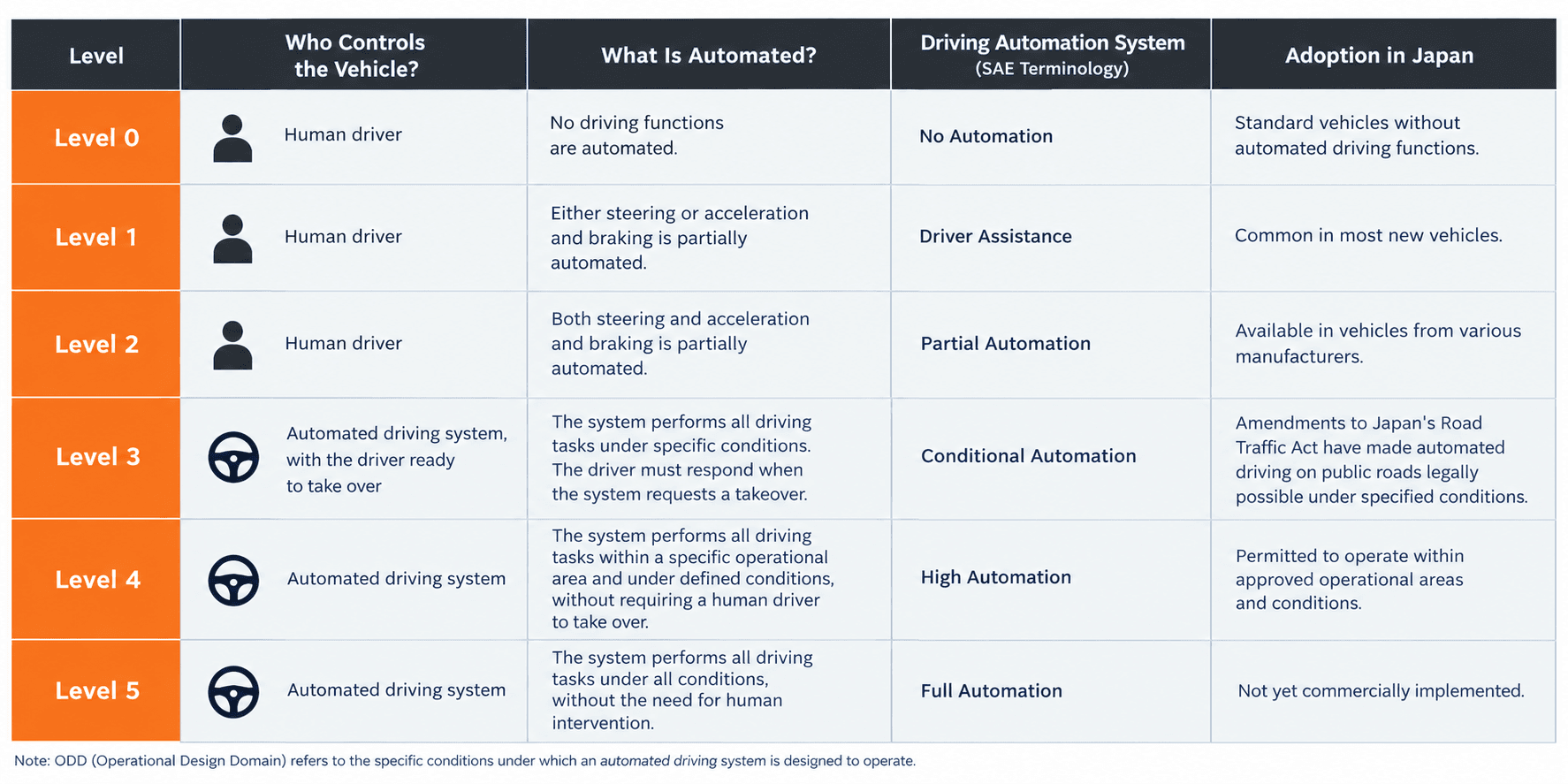
- More autonomous service areas. The national government has set a goal of autonomous mobility services in about 50 locations in fiscal 2025 and more than 100 by fiscal 2027. Expect the early wave to cluster on dedicated lanes, short fixed loops, and low-traffic routes, as in Hitachi and Shiojiri, before spreading to more complex roads.
- AI and autonomy working together. The two technologies are converging. KDDI Smart Mobility now offers both on-demand mobi and autonomous bus services, including full-scale operation in Tsukuba from October 2026. The logical endpoint is driverless vehicles dispatched on demand, combining the labor savings of autonomy with the flexibility of AI routing.
- Deeper partnerships between municipalities and startups. Startups bring technology and speed; municipalities bring funding, public trust, and knowledge of residents' needs. The most successful projects treat this as a long-term partnership rather than a one-off procurement.
- Systems tailored to each region: There will be no single "Japanese model." A mountain village may combine on-demand vans with public ridesharing using residents' own cars; a mid-sized city may run autonomous buses on its trunk routes with AI shuttles feeding them. The skill that matters most is matching the tool to local demand.
- Exporting what works: Many of the conditions driving this change, including aging populations, driver shortages, and thinning rural demand, are emerging across East Asia and Europe. Models proven in towns like Sakai, Shiojiri, and Rifu could become templates for regions far beyond Japan.
Japan's rural transport crisis is real, and technology alone will not solve it. Compared with some other countries, Japan may appear to be moving more cautiously in introducing autonomous mobility. However, the progress seen in places like Sakai, Shiojiri, and Hitachi suggests that the country is taking important steps toward introducing these technologies while meeting its high safety standards.
Ultimately, the future of autonomous mobility will depend on more than technological progress. Residents need to understand how these systems work, feel confident in their safety, and become willing to use them in their daily lives. Building that trust takes time and requires continued interaction between technology providers, local governments, transport operators, and communities. Japan's progress may be gradual, but each successful implementation can help create the confidence and experience needed for wider adoption.
Sources
- Chiba City presentation, Japan Bus Association data (2024)
- Ministry of Justice, bus and taxi driver shortage materials
- DIME, Teikoku Databank bus route survey (2023)
- Aisan Technology, Shiojiri Level 4 approval (Nov 2024)
- Shiojiri City presentation to MLIT (Jan 2026)
- Jidounten Lab, Sakai autonomous bus ridership (2024)
- Ministry of the Environment, Mirai Share profile
- KDDI Smart Mobility, Rifu mobi full service press release (Oct 2026)
- KDDI Smart Mobility, corporate site
- Jidounten Lab, newmo autonomous strategy (2026)
- MONOist, Hitachi BRT Level 4 launch (Feb 2025)
- Hitachi City press release (Feb 2025)
- Tsubame City / Yahiko Village autonomous pilot materials (2023)