
Japan Mobility Bizweek 2026: Beyond Autonomous Driving

From October 13 to 16, Japan Mobility Show Bizweek 2026 brought together mobility companies, startups, and cross-industry partners to create new value and drive innovation for the future of mobility and society. Walking through the exhibition, what impressed me most was that Japan’s mobility industry seemed to be shifting its focus from competing to build better cars to creating systems that support mobility as a whole.
In rural areas, a lack of bus drivers has made it increasingly difficult to maintain public transportation. In urban areas, the goal of eliminating traffic fatalities is still far from being achieved. In response to these social issues, the companies were showcasing not only autonomous driving technologies but also cooperation with road infrastructure, AI that understands human emotions, the application of mobility technologies to robotics, and even new materials for road pavement.
In this article, I will explore the key points of the exhibition through six perspectives, starting with the industry-wide strategy presented by the Japan Automobile Manufacturers Association (JAMA), followed by public transportation, passenger vehicles, human-centered mobility, robotics, and road infrastructure.
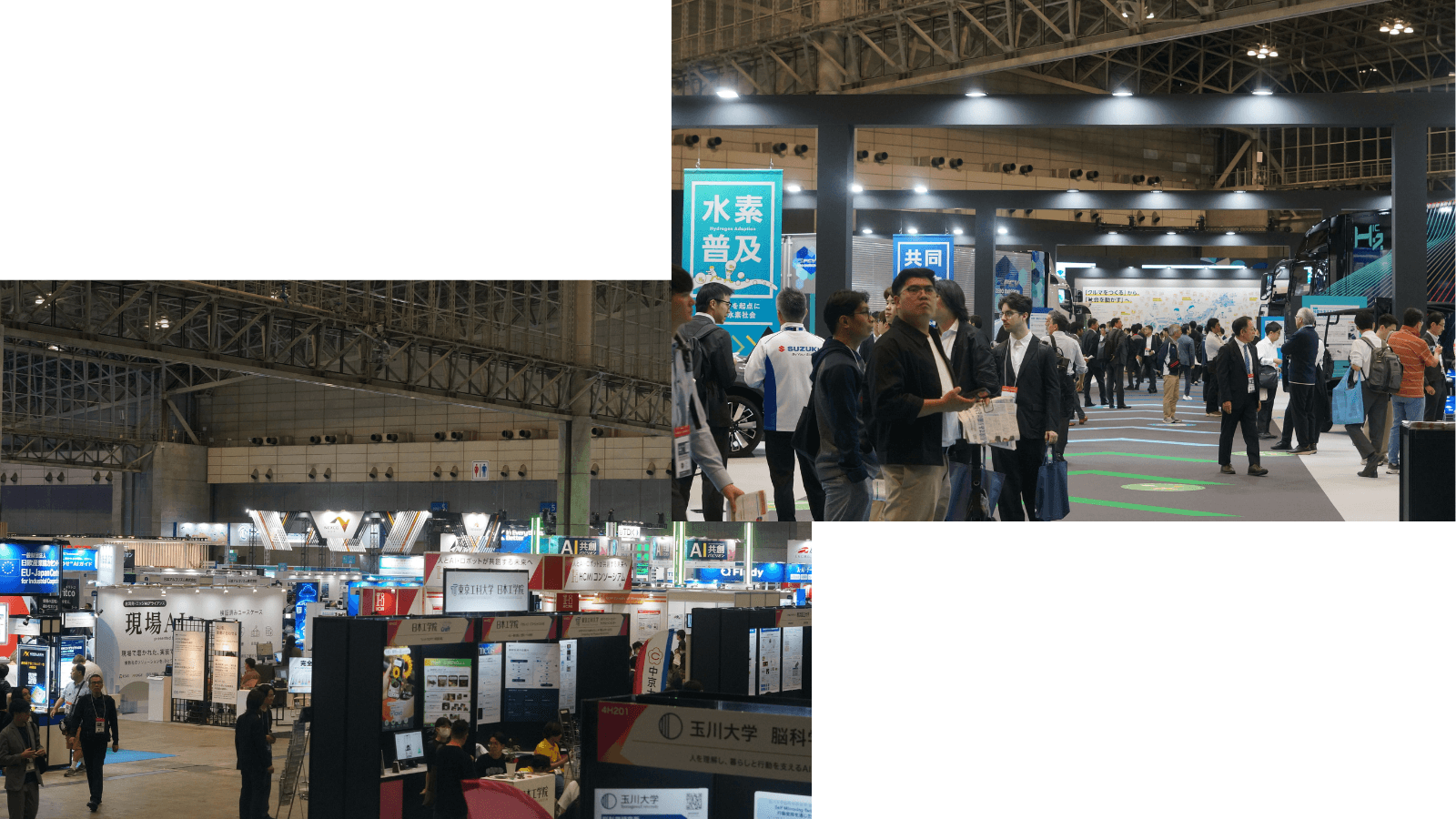
JAMA’s Roadmap for Autonomous Driving
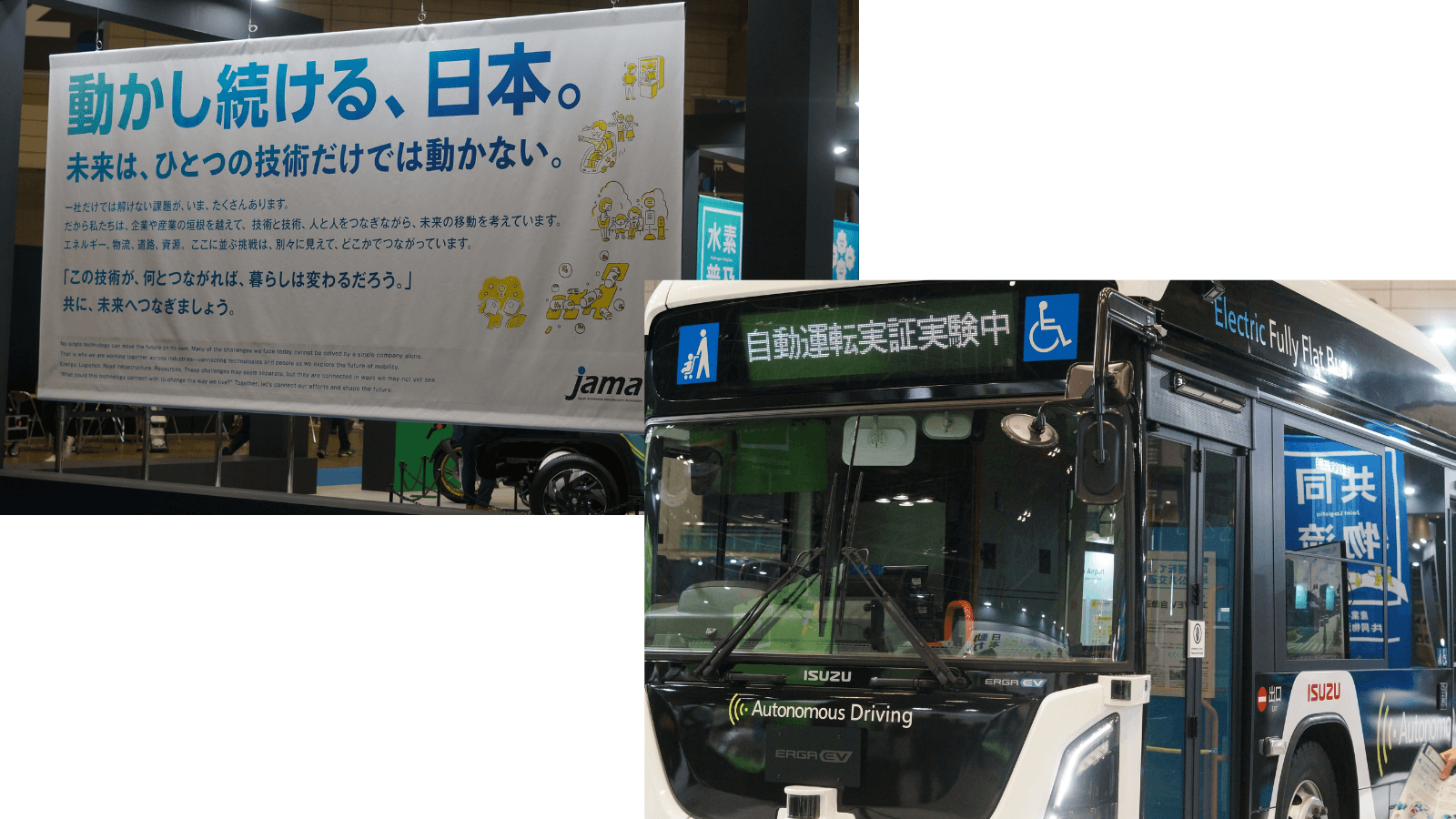
JAMA’s industry-wide goals are “zero traffic fatalities” and “the realization of free mobility.” The aim is to create a society where everyone can move safely and freely, regardless of their age or where they live.
One important point is how JAMA plans to achieve these goals. Relying only on cameras and LiDAR installed in vehicles has physical limitations, such as difficulty detecting risks behind buildings or in severe weather conditions. Recognizing these limitations, JAMA places cooperation between vehicles, roadside sensors, and traffic networks at the center of its strategy.
The strategy consists of three main pillars:
-
- Promoting Infrastructure Cooperation: Connecting vehicles with roadside sensors and traffic networks to reduce risks that onboard sensors alone may not detect in time.
- Establishing a Foundation of Social Trust: Standardizing safety verification frameworks, accident investigation procedures, and continuous evaluation processes to build public trust.
- Promoting the Market Adoption of Technology: Accelerating the transition from driver assistance to fully automated driving services in both public and private sectors.
JAMA also presented a step-by-step roadmap for 2026 to 2028.
- 2026: Building the Foundation: Developing institutional frameworks, conducting proof-of-concept (PoC) trials, and standardizing data management rules.
- 2027: Social Implementation: Launching commercial autonomous transportation and shuttle services in selected regions.
- 2028: Expansion Across Multiple Locations: Expanding successful regional models to locations across Japan.
Although each company continues to compete in developing its own technologies, the industry is also working to establish common foundations for regulations and data management. This approach was one of the themes that connected many of the exhibits.
Automating Public Transportation: Isuzu and Toyota’s Mobility Solutions
Public transportation is one of the areas where the need for autonomous driving is particularly urgent. As driver shortages and population aging become more serious in rural areas, Isuzu and Toyota are developing dedicated electric vehicle platforms to address these challenges.
Isuzu’s Elga EV Autonomous Bus
Isuzu’s Elga EV autonomous bus is being developed to help maintain sustainable public transportation in regional areas. What caught my attention was that the exhibit focused not only on driving itself but also on passenger safety when getting on and off the bus.
The system uses AI-based image recognition to check passenger safety and automatically coordinates door operations with onboard announcements. For buses operating without drivers, these safety checks during boarding and exiting are essential for safe operation. The goal is to maintain reliable, scheduled bus services in areas where securing enough drivers has become difficult.
Toyota’s e-Palette Shuttle
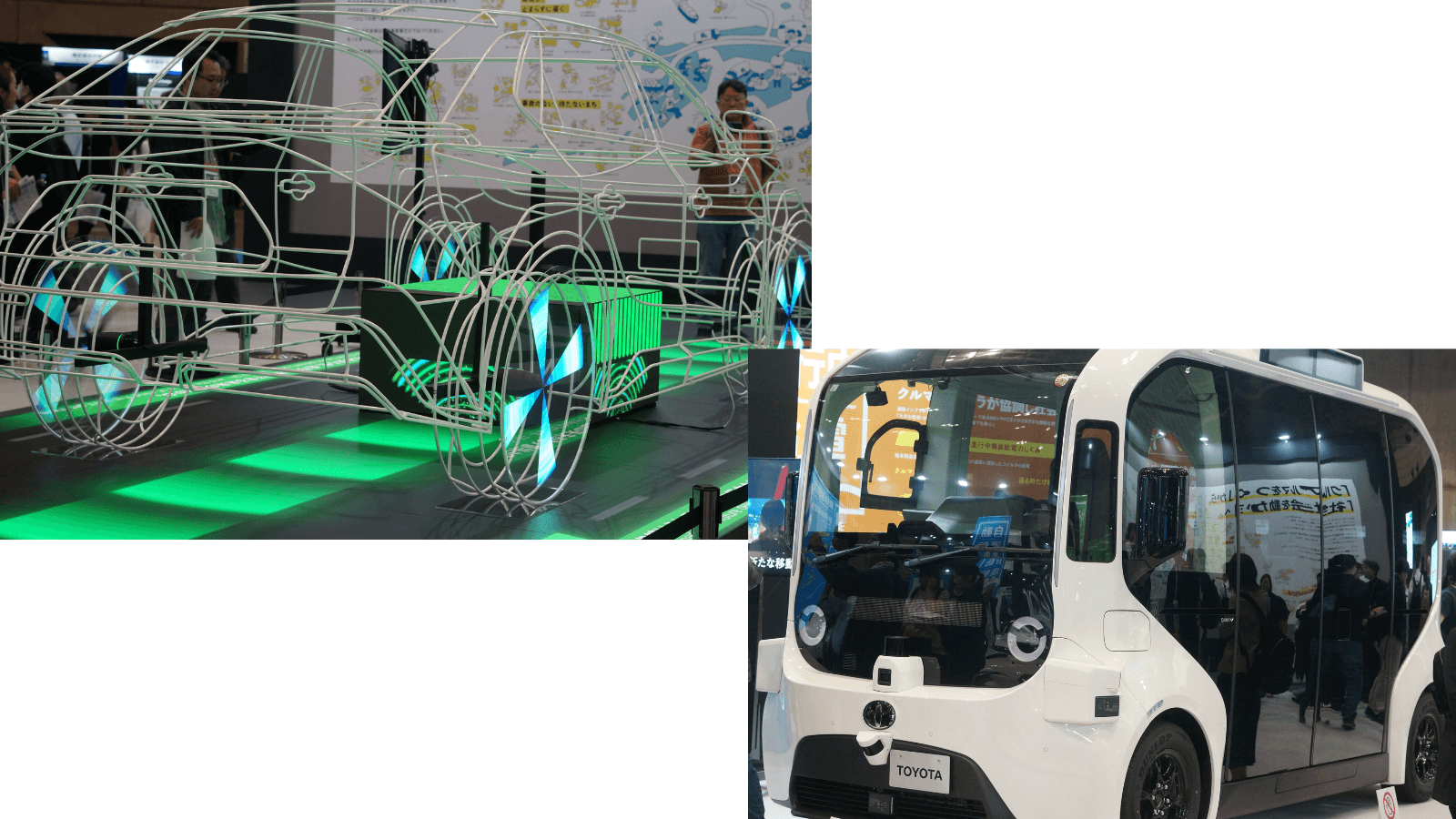
Toyota’s e-Palette is an electric shuttle designed for use in local transportation, corporate campuses, and smart cities.
One of its key features is its open design, which allows third-party autonomous driving software to be integrated into the vehicle. Through Toyota’s Vehicle Control Interface (VCI), software such as TIER IV’s Autonomous Driving Kit (ADK) can be incorporated. This allows Toyota to provide the vehicle while specialized companies provide the autonomous driving software, giving municipalities and service operators more options when introducing these vehicles.
Toyota aims to equip the e-Palette with Level 4 autonomous driving systems in FY2027, following demonstration trials and community shuttle projects. This timing aligns with 2027 in JAMA’s roadmap, which is identified as the year for social implementation.
What these two vehicles have in common is that autonomous driving is being treated as a practical way to maintain public transportation, rather than simply a technology to showcase.
Nissan and Subaru’s Approaches to AI and Cooperative Autonomous Driving
Unlike shuttles that follow fixed routes, passenger cars must navigate a wide variety of roads, from the area in front of a person's home to their final destination. To address this challenge, Nissan and Subaru presented different but complementary approaches.
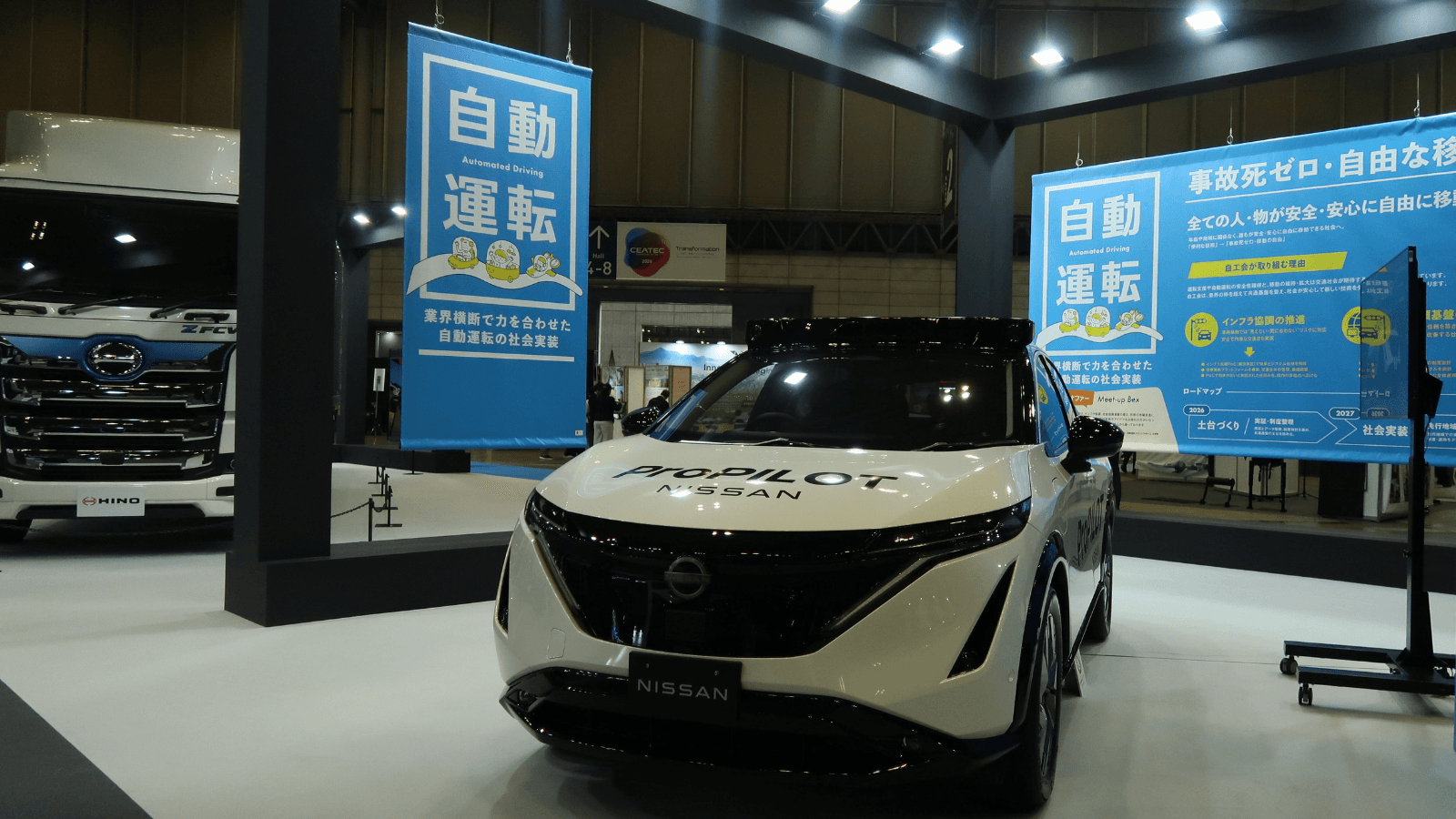
Nissan: AI for Door-to-Door Autonomous Driving
Nissan aims to achieve door-to-door autonomous driving, allowing a vehicle to travel from its starting point to its destination without interruptions in automated operation. Its approach combines advanced AI with multiple sensors, including cameras and LiDAR, as well as high-definition maps.
The system aims to handle the entire journey, from highways to narrow residential streets, without requiring the driver to take over. Through deep learning, it is designed to predict pedestrian movements and make natural driving decisions at complex intersections, similar to those of an experienced human driver. In other words, Nissan is working to improve the vehicle’s own ability to understand its surroundings and make decisions.
Subaru: Cooperative Autonomous Driving Through Vehicle-Infrastructure Connectivity
Subaru starts from the understanding that onboard sensors cannot see beyond physical obstacles. Its approach is cooperative autonomous driving, in which vehicles and infrastructure share information to improve safety.
At test facilities such as the Bifuka Proving Ground in Hokkaido, Subaru connects vehicles with road infrastructure through local 5G networks and fiber-optic communications. Data collected from roadside sensors and nearby vehicles is processed by Multi-access Edge Computing (MEC) servers and shared with a test vehicle based on the Subaru Levorg in real time.
This approach aims to detect risks before they become visible to the driver or the vehicle’s onboard sensors, such as an oncoming car approaching from behind a blind curve. By identifying these hidden dangers in advance, Subaru aims to help eliminate fatal traffic accidents.
What These Two Approaches Show
Nissan is working to make vehicles smarter, while Subaru is focusing on connecting vehicles with their surroundings. Rather than viewing these approaches as competing solutions, combining onboard AI with information from road infrastructure could represent a practical example of the infrastructure cooperation promoted by JAMA.
Mazda’s Empathic AI and Technology That Understands People
While discussions about autonomous driving often focus on safety and efficiency, Mazda’s exhibit raised a slightly different question: How can we make the time people spend traveling more meaningful and enjoyable?
Mazda presented the concept of “The More You Drive, the More Alive You Feel.” At the center of this concept is empathic AI, which aims to understand the driver’s condition and emotions. The technology is designed to provide support based on the driver’s state and surrounding conditions, creating a more reassuring driving environment through the human-machine interface (HMI).
As technologies that allow cars to drive on behalf of people continue to advance, Mazda is exploring how AI can improve the experience of driving itself. Safety and convenience are not the only considerations. The feelings and experiences of the people inside the vehicle are also becoming part of the design process.
This exhibit shows that a human-centered approach will remain important even as autonomous driving develops. The future of mobility is not only about allowing vehicles to drive by themselves but also about improving the relationship between people and their vehicles.
Suzuki’s MITRA and the Application of Robotics Technology
Mobility technology is not limited to vehicles that carry people. Suzuki’s MITRA, a multipurpose electric platform, was an example that clearly showed how these technologies can be used in other fields.
MITRA applies Suzuki’s long-standing expertise in developing electric wheelchairs to a platform designed to serve as the mobility base, or “legs,” of robots. It features independent suspension on all four wheels, independent rear-wheel motors, and front-wheel power steering. It is also designed to withstand dust and water, allowing it to operate in various environments, including outdoor areas and uneven terrain.
The exhibition introduced three potential applications.
- Retail: Mobile unmanned vending robots that can move around while selling products.
- Logistics: Autonomous delivery robots for last-mile delivery.
- Agriculture: Sensing robots that collect information about agricultural fields.
Instead of developing an entire vehicle for each purpose, Suzuki is providing the mobility function as a platform that can be used across different industries. The exhibit showed the potential for technologies developed by an automotive manufacturer to support labor-shortage industries such as logistics, retail, and agriculture.
The Future of Roads: Super PET Ascon
No matter how advanced autonomous vehicles and delivery robots become, their development will have limited value if the roads they use are damaged or difficult to maintain. Super PET Ascon, a road pavement technology that reuses recycled PET bottles, brought attention to this often-overlooked part of mobility.
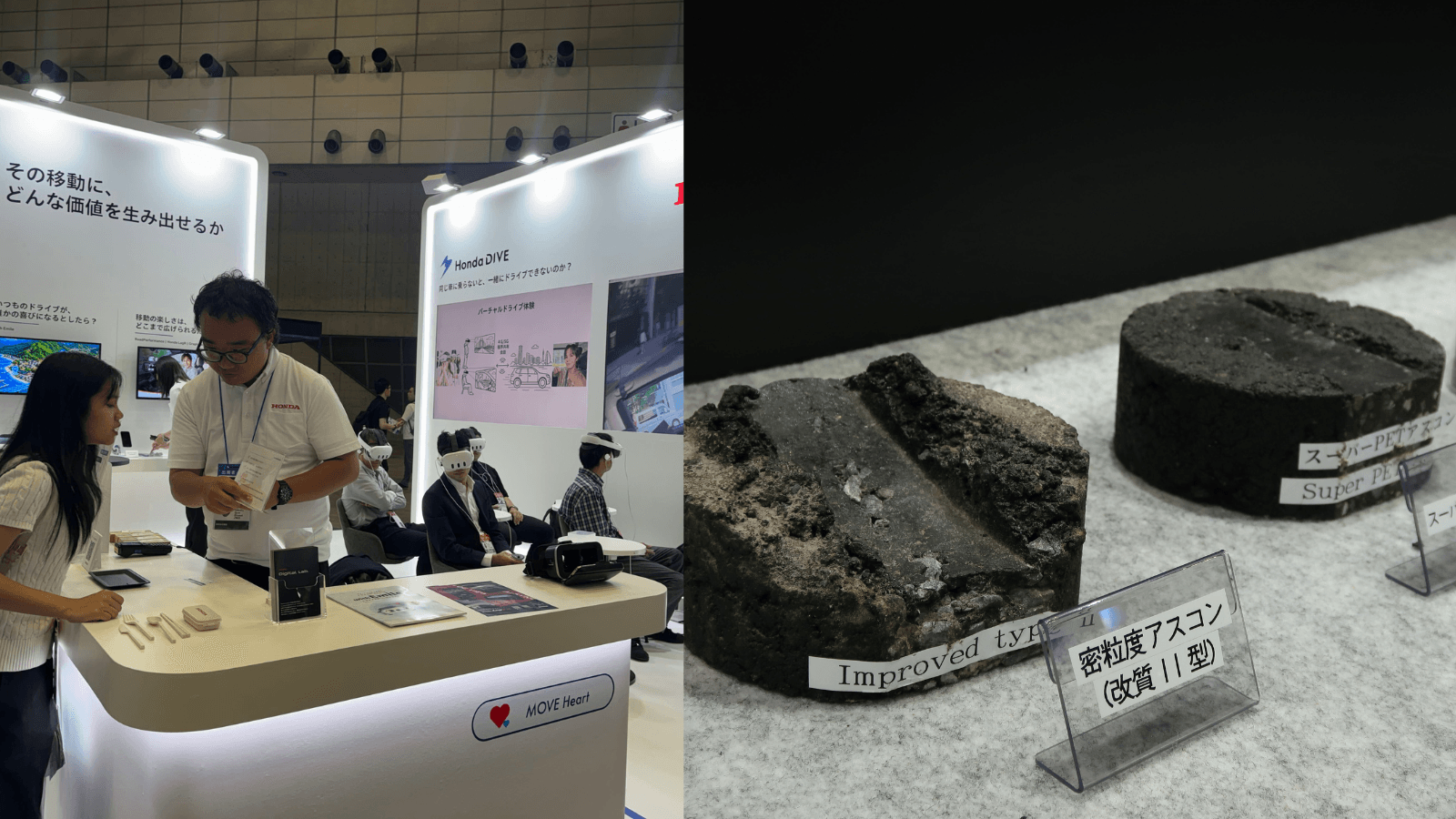
The technology is designed for areas such as logistics facilities and intersections, where heavy vehicles frequently travel and road surfaces experience significant wear. By reusing waste PET bottles as part of the material, the technology aims to achieve high water resistance and durability.
According to the exhibition, Super PET Ascon can reduce CO₂ emissions by approximately 25% compared with conventional semi-flexible pavement. It is also designed to be installed at a speed similar to that of ordinary asphalt pavement, without requiring specialized construction work on-site.
Durability, construction efficiency, and reduced environmental impact may not be the most eye-catching technologies, but they are essential for supporting the future of mobility from the ground up. Discussions about autonomous driving often focus on vehicles and software, but this exhibit reminded me that the physical infrastructure supporting mobility also needs to evolve.
A Future Where Vehicles, People, Robots, and Infrastructure Connect
Looking back at Japan Mobility Show Bizweek, I see three major trends in Japan’s mobility industry.
The first is the shift from vehicles as machines that simply provide transportation to vehicles that can understand people. Nissan’s AI interprets the surrounding environment, while Mazda’s empathic AI aims to respond to the emotions of the driver. Vehicles are increasingly being designed to understand both the world outside and the people inside.
The second is the expansion of mobility technology beyond vehicles. As seen in Suzuki’s MITRA, technologies developed for electric mobility are being adapted to provide the foundation for robots that support logistics, retail, and agriculture.
The third is the growing recognition that the future of mobility must also be considered from the perspective of road infrastructure. Subaru’s cooperative autonomous driving, JAMA’s infrastructure cooperation strategy, and Super PET Ascon’s pavement technology all show that the future of mobility cannot be achieved through vehicles alone.
In 2027, the social implementation of autonomous driving services is expected to advance further. At that point, the key question may not be which individual technology is the most advanced, but how effectively vehicles, people, robots, and infrastructure can work together.