
MUSVI: how to change global communication

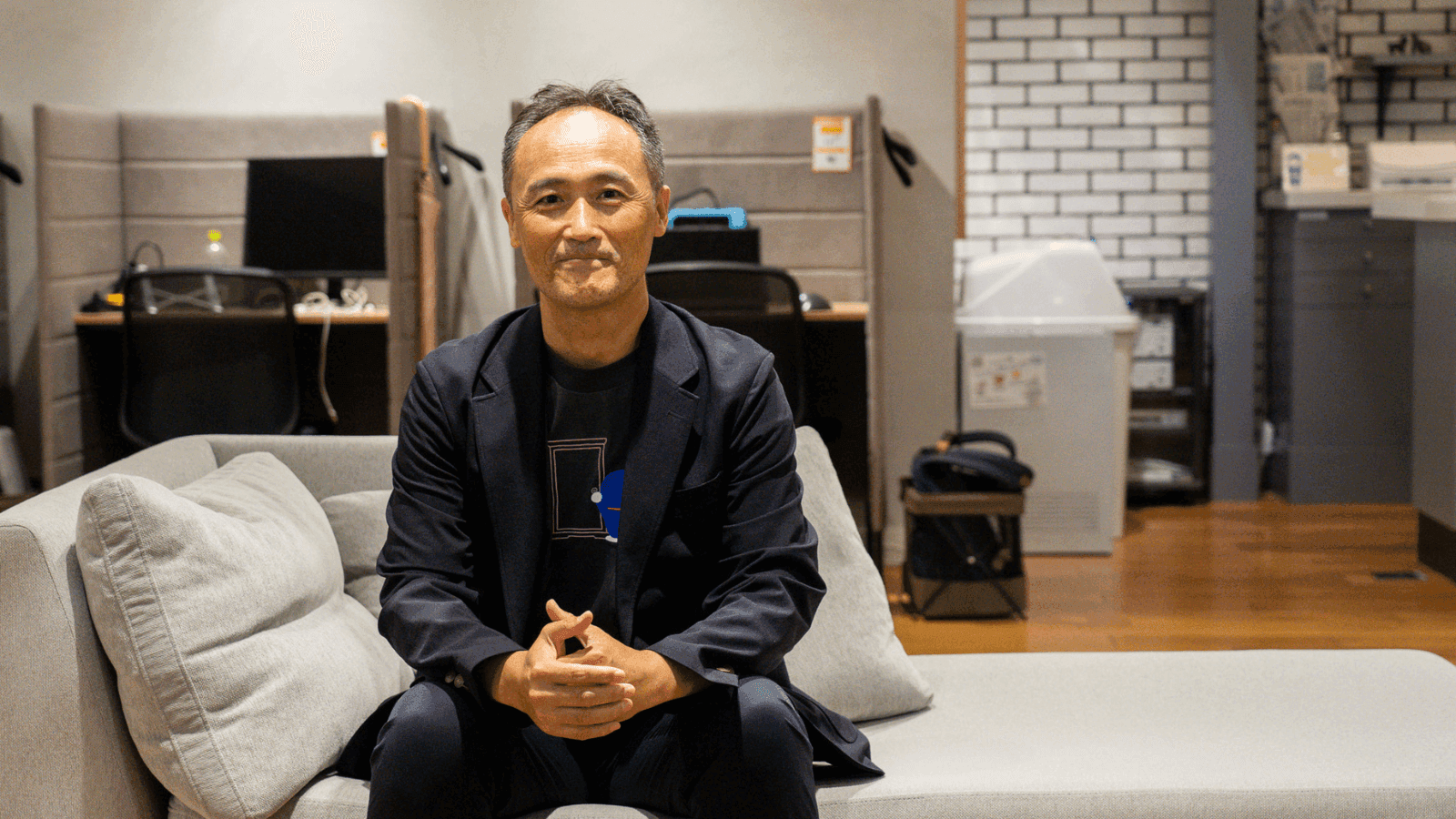
Please introduce yourself.
My name is Yusuke Sakai, and I serve as the CEO of MUSVI.
Originally, I worked in the field of wireless communication technologies—things like Wi-Fi and Bluetooth—when I worked at Sony I spent quite a bit of time holed up in what we called the radio room, a rather austere space, working on antenna design and related tasks.
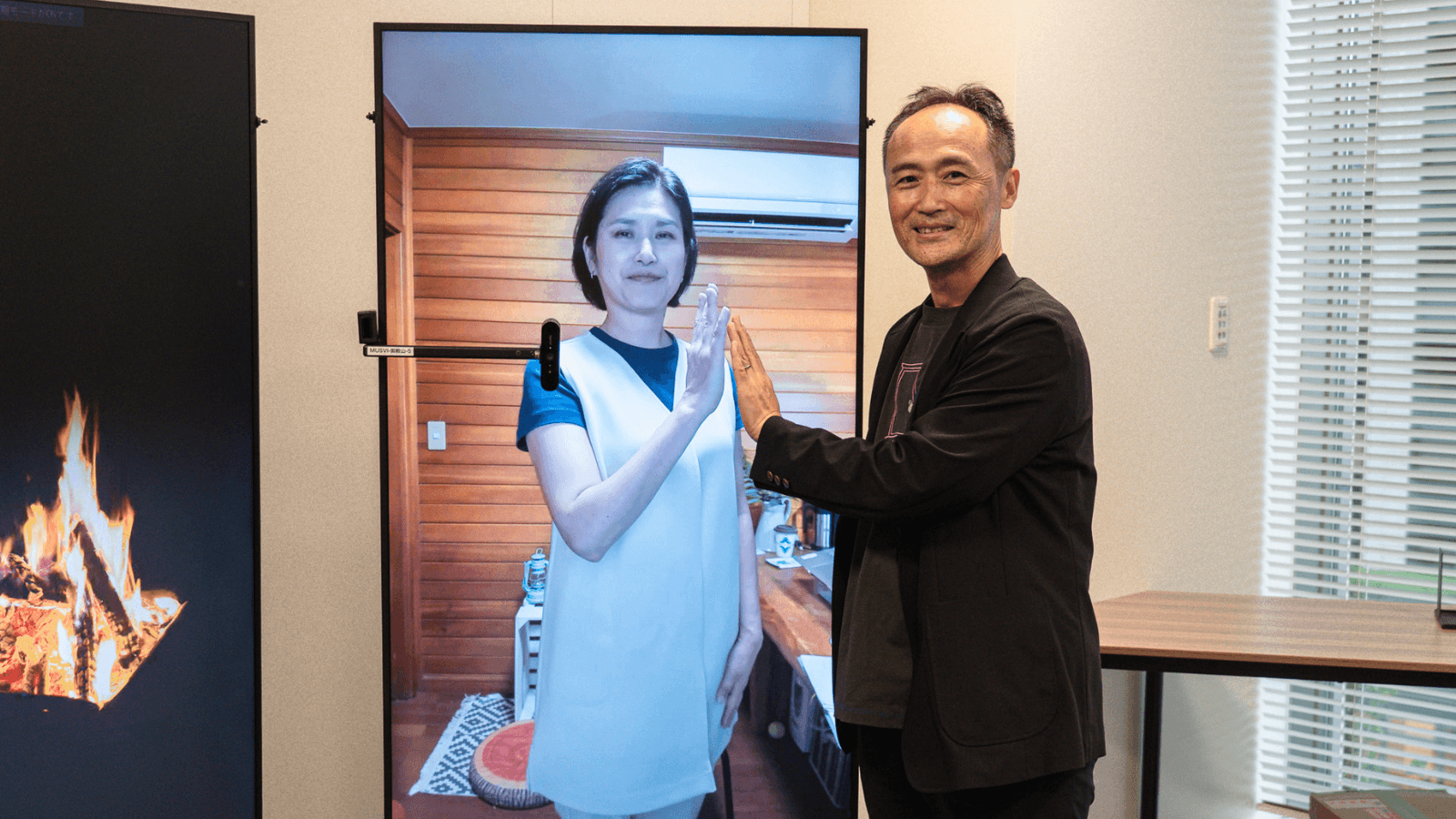
At MUSVI we develop a remote communication system called Mado (Japanese for ”window”), which integrates a large display, a camera, and a microphone. By connecting Mado units in different locations, we aim to create a form of communication where users can not only see the other person but also experience their voice and the atmosphere of the space—as if they were actually there.
How does MUSVI define the concept of “connecting people”?
We have a philosophy of “bringing lives closer.” By ‘bringing closer,’ we mean actually bridging the physical distance that separates us and truly bringing those life-like elements that are otherwise out of reach. In Japanese, “closeness”(chikaku) has a double meaning—it is a homophone for “bringing together” and “recognition.”
For us, it’s about having technology based on how humans actually function, making people feel that someone is really there, and if we could use that to bridge the distance between people—to bring their hearts closer together—that’s the idea that has become our core, fundamental keyword.
How did Mado come about?
I think the fact that I joined Sony is actually quite closely connected to the work I’m doing now. To give you some background, I joined Sony in 1999, and on that Sony application form, I wrote that I wanted to create something like a “window” that connects people and the world. On that application form—from about 27 years ago now—I was already allowed to propose that I wanted to pursue this kind of worldview. That vision must have seemed completely baffling coming from a new employee, but the people at Sony kept supporting me; saying things like, “this sounds interesting” or “let’s give it a shot,”which allowed me to continue my research.
The number of ideas that got rejected—the ones that never saw the light of day—started to pile up, but I didn’t give up.
I do think that within those large corporations, there’s an environment that makes it easier to take on challenges, and as a result of working so hard, they’ve released many products that have surprised the whole world. But I felt there were limits to pursuing that kind of thing within the company. To put it another way, I was allowed to do everything I possibly could within a Japanese company.
Japan has been very successful around the world, with large companies creating big projects with big budgets. But since around the ’90s, we’ve struggled to create something truly new. Especially since Apple came along, we’ve had a hard time creating products like that.
I really believe that the authentic technologies—the ones Sony has been nurturing all this time, involving things like video, audio, and human interaction—which we describe as “touching the heart”—are incredibly important.
So, I left the company and invested 100% of my life savings to figure out how to turn that into entirely new product features and possibilities.
In the end, Sony—specifically the current president, Mr. Totoki—agreed to invest in the company. This is actually quite rare, isn’t it? Normally, once you leave a company, you have to compete against the patents you filed yourself, so I think this would probably be completely incomprehensible from a Western perspective. However, Sony licensed all of the roughly 120 patents I’d been working on there, along with the underlying technology, and they invested in the company on the condition that they would provide funding but not interfere in the business decisions.
What kept you going all this time? What was your origin or driving force?
Ever since I was a kid, I’ve really loved traveling. As I traveled all over the world and around Japan, I found joy in meeting all kinds of people, and I really loved experiencing the smells and foods of places I was visiting for the first time—basically, I loved being exposed to different cultures. When I was a freshman in college, I actually went all the way out to the Scottish countryside and showed up unannounced at the home of that Scottish friend who had hosted me for a homestay in Japan before. Without an appointment. And since there was no public transportation, I actually hitchhiked there. I looked at the address on a Christmas card, knocked on the door, and my friend’s mom, whose name was Francis, came out. I still remember her face from that moment so clearly. She said, “Yusuke!” and gave me a big hug. I ended up staying with them for a month. I traveled around Scotland with just him and his dad. It was literally a journey of self-discovery.
It made me realize that the world isn’t that far away at all. It was like, if we just overcome our barriers, knock on the door, and introduce ourselves, this world is right there waiting for us. That was my formative experience, and I think that’s probably why I’m doing Mado in the first place.
How does Mado differ from other videocall platforms?
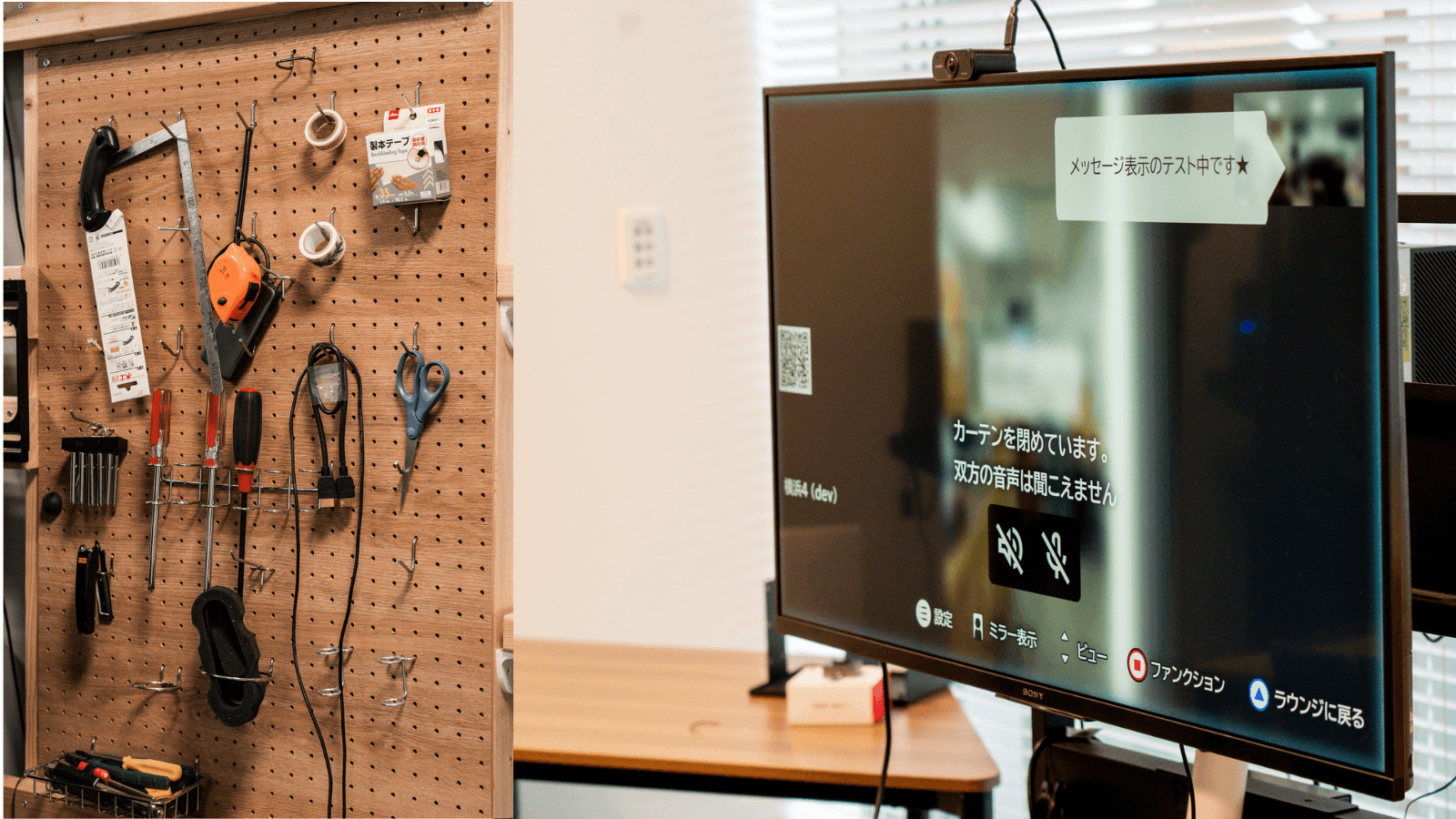
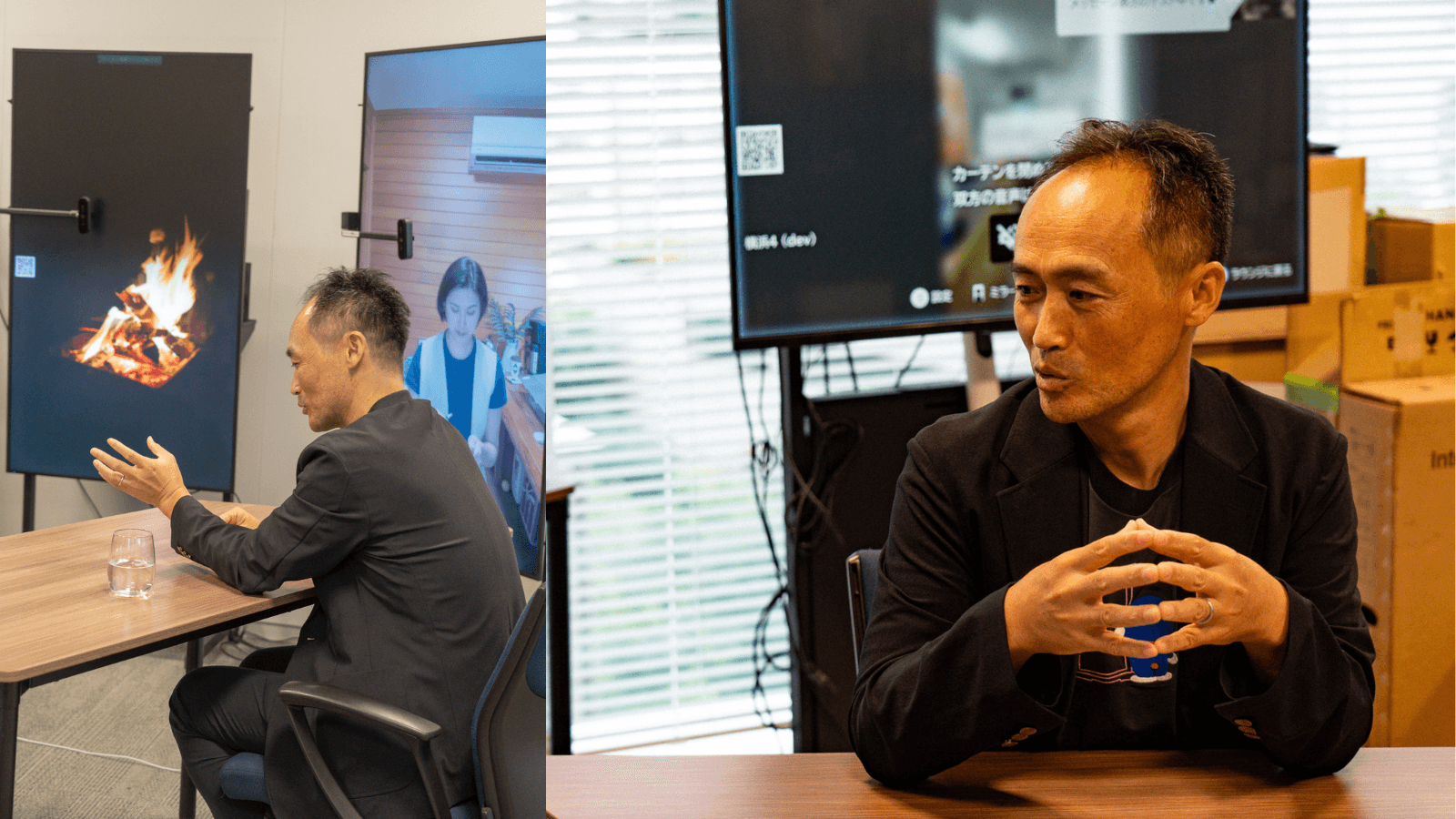
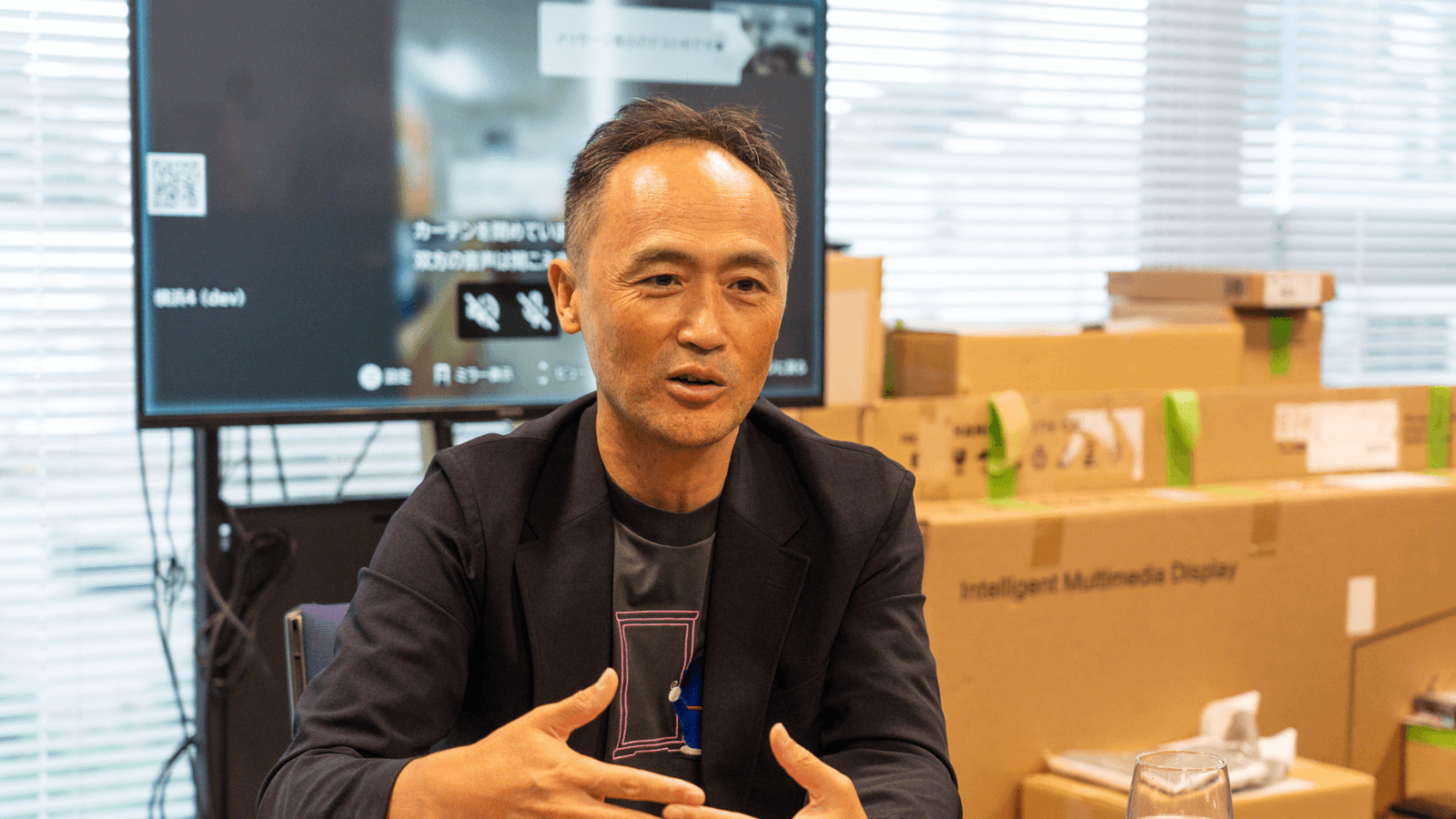
This window feature is actually pretty interesting. For example, when Ms. A (the musvi employee who joined the interview through the window) is taking a break, even just seeing that out-of-focus footage adds so much more warmth than having nothing at all—it really gives you a sense of her presence. It’s that sense of presence, that in-between space. People in the office now, when you close Mado it actually makes you feel incredibly lonely. We call this “window loss.” It’s like, when the window is there, you don’t really notice it, but when it’s gone, you feel this emptiness.
In a video conference room, where everyone just sits quietly and members listen to the department head speak, that’s one thing. With Mado, while there’s still a physical distance between people, the sense of connection within the space itself really brings us together. If we were just focusing on traditional efficiency, then yeah Zoom is fine, Slack is fine, text messages are fine. But we see limitations emerge.
It comes down to that final touch of warmth, or that sense of zero distance. I think there’s a worldview here that can only happen through a window—one that can’t be created without it. It’s not just about the business potential—it’s about the social significance, or the realization that this technology can truly help people in the world. When I think about that, it really gets me excited.
How are you spreading this way of thinking?
I think it was 2013 or 2012—back when Skype was the go-to for video conferencing, and Skype’s headquarters were in London. I just barged into the headquarters all by myself, showed them the prototype I’d built, and said, “Actually, I want to create a world where people all over the globe feel like they’re really right there in front of you—a world where we’re connected like this—and I want to put that inside Sony’s BRAVIA TVs. Could we work on this together with Skype?” Looking back now, it was a pretty reckless thing to do.
Basically, when you just dive in and try something like that, you usually don’t get taken seriously at first. But what made me incredibly happy was that—and this goes for Skype, Zoom, and even Cisco—there’s a tremendous sense of resonance with those engineers who are, as I call them, “window buddies”—people dedicated to connecting things.
Walkie-talkies used in the military, for example, aren’t really exciting—they’re more like a task you have to perform to complete a mission. But the people at Skype and similar companies don’t operate from that mindset. They’re driven by a desire to connect people in their everyday lives—to foster something warmer, something that can’t quite be put into words, like bonds or a sense of trust.
Have you heard of “Portals”? It was around 2015, I think. Huge window-like installations popped up all over the world—in places like New York—and they’d switch images every three minutes or so. I happened to stop by a town called Lublin in Poland on my way to Ukraine the other day, and I stumbled upon one without even meaning to. On the other side, it showed places like Brazil or Dublin, and when I waved, people on the other side came running over, going, “Whoa!” My device was falling apart and the camera lens was fogged up, but I was really moved that it was still there—I felt like I definitely share the same spirit with people like that.
Do you have a final message?
For me, “opening a window” means releasing the mental brakes that hold a person back. Basically, those brakes are inside our minds. “I know I could do it if I tried, but for some reason, I just can’t.” It feels like a door is shut inside your chest.
For example, even if you think you might be able to connect with Ukraine, you probably wouldn’t just go to some website, create a Zoom account, and try to talk to someone, would you? But once you can feel that “this window actually connects to Ukraine,” the brakes on your consciousness are released.
We’re working on “bringing lives closer together,” but I hope to take it one step further and break down the walls that exist in everyone’s hearts. Sometimes, people who used to say, “that’s absolutely impossible,” start saying, “I think we could do it if there were a window.”
So, rather than breaking down walls, I think it’s more about opening them up. Walls definitely exist, and they’re important too. But I hope this technology can create that sense of, “maybe this part could open up,” or “maybe we can make this work.” And then, we’ll turn walls all over the world into windows.