
Rethinking the end of life: startups reimagining death and remembrance in Japan


Around 1.59 million people die in Japan every year. As the population ages and more people live alone, the questions of how to meet the end of life, and how to remember those who have passed, are no longer ones that only some families face.
Funerals and burial have long been entrusted to local custom and to the family. As those foundations shift, a number of startups are approaching the end of life with new technologies and new ideas. This article introduces five of these initiatives and considers what they reveal about how shūkatsu, the Japanese practice of preparing for one's own death, is changing.
The five are SouSou, an app that uses Japan's national My Number Card to deliver a person's wishes after death; TalkMemorial.ai, which preserves the words of the deceased through AI; an AI memorial service and a metaverse cemetery run by a long-established funeral company; RETURN TO NATURE, a "circular burial" that returns remains to the forest; and SPACE NTK, which sends remains into space. None of them aims to process death more efficiently. Each, in its own way, seeks to stand beside both those who depart and those who remain.
Background: when "the family cares for the dying and mourns the dead" no longer holds
The numbers show how much the circumstances of death in Japan have changed. In 2025, 1,589,489 people died, slightly fewer than the postwar record set the year before but still more than twice the number of births (671,236) (nippon.com, 2026a).
One of the heaviest realities is dying alone. Of the bodies handled by police nationwide in 2025, 76,941 were people who died at home while living alone. The Cabinet Office estimates that 22,222 of them, found eight or more days after death, were likely socially isolated during their lives, a category it calls koritsushi, or "isolated death" (nippon.com, 2026b).
Businesses have emerged to support older people with no family to rely on. Akari Hosho, for example, works with lawyers and judicial scriveners to act as a personal guarantor when someone is admitted to a hospital or care facility, and to handle the affairs that follow death, including taking custody of the body (KEPPLE, 2025a). These are roles that families have traditionally filled, now taken on by society.
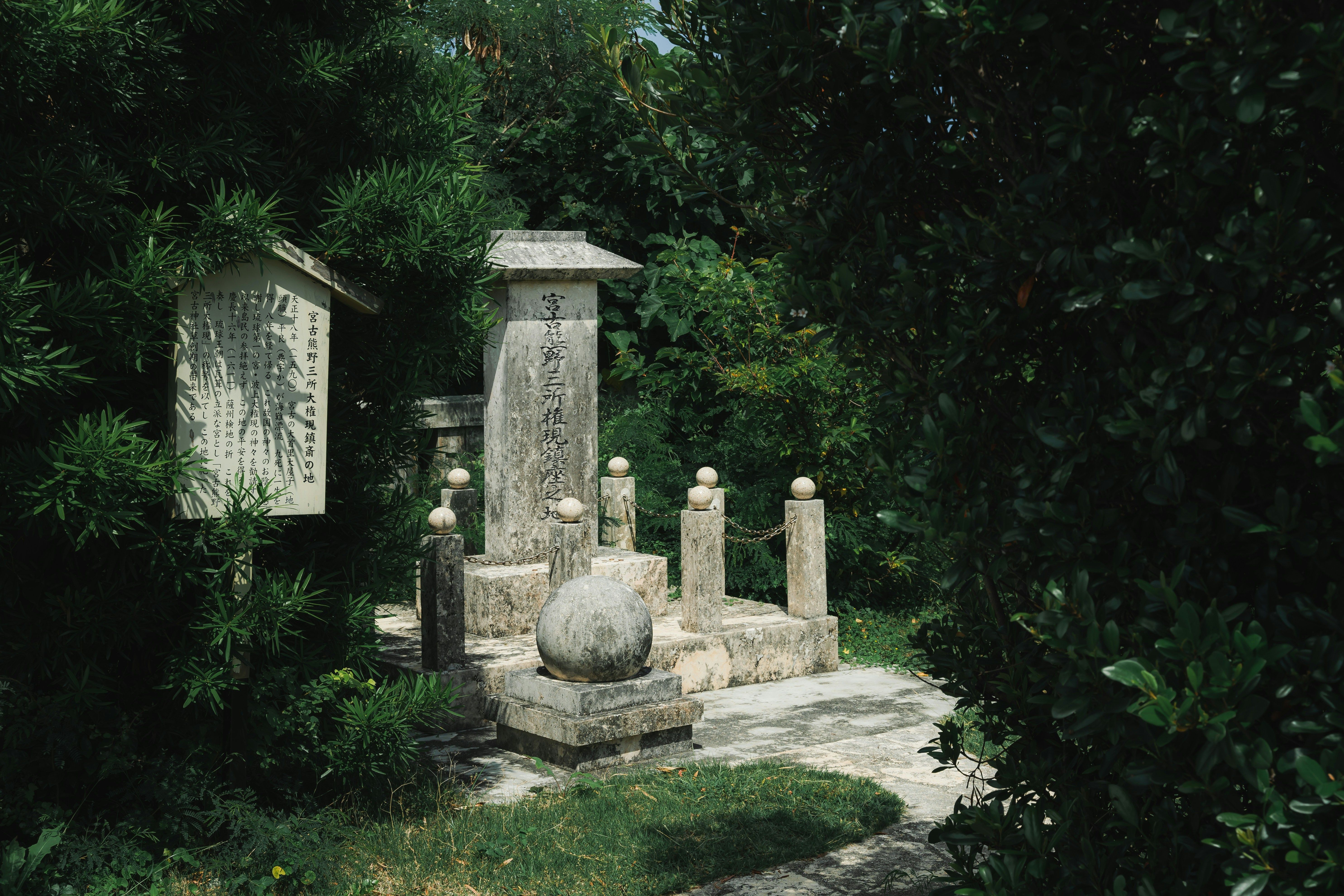
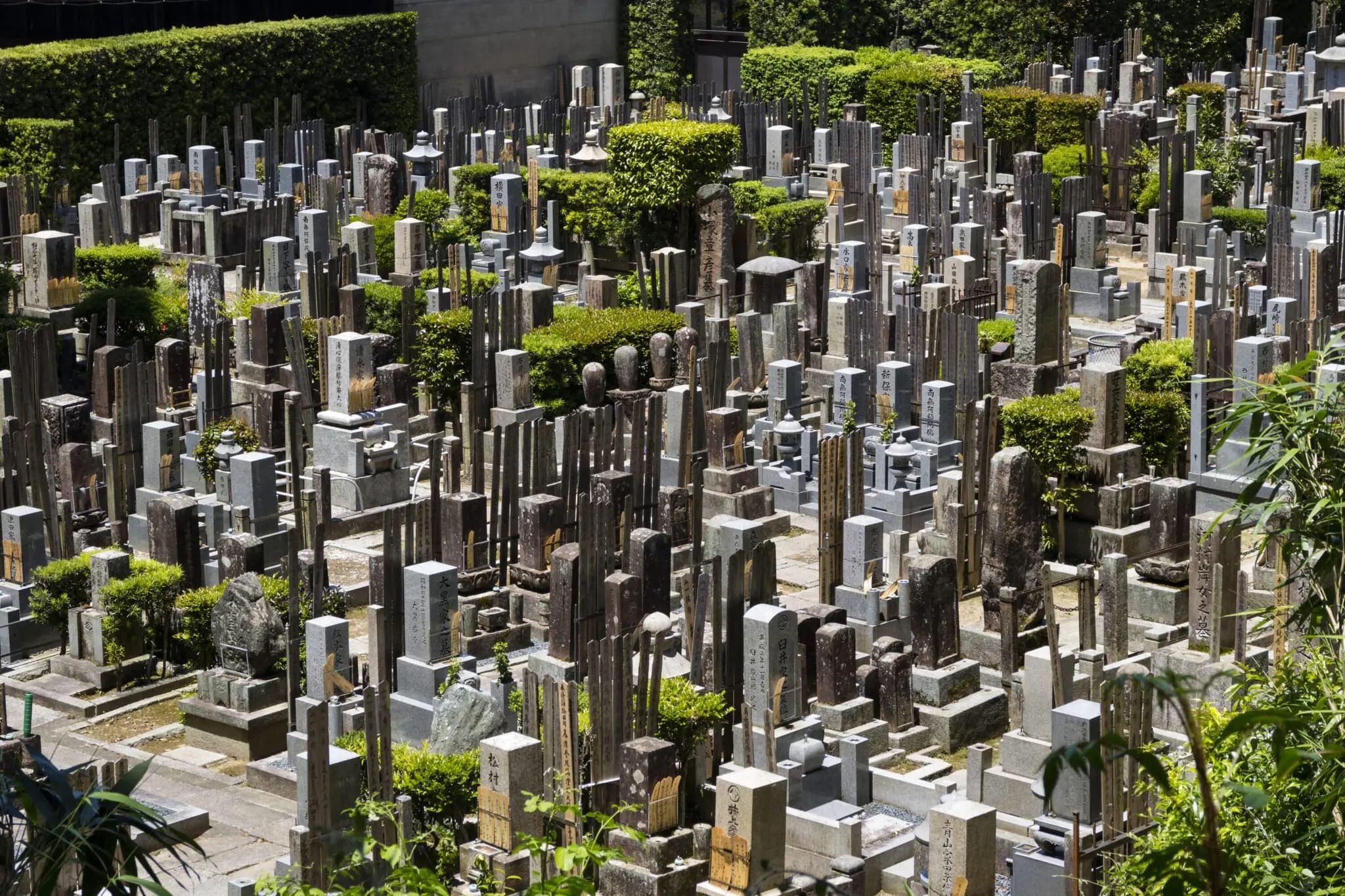
The forms of remembrance are also changing. The number of permits for relocating remains, required when closing or moving a family grave (a practice known as hakajimai), reached 166,000 in fiscal 2023, double the figure of a decade earlier (Yogen no Sho, 2025). A growing number of people, not wanting to burden their children and grandchildren, are reconsidering the very idea of inheriting the family grave.
The legal system has moved as well. In June 2026, Japan's Diet passed a revision to the Civil Code creating a "digital will" (formally, the hokan shōsho igon), which can be written on a computer or smartphone and stored by the Legal Affairs Bureau. It will take effect within three years of promulgation, changing a system that has assumed handwritten wills since the Meiji era (Meigi Henkō, 2026).
The five initiatives below are each responding to these changes in their own way.
SouSou
When someone dies, the family left behind faces a long list of procedures. Many of the deceased's contracts, from online banks and insurance to mobile phones, subscriptions and social media accounts, exist only in digital form, and often no one but the person themselves knew they existed.
SouSou is a digital end-of-life planning app that addresses this problem. It offers, free of charge, an "ending note" (a record of one's wishes and affairs), time-capsule letters to be delivered after death, and memorial pages. What sets it apart is that it uses the public personal authentication built into Japan's My Number Card, the national ID card, as the foundation for verifying identity (ASCII STARTUP, 2026).
The company describes three distinctive features. First, identity verification through the My Number Card proves that the wishes recorded truly belong to the user. Second, it uses information linked to the card to confirm a death digitally. Third, it connects with outside services, such as notifying insurers of a claim, cancelling a mobile contract or deleting social media accounts, to simplify the procedures that follow a death (Sogyo Techo, 2025).
The company's aim is end-of-life planning that does not simply "leave" wishes behind but "delivers" them to the right people at the right time. In June 2026, its membership passed 10,000.
Founder and CEO Kazusa Kusaka worked on public-sector digitalization at a major consulting firm. After losing his father, he founded the company in 2022. He has said that the experience of handling the procedures after his father's death, and seeing how much difficulty arose around information, was his starting point (Sogyo Techo, 2026). In July 2025, the company raised 180 million yen, bringing its total funding to about 300 million yen.
TalkMemorial.ai
When a loved one is lost suddenly, the words left unsaid can linger for years. TalkMemorial.ai lets bereaved families converse, through a smartphone or computer, with an "AI deceased" generated from photos, videos, voice recordings and an account of the person's life. Families can register up to 500,000 characters of the person's history and memories, from which the AI speaks (NIUSIA, 2025).
The AI solutions company NIUSIA launched the service in December 2024. In surveys during development, 80 to 90 percent of respondents said such a service was unnecessary. Yet within a little over a year, it had received more than 100 requests. CEO Yukihiro Kashiwaguchi has said the service is not meant for everyone, but offers an option for the minority of bereaved people who cannot come to terms with their grief. Many of those who use it have lost a spouse or a child (TechNews, 2026).
The company has drawn a careful line. The AI deceased will not talk about anything that happened after the person's death. If the deceased's time were allowed to move forward alongside the present, Kashiwaguchi explains, the family could become detached from reality and fall into an unhealthy dependence. The service is designed not to keep people using it for as long as possible, but to help families accept their farewell.
In 2026, the company also launched PetMemory.ai, which helps owners hold on to the memories of pets they have lost.
Sagami Tenrei nara mata, aeru
New approaches to remembrance are not limited to startups. Alpha Club Musashino, a ceremonial services company founded in 1962 runs the funeral brand Sagami Tenrei in Saitama Prefecture. While deeply rooted in community and tradition, it has started to actively branch out and embraced technology in memorial services through multiple company aquisitions.
These services now form part of a wider series the company calls Sagami Tenrei nara mata, aeru ("With Sagami Tenrei, we can meet again"). Its starting point is a quiet change in Japanese life: fewer people return to their family homes for Obon, the summer festival for honoring ancestors, and as graves and household Buddhist altars are closed, the very places where people once put their hands together in prayer are disappearing. The longing to see the deceased once more, the company argues, has not changed (Alpha Club Musashino, 2026).
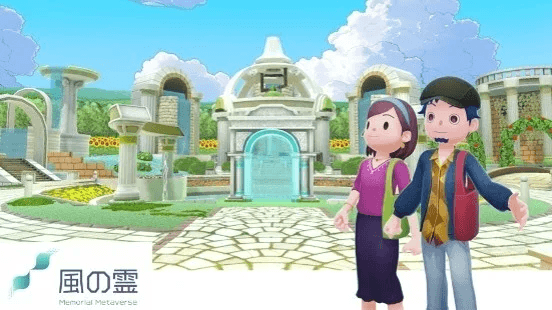
One example is the metaverse cemetery Kaze no Rei ("Spirit of the Wind"). The company took over an online cemetery that another firm had launched in 2021. Digitized portraits of the deceased are enshrined in a virtual mausoleum, where family and friends can visit as avatars, pay their respects at the grave and take part in memorial services (Forbes JAPAN, 2023). It offers a place of remembrance to relatives who live far away or who find it difficult to travel.
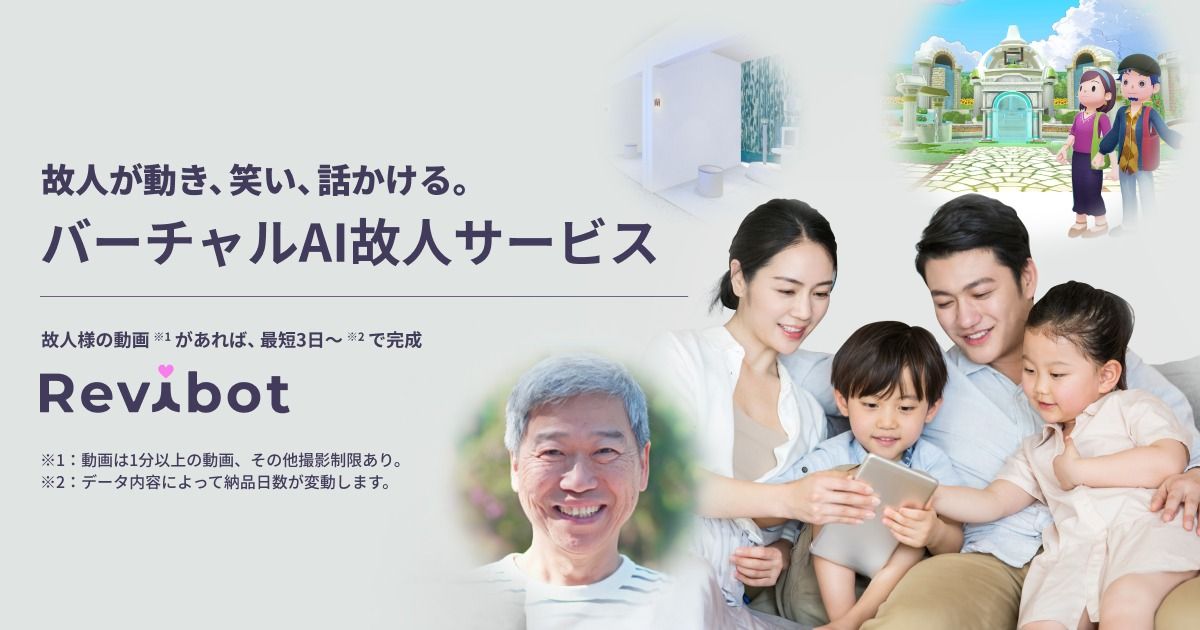
Another is Revibot, an AI memorial service launched in December 2024. It draws on photos and home videos to capture the person's expressions, voice and manner of speaking, and uses generative AI to create video in which they speak. It was produced by FLATBOYS, a startup that specializes in AI avatars. The company envisions it being shown on the memorial portrait screens of columbaria or at funeral altars, where the deceased can greet those who have come to mourn (ASCII STARTUP, 2024).
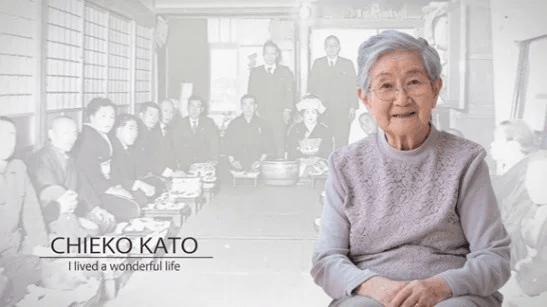
Drawing on the wedding video expertise of its subsidiary Retromeme, which produces around 5,000 wedding films a year, Alpha Club Musashino makes films that look back on the life of the deceased, using AI to colorize and animate old photographs. One version, My self history, is screened at funerals; another, Kioku Note ("memory notebook"), turns the family's letters to the deceased into film for gatherings such as Obon (Alpha Club Musashino, 2025a). The memorial movies are now used in more than 300 funerals a month, and 97.5 percent of users surveyed by the company said they were satisfied (Alpha Club Musashino, 2026).
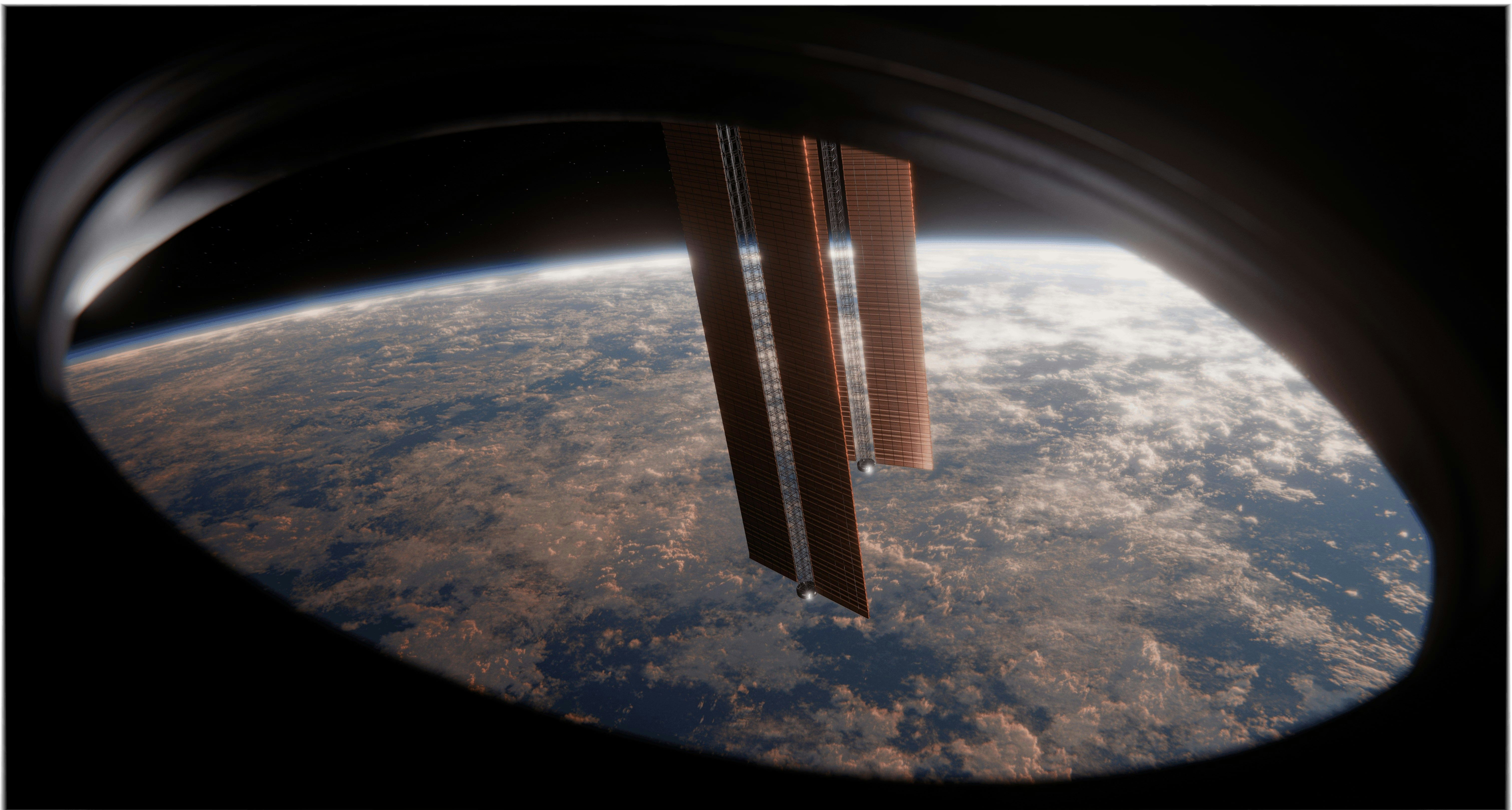
In partnership with SPACE NTK, Alpha Club Musashino offers Space voyage α, in which remains are placed aboard a satellite that circles the Earth for several years before re-entering the atmosphere and burning up as a shooting star. Plans start at 1.1 million yen, with an option to send part of the remains to the surface of the Moon (Alpha Club Musashino, 2025).

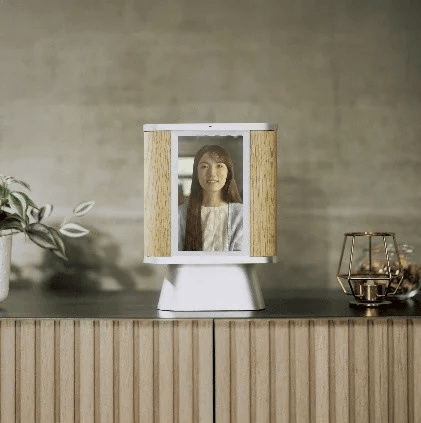
In 2025 Alpha Club Musashino acquired the rights to COHACO, a "smart butsudan" developed by the startup COHACO Inc., founded in December 2024. Designed to fit modern homes without a dedicated altar room, it displays photos of the deceased when their name is spoken before it, sounds the orin prayer bell at a touch, holds up to four memorial tablets, and can play messages the deceased recorded in life on a chosen date, such as an anniversary. Explaining the acquisition, the company said that precisely because households are giving up their altars, it chose to stake its future on the altar itself, as a way to restore a place for the heart in Japanese homes (Alpha Club Musashino, 2025).
In releasing the service, the operators set up an ethics committee that includes experts from universities and companies, and committed to rolling it out in stages while considering religious views and views on life and death. Alpha Club Musashino has also decided to invest in SouSou, extending its efforts to the management of digital belongings left behind by the deceased (Monthly Funeral Business, 2025). The significance of this case lies in seeing a company that has long carried a region's rituals exploring new forms of memorial while adopting new technology.
RETURN TO NATURE

No gravestone, no marker: the remains are returned to the soil of the forest. In the "circular burial" (junkansō) service RETURN TO NATURE, cremated remains are ground into a fine powder and buried in the forest soil. Burials are carried out under the supervision of soil science experts, and over time the remains nourish trees and microorganisms, becoming part of the forest's cycle (KEPPLE, 2025b).
The company works with Buddhist temples, using forests owned by the temples as burial grounds. Its sites are Nose Myōkensan, a well-known sacred mountain in the Kansai region, and Manoji, a temple in Chiba Prefecture. Part of its revenue goes to maintaining and regenerating the forests and to donations to forest conservation groups. People who sign up in advance can sit on the benches and decks set up in the forest and spend time in the place where they will one day return. Pre-arranged contracts start at 480,000 yen, with no ongoing maintenance fees (KEPPLE, 2024).
Founder and CEO Yuki Koike worked for 15 years as a copywriter in advertising. Through her own experience of a family funeral and of relocating her parents' grave, she came to envision a business connecting death with the regeneration of forests. A 2025 survey by the company found that one in five people in their sixties wished for a natural burial. In October 2025, the company raised 250 million yen in a pre-Series A round, bringing its total funding to 309 million yen (KEPPLE, 2025b).
Many people have no one to inherit their grave, or find it hard to keep caring for one far away. In the face of these realities, circular burial does more than remove the burden of upkeep. It gives a new meaning to the end of life: that one's passing can help grow a forest for the generations to come.
SPACE NTK
"When people die, they become stars." Many in Japan have found comfort in these words when parting with someone they love. SPACE NTK, founded in 2017, is trying to turn that wish into something real.
The company runs a business it calls "Space SOH," which carries remains and messages into space. The letters stand for four Japanese words pronounced sō: 葬, sending the deceased to space; 想, entrusting one's feelings for them; 送, delivering things one wishes to leave for the future; and 奏, letting singing voices and music resound in space.
On July 7, 2026, the night of Tanabata, the Japanese star festival, the third of the company's MAGOKORO satellites was launched aboard a SpaceX Falcon 9 rocket. Along with the remains of eight people, the satellite carried message cards, recordings of singing voices and drawings by children, entrusted by their families (SPACE NTK, 2026).
Reflecting on the launch, CEO Tomoko Kasai said that the grief of losing a loved one does not quickly fade, but that being able to look up at the night sky and feel "they are still watching over us" may bring some comfort to those left behind. The company is open to partnerships with funeral homes, temples and cemeteries, and Alpha Club Musashino offers its space burials to families under the name Space voyage α (Alpha Club Musashino, 2025c). The next launch is planned for the second half of 2027.
What these five initiatives reveal about end-of-life planning in Japan
The five initiatives differ in method and in field. Seen together, however, they show how attitudes toward the end of life in Japan are changing.
1. Society and the individual take on roles once left to the family
SouSou aims to build a system in which a person's wishes reach the right people reliably, without depending on the family's memory or guesswork. As more older people live alone or have no close relatives, it is becoming difficult to leave end-of-life care and the procedures after death to the family alone. A shift is under way toward people preparing for themselves while they are alive, supported by systems in society.
2. The grave: from something inherited to something chosen
Circular burial, the metaverse cemetery and space burial all offer places of remembrance that differ from the family grave tended by descendants across generations. Behind the doubling of grave closures over the past decade lies a wish not to leave a burden for the next generation. These new options respond to that wish while ensuring that a place to remember the deceased is not lost. Tree burial (jumokusō), the broader category to which circular burial belongs, is said to account for 40 to 50 percent of new grave purchases according to various surveys (Dai-ichi Life Research Institute, n.d.).
3. From efficient procedures to care for the heart
What AI memorials and space burial address is not paperwork but the hearts of those left behind. TalkMemorial.ai is designed around the family's farewell; SPACE NTK seeks to create a new place of prayer in the night sky. The role of technology is expanding toward standing beside people in their grief.
4. Long-established institutions working with startups
Funeral and burial practices are deeply tied to local custom and religious views. at FOREST works with temples to use their forests as burial grounds, and Alpha Club Musashino is pursuing new forms of memorial through its investment in SouSou and its collaboration with FLATBOYS. Partnerships between established players, who hold trust and a customer base, and startups, who bring new technology and ideas, are key to rooting these initiatives in society.
5. A loose relationship with religion, and room for diverse forms of remembrance
Japan is often described as a non-religious country. In a 2018 survey by the NHK Broadcasting Culture Research Institute, conducted as part of the International Social Survey Programme, 62 percent of respondents said they did not follow any religion, while 36 percent said they did (Manabe, 2022). Yet the same body of research suggests that this "non-religious" majority includes many people who hold a looser, folk spirituality, such as a sense that the gods dwell in nature, rather than belief in a particular doctrine. The NHK study also found, however, that such sensibilities are themselves weakening (Kobayashi, 2019).
This loose relationship with institutional religion may help explain why such varied forms of remembrance, from forests to the stars, can find acceptance in Japan. At the same time, it would be a mistake to see these new forms as a departure from religion altogether. Tree burial itself was created in 1999 by Chisaka Genpō, the head priest of a Zen Buddhist temple in Iwate Prefecture, partly as a way to restore damaged woodland (Boret, 2016). at FOREST likewise carries out its burials in temple forests, and Alpha Club Musashino has chosen to bring AI into the household Buddhist altar itself rather than replace it. Rather than replacing Buddhist practice, these new options are emerging alongside it, as temples themselves adapt to a changing society. In Japan, it seems, what is changing is less people's faith than the forms through which they remember.

Technology and respect for the dead
It is not yet clear whether these initiatives will be widely accepted. A long-running column in INTERNET Watch, which has covered the relationship between digital technology and death for many years, notes that virtual cemeteries and digital recreations of the deceased are not easily accepted in Japan, and that there is not yet a domestic example of such a memorial tool succeeding commercially (INTERNET Watch, 2024).
AI memorials in particular raise weighty questions: how to consider the consent of the deceased, and how such services affect the grief of those left behind. That the companies introduced here have set up ethics committees, or drawn a firm line against letting an AI speak of events after a person's death, suggests that what is being tested is not the technology itself but respect for the deceased and their families.
The end of a life, and the remembrance that follows, are deeply personal and deeply rooted in culture. The initiatives emerging in Japan, a society now facing an era of many deaths, are not tools for handling death efficiently. They are new options that let each person choose an end that feels true to them, and let those left behind go on remembering the people they love. Quietly, they are beginning to spread.