
Newsletter Signup
Join Our Community!
Stay updated with the latest news, exclusive insights, and more.
Stay updated with the latest news, exclusive insights, and more.
To see how we may use your information, take a look at our privacy policy.

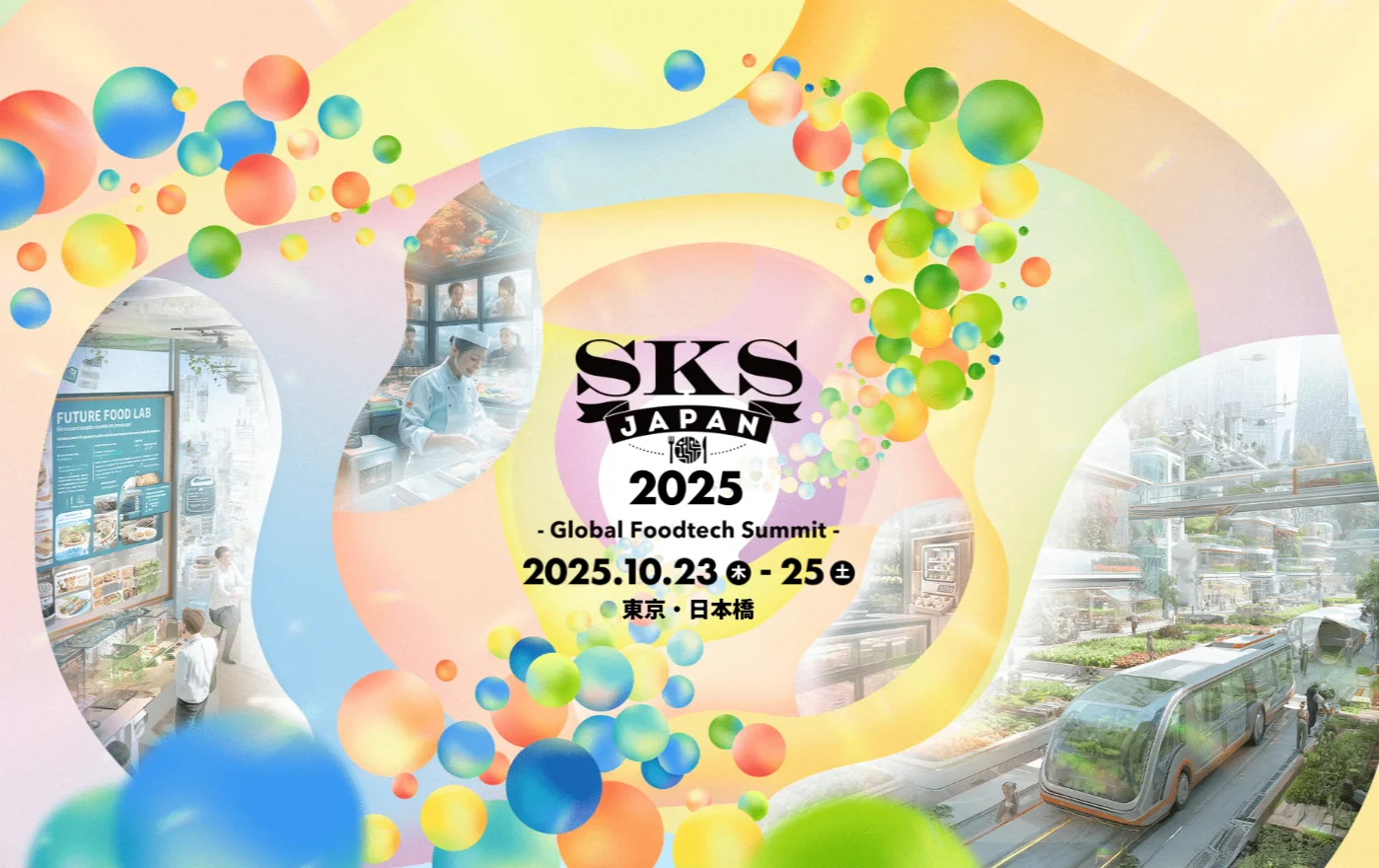
On October 24th, Blackbox attended SKS JAPAN 2025, a specialized conference for food and agriculture innovators, which was held in Nihonbashi, Tokyo. Startups from the agritech field gathered to discuss the future of food and agriculture and connect with other stakeholders, such as entrepreneurs, VCs, and corporations from various sectors.
The venue was filled with energy as around 30 companies showcased their solutions throughout the spacious exhibition hall. I had the opportunity to speak with several exhibitors in depth—sometimes while sampling karaage made with meat alternatives and a delicious high-protein smoothie.
Japan’s food and agriculture industry is facing multiple challenges today. Large quantities of still-edible food are discarded each year, while many local producers struggle to share the value of Japanese ingredients and culinary traditions with global audiences. At the same time, access to plant-based and vegan-friendly options remains limited, which reveals gaps in both consumer awareness and infrastructure. These issues indicate the urgent need for solutions that connect sustainability, technology, and culture in the food sector.
SKS JAPAN fosters collaboration that transcends sectors and borders by gathering startups, corporations, researchers, and policymakers from around the world, creating an open environment for dialogue and co-creation. Topics include the global foodtech landscape, Japan’s evolving ecosystem, and regenerative approaches that go beyond sustainability to build resilient and cross-industry food networks.
Throughout Nihonbashi, exhibitions and showcases featured cutting-edge technologies, including meat alternatives, smart agriculture, and digital food platforms, which illustrated how new value can be unlocked in the food distribution.
Among the many exhibitors at SKS JAPAN 2025, we had the opportunity to speak directly with several startups and learn about their visions for expanding their businesses overseas. Here are some of the companies we interviewed during the event.
Floatmeal is a Hokkaido-based FoodTech startup developing patented microbial technology for sustainable food production. Floatmeal is working to stably produce Wolffia, which is an exceptionally high-protein, nutrient-rich plant, using its proprietary method. We had the chance to try Apple Ginger Wolffia Juice with their flagship product, Powdered Wolffia. Initial reservations were swiftly replaced by pleasant surprise; a refreshing apple-ginger flavor with a hint of matcha, with no bitterness or odor. It was so tasty that we found ourselves wanting more!
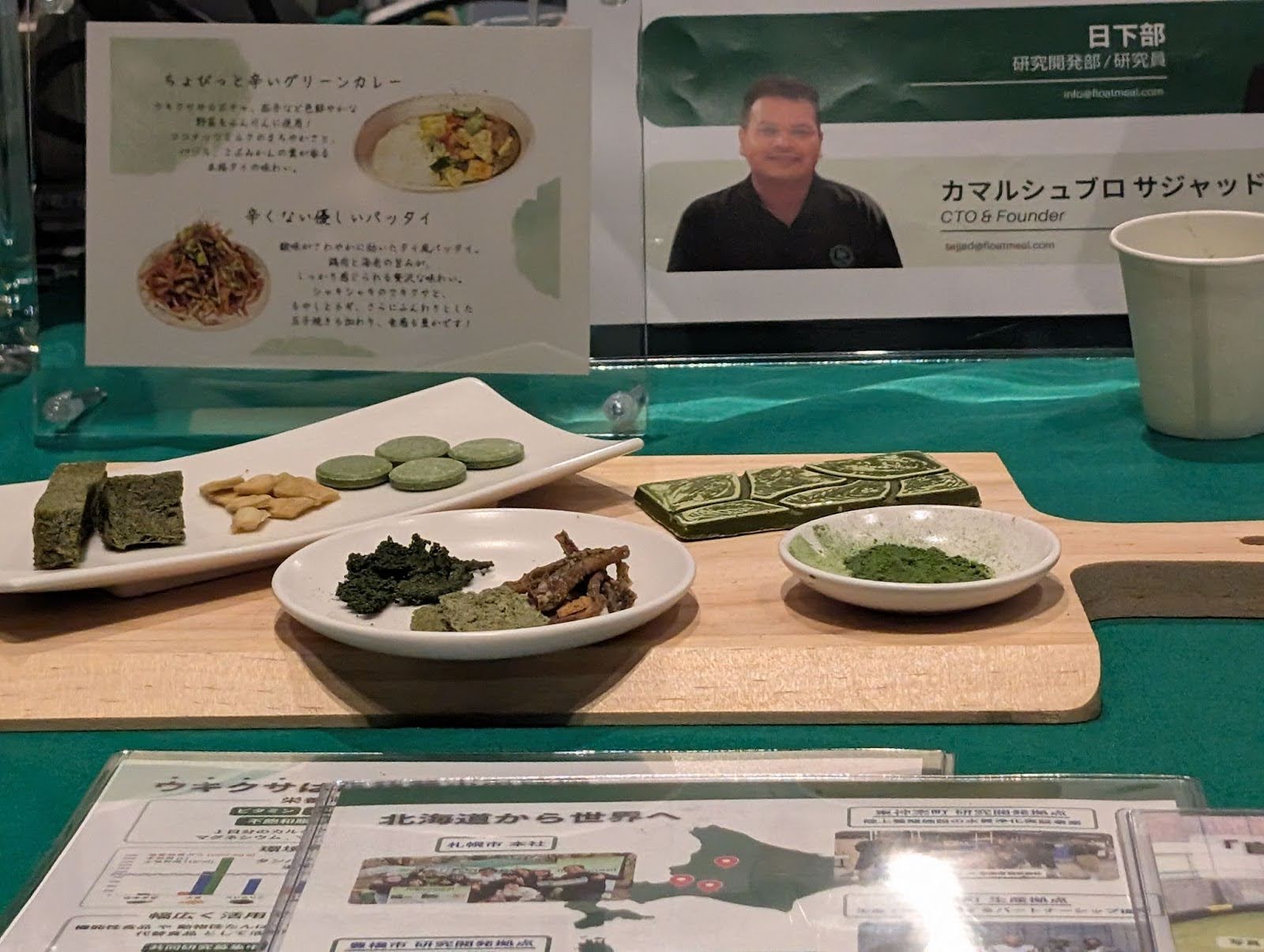
We also spoke with Floatmeal’s CEO, Moana Kitamura, about their global expansion. The company is entering its next growth phase, planning to expand production bases to warmer regions such as Thailand and Bangladesh. With an eye on Southeast Asia, particularly Thailand, Floatmeal envisions scaling its technology globally, with long-term plans to extend its market reach to Europe and the United States.
Fermenstation is taking on the challenge of building a circular economy through advanced fermentation technology. Using its proprietary process, Fermenstation upcycles unused resources like rice into ingredients for soap, or feed for chickens and cows.

When it comes to overseas expansion, the team expressed a strong interest in the US market, noting that in the US there’s a growing tendency to view waste from manufacturing and agriculture not as waste but as an asset—perfectly aligning with Fermenstation’s motto of “waste to resource.” By transforming industrial and agricultural waste into usable materials, the company sees plenty of potential for collaboration and growth in the American market.
Fit & Recovery is a company specializing in ultra-fine pulverization technology, reducing particles to sizes smaller than ever before. Fit & Recovery produces and sells high-quality brown rice flour that stands out for its smooth texture and versatility, with the ability to contain more water, using the pulverization process. We learned that their innovation also ties in with Japan’s national initiative to boost rice exports. By increasing the number of processed rice-based products made possible through Fit & Recovery’s technology, the company would contribute to the government’s broader vision of promoting Japanese rice to global markets. On the technical side, Fit & Recovery holds patents for its processing technology, which can also be applied to other industries such as metals and pharmaceuticals. Looking ahead, while they are currently focused on expanding overseas sales of their processed powder products, the company is also considering exporting the technology itself abroad more in the future.
Byte Bites 3D food-printing startup, printing fully edible 3D objects from a variety of ingredients. Byte Bites uses its team’s deep expertise in both food and 3D printing primarily for development testing and product prototyping, collaborating with major Japanese companies such as ITO EN, one of Japan’s leading green tea manufacturers.
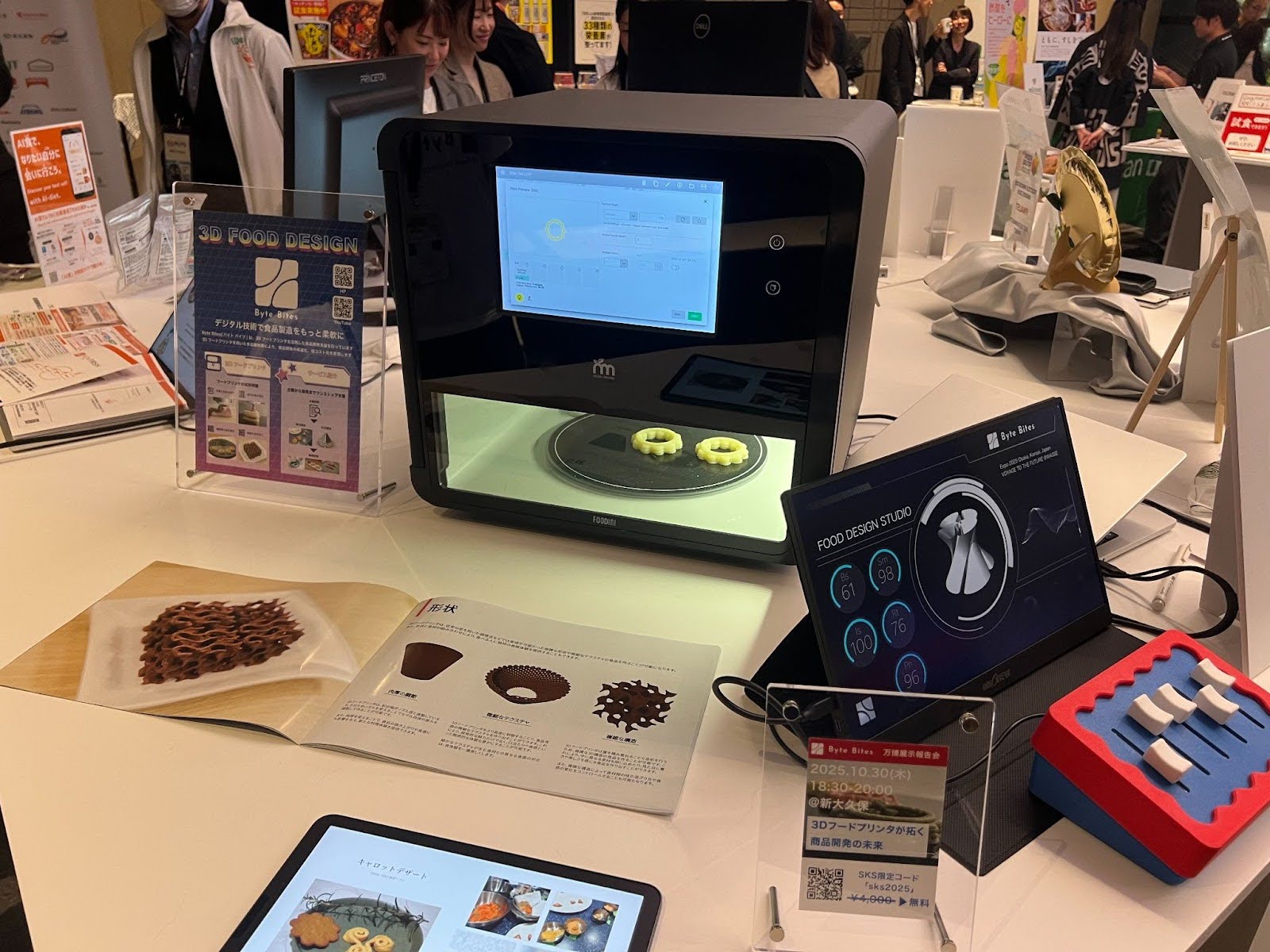
For now, the company is focused on expanding its client base within Japan. However, Byte Bites sees strong potential for international expansion in the future.
Deats Food Planning produces an upcycled meat alternative made from konjac blended with soy pulp. They have forged partnerships with high-profile clients such as ANA, Kappa Sushi, and Expo 2025 Osaka. However, with relatively limited domestic demand for plant-based foods, the company is now strongly focused on expanding into overseas markets.
At the event, we had the chance to sample Deats’ fish-fry product made with their alternative meat. Deats’ product had a pleasantly chewy texture and authentic flavor that closely resembled real meat.
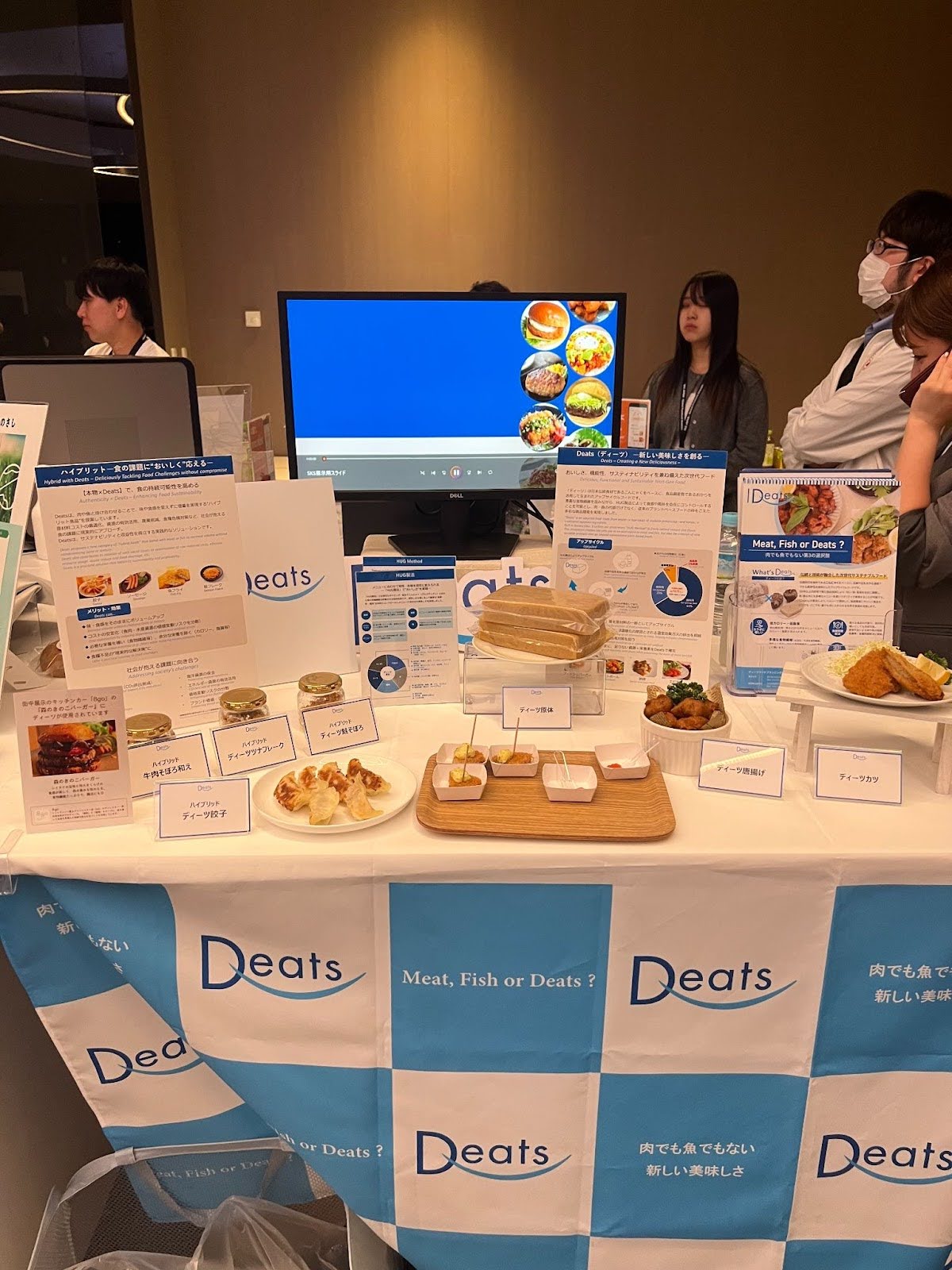
According to the company’s PR representative, Deats is particularly eager to enter markets such as the US West Coast, Australia, and Europe. However, high travel and promotion costs remain major challenges for scaling into markets like Europe and the US, in spite of the possible market.
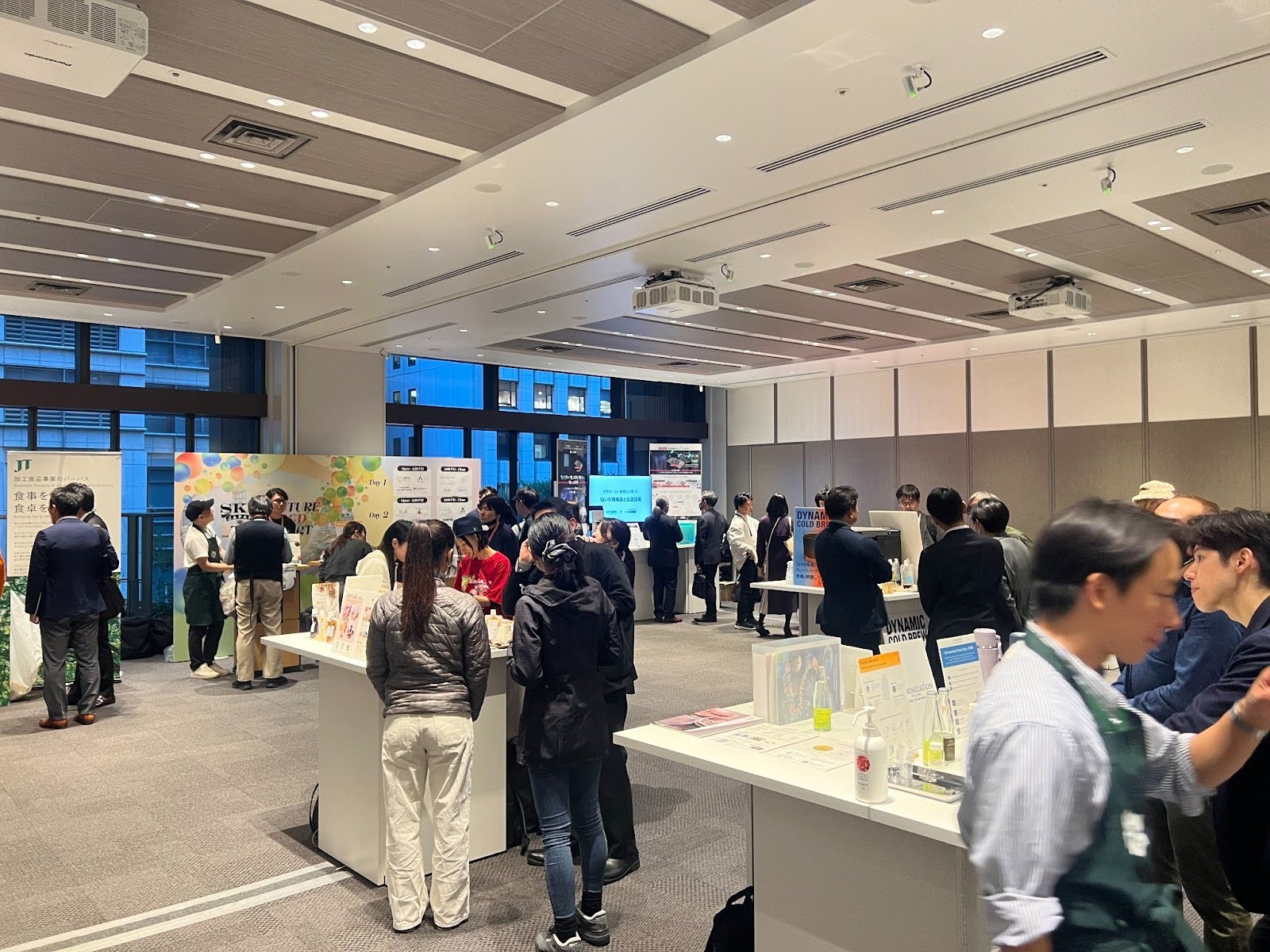
AgriTech startups can seem a little intimidating, often involving complex scientific and technical concepts as their core principles. However, the exhibitors at SKS JAPAN were all able to clearly and simply explain their products and technologies—whether it was fine pulverization or fermentation—in a friendly and engaging manner.
What also impressed was the shared sense of purpose among the companies. Many were driven by a passion to tackle Japan’s pressing challenges, such as the shortage of young farmers and the issue of food waste, while also striving to share Japan’s food culture and technology with the world. At the same time, they acknowledged the barriers they face, including Japan’s shrinking domestic market and the difficulties of global expansion due to limited human, financial, and linguistic resources.




.png)