He Screamed a Founder's Name on a San Francisco Street. Here's Why That Matters for Japan's Startup Scene.

Let me paint you a picture. A 22-year-old Japanese university student is standing on a street in San Francisco, shouting a startup founder's name into the air. Five times. At full volume. Because the guy wouldn't answer his cold calls, and knocking on the office door didn't work either.
If you've spent any time in Japan—where even making eye contact with a stranger on the train is considered a borderline act of aggression—you'll understand how profoundly not Japanese this behavior is. But for Kensuke, the startup relations lead at Takeoff Tokyo, it was simply the logical next step. He'd flown twelve hours to meet this person. He wasn't going home without a conversation.
The founder came outside. They talked. Kensuke posted the story on X. It got 350,000 views.
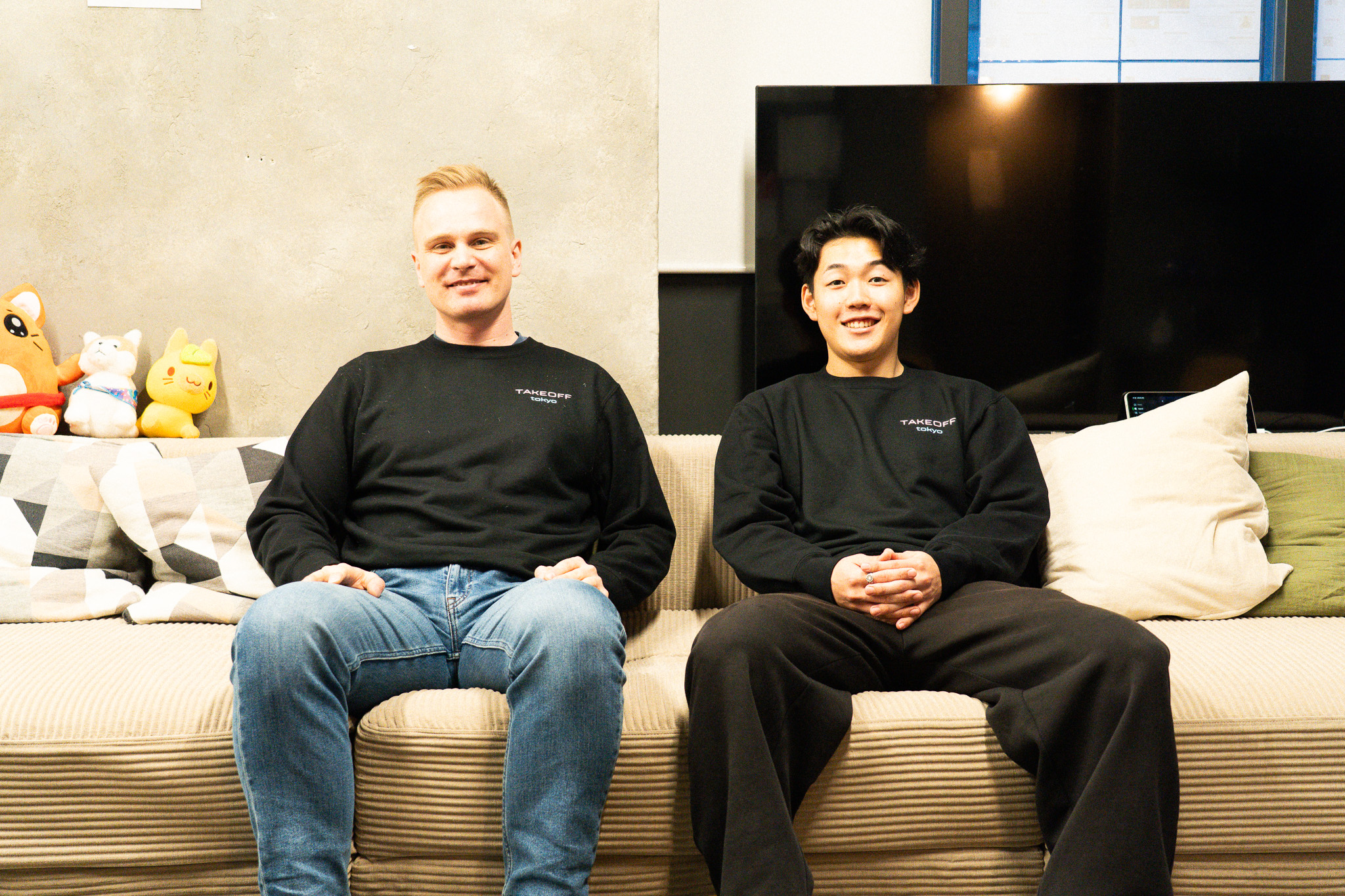
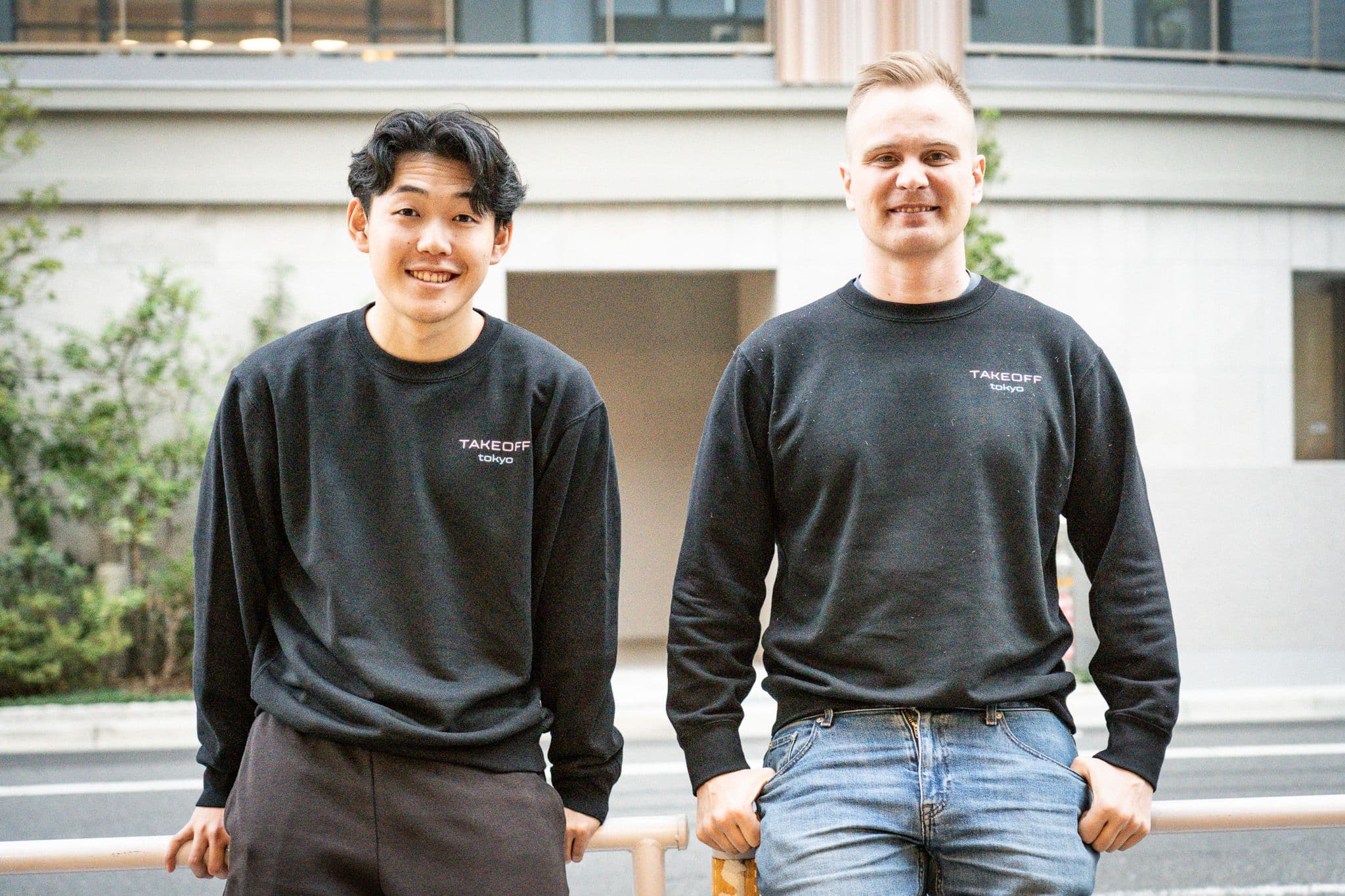
We sat down with Kensuke and Antti Sonninen—the Finnish founder and CEO of Takeoff Tokyo—over coffee in Shibuya to talk about why Japan's startup ecosystem feels stuck, why the country's sharpest young talent keeps leaving, and how a deceptively simple language rule might be the most radical thing happening in Japanese business right now.
(Spoiler: it involves banning polite speech.)
The Finn who brought Angry Birds to Japan and never left
You might know Antti Sonninen from Slush Tokyo, the massive startup conference he co-founded and ran until 2018. Before that, he was Rovio Entertainment's Japan country manager—yes, the Angry Birds people—which is how a Finnish engineer ended up spending thirteen years in Tokyo and counting.
It was during his Rovio days that Antti started noticing something that would eventually become his obsession. He'd regularly bring foreign tech executives to meet Japanese startup founders, and the same scene would play out every time.
"The Japanese founder would have this incredibly impressive business card. Multiple titles. Very serious. But when I'd introduce them to someone from Silicon Valley operating at literally ten times their scale, they'd just go: 'Sorry, please, no English.'" He pauses. "They hadn't spoken a single word of English yet."
Here's where it gets interesting: it wasn't that they couldn't speak English. It was that demonstrating the ability would be seen as showing up their seniors—a social crime far worse, in the Japanese business world, than missing a potentially life-changing conversation with a global investor.
"I kept seeing this pattern," Antti says. "Young, talented people deliberately performing incompetence to protect someone else's feelings. And I thought—oh, this is why we're heading for forty lost years."
[You can read our one-on-one interview with him from two years ago here.]
"I genuinely questioned my life choices"
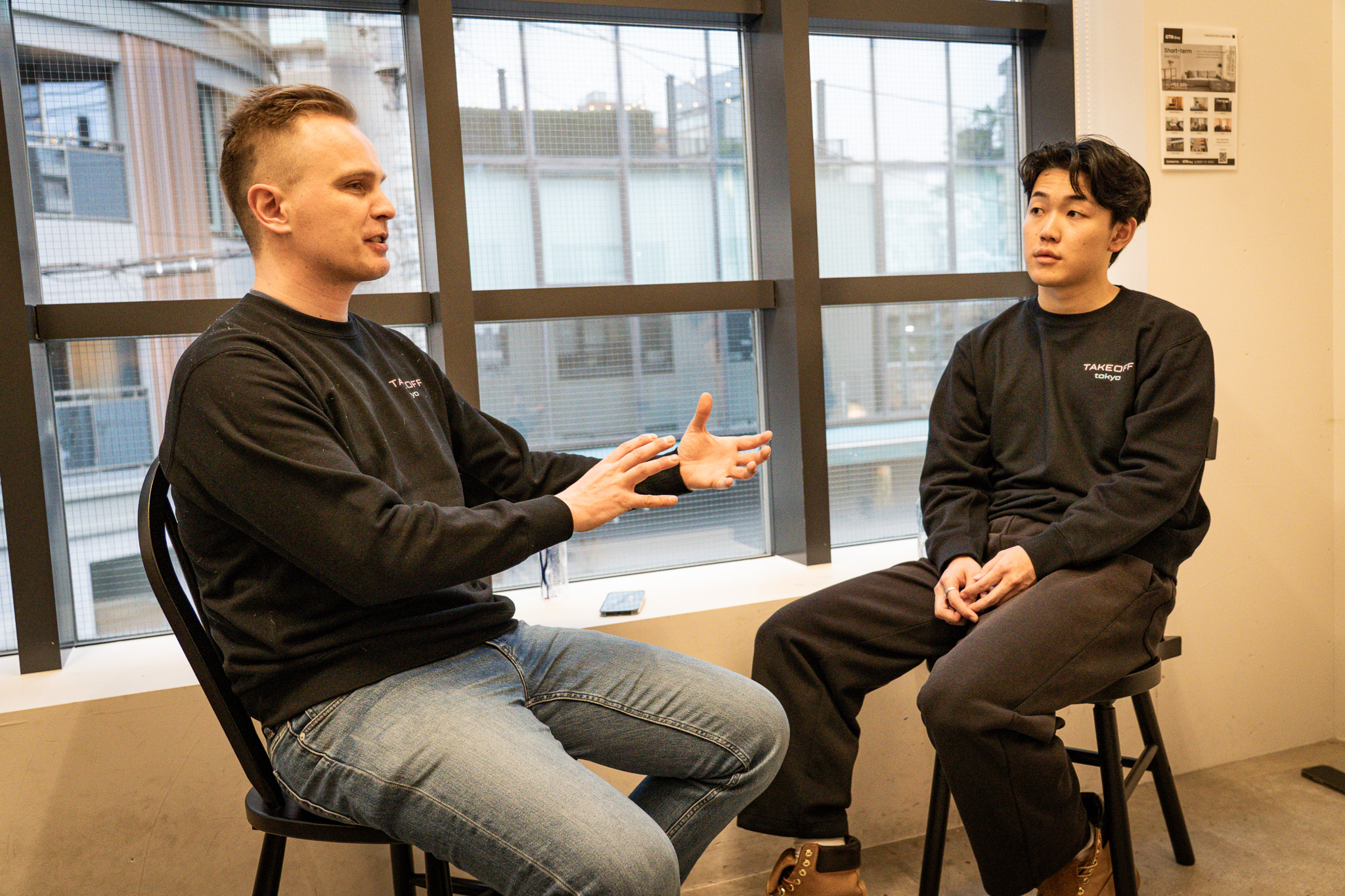
If you want to understand why Takeoff Tokyo exists, you need to understand what Japanese startup events typically look like. Antti's description is... vivid.
"Panel discussions lasting seventy minutes. Audience members asleep. A professional TV announcer—who knew absolutely nothing about startups—reading the speaker's full title: 'Representative Director, President, Chairman, CEO,' with about four more honorifics after that. Classical music. White gloves on the presenters. Speakers complimenting each other while the audience dozed off."
He leans back. "I went to one particularly famous event and thought: who is this for? Who is having a good time here? Because it's not the audience, and honestly, I don't think it's the speakers either."
Now compare that to Kensuke's experience at Latitude59, Estonia's flagship startup conference, which he attended during his exchange year. "Thousands of people from everywhere, all in this one venue. Investors walking up to me—a complete nobody—asking what I was working on. Students my age running the whole thing. In English. It had this electric energy, like everyone was on the edge of something."
The smell of strong Estonian coffee. The sound of pitches being delivered in accented English by twenty-somethings who didn’t feel like wearing suits. The buzz of a room where nobody cared about your job title—only about what you were building.
Kensuke came back to Japan. The contrast hit him like jetlag that wouldn't lift.
"You go from a world where what you're doing gets you noticed," he says, "to one where who you're sitting next to gets you noticed. Abroad, your work speaks. Here, your relationships speak."
The heat problem
There's a phenomenon that both Antti and Kensuke have watched play out—in their team members, in themselves, and in dozens of young Japanese founders they know. You go abroad. You absorb this incredible, almost physical energy from being around people who think bigger than you. You come home crackling with ambition.
And then it fades. Slowly, like a hot bath cooling to room temperature.
"That's the best way I can put it," Kensuke says. "The heat just... cools down. Because you're back in a world where being too ambitious makes people uncomfortable. Where you have to defer to someone who's never left the country but has been in the industry three years longer than you."
Some people solve this problem by not coming back at all. And here's the bit that should concern anyone who cares about Japan's economic future: the country's most promising young founders are increasingly incorporating their companies overseas. Shizuku AI recently took investment from Andreessen Horowitz—but it's US-registered. Alpaca went through Y Combinator and is structured the same way. The brains are Japanese. The companies aren't.
"The optimistic take," Kensuke offers, "is that in ten years, these people become role models who pull the next generation upward. The pessimistic take is that they're just... gone."
This is what Takeoff Tokyo is trying to fix. Not by guilt-tripping people into staying, but by building the kind of community where staying doesn't feel like compromising.
"Your Stanford kids aren't smarter. They just aim higher."
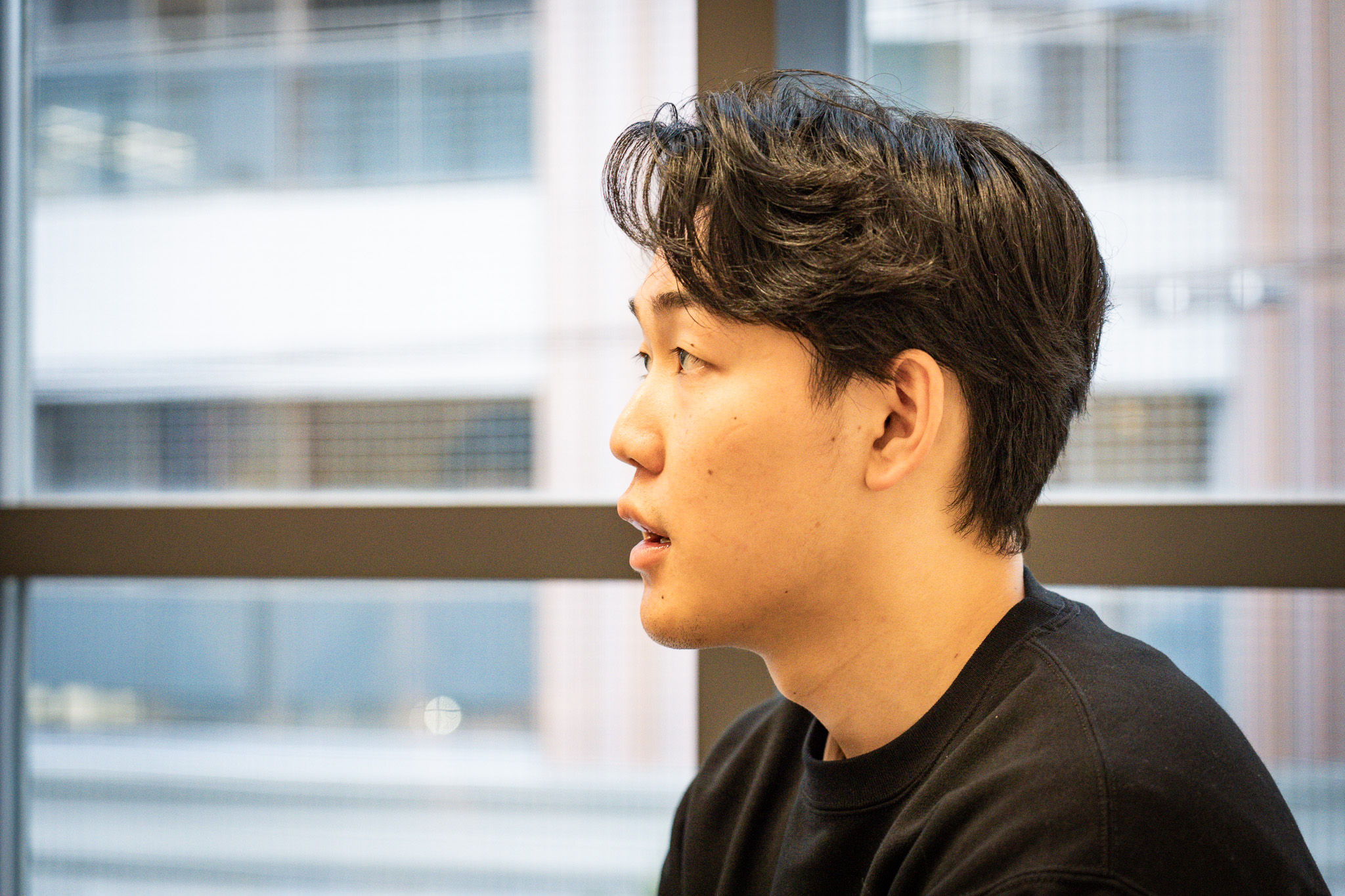
At a recent invitation-only event in Tokyo hosted by Andreessen Horowitz (yes, Kensuke was there—the street-screaming thing tends to open doors), he found himself chatting with Tomoko Namba, the founder of DeNA and one of Japan's most respected tech entrepreneurs.
Her observation was the kind of thing that sounds simple but rearranges your brain a little.
Japanese students, she said, are every bit as capable as their peers at Stanford or MIT. The gap isn't talent. It's target size. Japanese founders tend to aim for a level of success where seventy percent of them can realistically make it. Stanford founders aim for a level where almost nobody succeeds—but the ones who do build something enormous.
"The difference between those two ambitions," Kensuke says, "is the difference between the two ecosystems."
Antti calls it "self-censorship"—the very Japanese habit of taking your most exciting idea, reading the room, and quietly making it smaller and less threatening before you dare to share it. "Abroad, nobody does that," he says. "Nobody takes their best concept and makes it cuter and less intimidating so it doesn't bruise someone's ego."
The rule that changes everything (and it's absurdly simple)
So here's Takeoff Tokyo's secret weapon, and you might laugh when you hear it: they banned keigo.
If you're not familiar, keigo is the elaborate system of formal Japanese speech that encodes hierarchy into every sentence. There's a whole grammar for talking up, talking down, and talking sideways. It's beautiful, it's culturally significant, and—according to Antti—it's an innovation killer.
"When I was a research student at the University of Tokyo," he explains, "I had to use keigo with my professors. And I noticed something: I stopped sharing my most interesting ideas. The language itself was filtering what I was willing to say."
So within the Takeoff Tokyo team—which spans from high school seniors who haven't even started university yet to working professionals—everyone speaks in casual Japanese. Tamego only. No seniority-based language. If you're a seventeen-year-old with a better idea than the CEO, the linguistic playing field is already flat.
"Someone once confronted me about it," Antti says, grinning. "'You're just importing Finnish culture into Japan,' they said. So I asked them: did you know that when the Japanese parliament was established during the Meiji Restoration, all members were required to address each other as kimi—equals? Itō Hirobumi, Japan's first prime minister, formalized the rule. The whole idea came from Yoshida Shōin, who wanted to demolish the feudal class system because he believed innovation couldn't happen inside a hierarchy."
He takes a sip of coffee. "This isn't Finnish culture. It's Japanese culture—the version that produced the country's most extraordinary period of transformation. I'm not importing anything. I'm just reminding people."
Your mileage may vary on whether this argument would actually work in a boardroom, but you have to admit it's a spectacular comeback.

The Takeoff Mafia
The conference itself—heading into its fourth edition on March 31–April 1, 2026, after drawing around 3,000 participants last year—is the visible part. But the real project is what Antti calls, half-jokingly, the "Takeoff Mafia": a network of 500 globally competitive founders who came up through the community.
Kensuke is the prototype. Two years ago, he could barely hold a conversation in English. Now he's cold-calling founders in San Francisco, attending Andreessen Horowitz dinners, and closing sponsorship deals worth millions of yen—all before graduating.
"If we can make 500 people like him," Antti says, "Japan's startup ecosystem won't just improve. It'll be unrecognizable."
There's a moment in our conversation where Antti recalls the first time he and Kensuke went to the gym together—a casual Anytime Fitness session after a long day. Something shifted between them. The CEO-and-intern dynamic evaporated. They became collaborators.
"In Estonia, that's completely normal," Kensuke says. "You go to the gym with your professor. You go to a club with your boss. The distance between people is just... shorter."
Antti nods. "And when the distance is shorter, the best ideas come out."
So here's the question for anyone watching Japan's startup scene from the outside: is the problem really funding, or regulation, or market size? Or is it something much simpler and much harder to fix—the distance between the people in the room?
If Antti and Kensuke are right, closing that distance might be the only thing that matters.
Takeoff Tokyo 2026 takes place March 31–April 1 in Tokyo. For tickets and more information, visit takeoff-tokyo.com.