
Newsletter Signup
Join Our Community!
Stay updated with the latest news, exclusive insights, and more.
Stay updated with the latest news, exclusive insights, and more.
To see how we may use your information, take a look at our privacy policy.

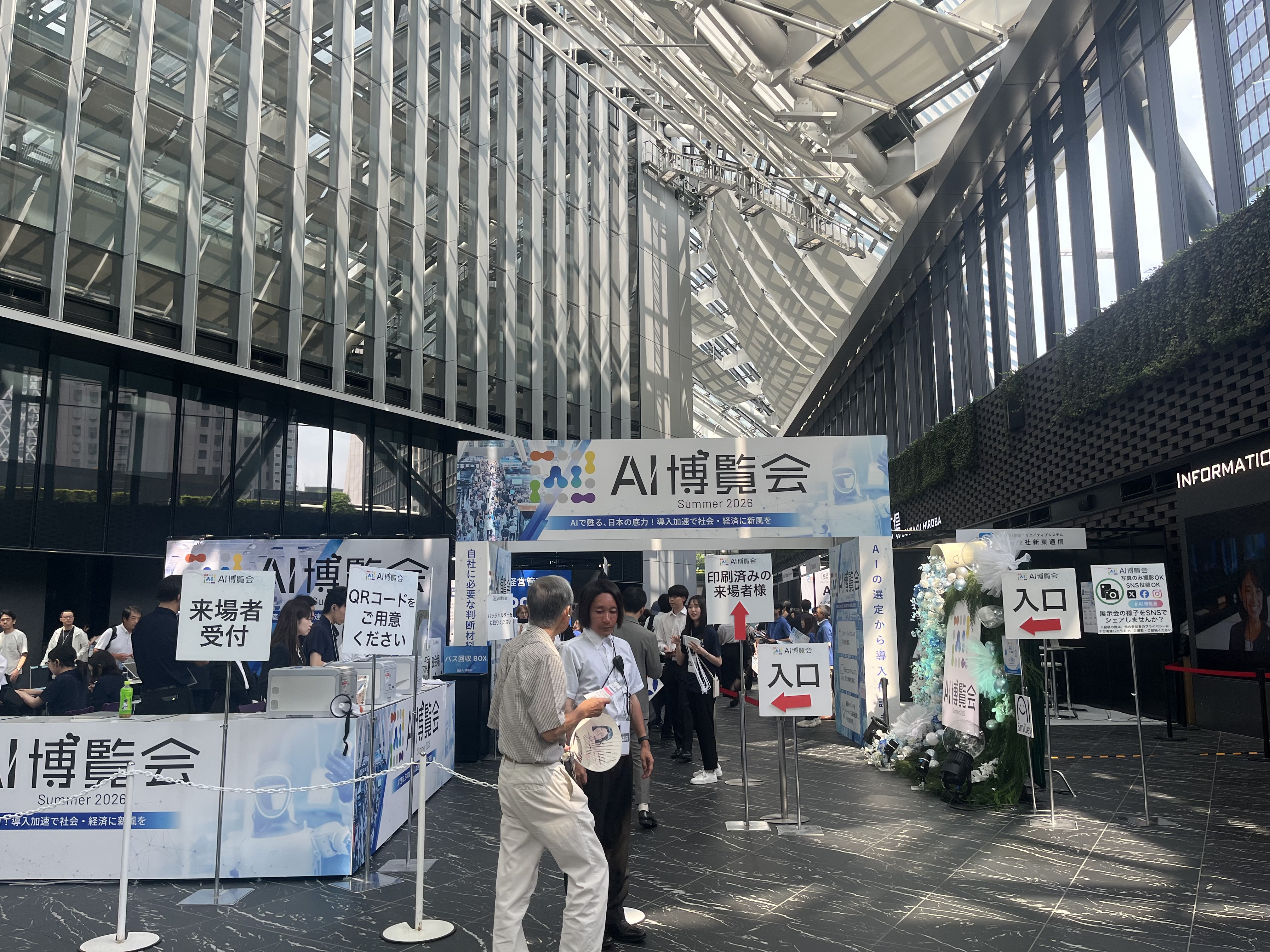
You feel AI Expo Japan before you understand it.
Stepping through the main entrance, you are immediately greeted by a wide, high ceilinged hall packed shoulder to shoulder. The first sensation is not any particular booth; it is the constant background noise of networking. Pitch decks loop across overhead screens, sales representatives call out over one another, and every now and then, a small wave of excitement rises from somewhere in the crowd as visitors watch a robot move.
There is no leisurely stroll here. Every few steps, someone places a flyer into your hands, and by the time you have crossed a third of the exhibition floor, your tote bag already feels noticeably heavier.
Around 100 companies gathered in the hall this year, yet the density of the crowd made the exhibition feel even larger. Popular demonstrations were given dedicated spaces, which helped prevent the floor from becoming completely congested, but crowds still gathered around the busiest booths.
Business cards continued to circulate in the traditional way, but exhibitors also embraced QR codes, allowing visitors to connect instantly without reaching for a card holder. Rather than replacing business cards, it felt like an additional way to connect in an exhibition moving at full speed.

The exhibition divided quite neatly into two spheres.
Nearly 90 percent of the show floor was occupied by enterprise SaaS, while a much smaller area showcased companies working on Physical AI and robotics. The contrast between them became one of the defining features of AI Expo Japan 2026.
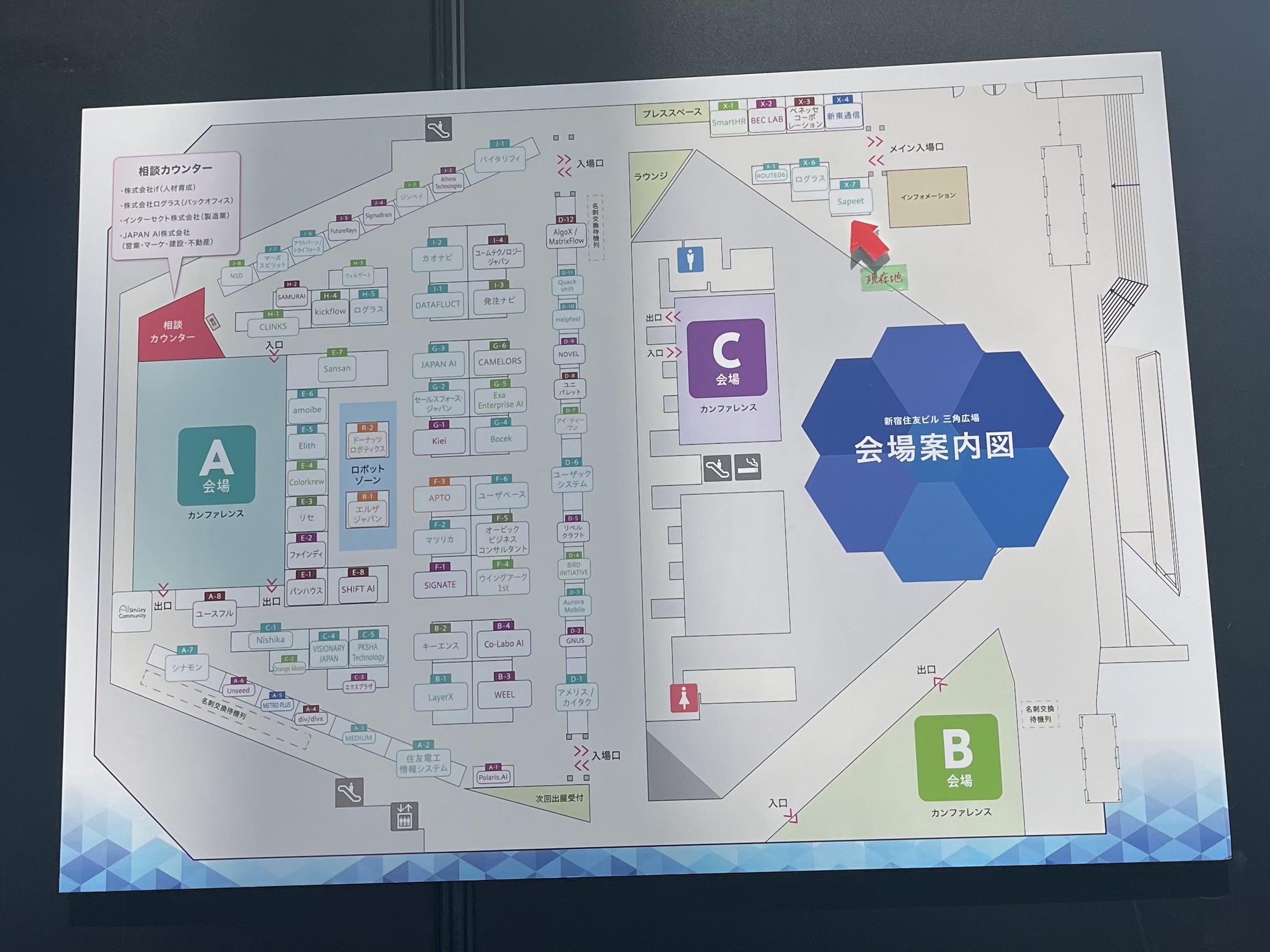
Walking in from the main entrance, visitors were greeted by rows of laptop demonstrations and SaaS dashboards running continuously across large displays.
Representatives explained AI driven HR platforms for employee training and recruitment, workflow automation systems for executive operations and transcription, and specialized legal technology for litigation support.
This was the practical foundation of the exhibition. It was polished, useful, and familiar to anyone who has attended an AI conference in recent years. Enterprise software clearly remained the largest presence on the show floor.
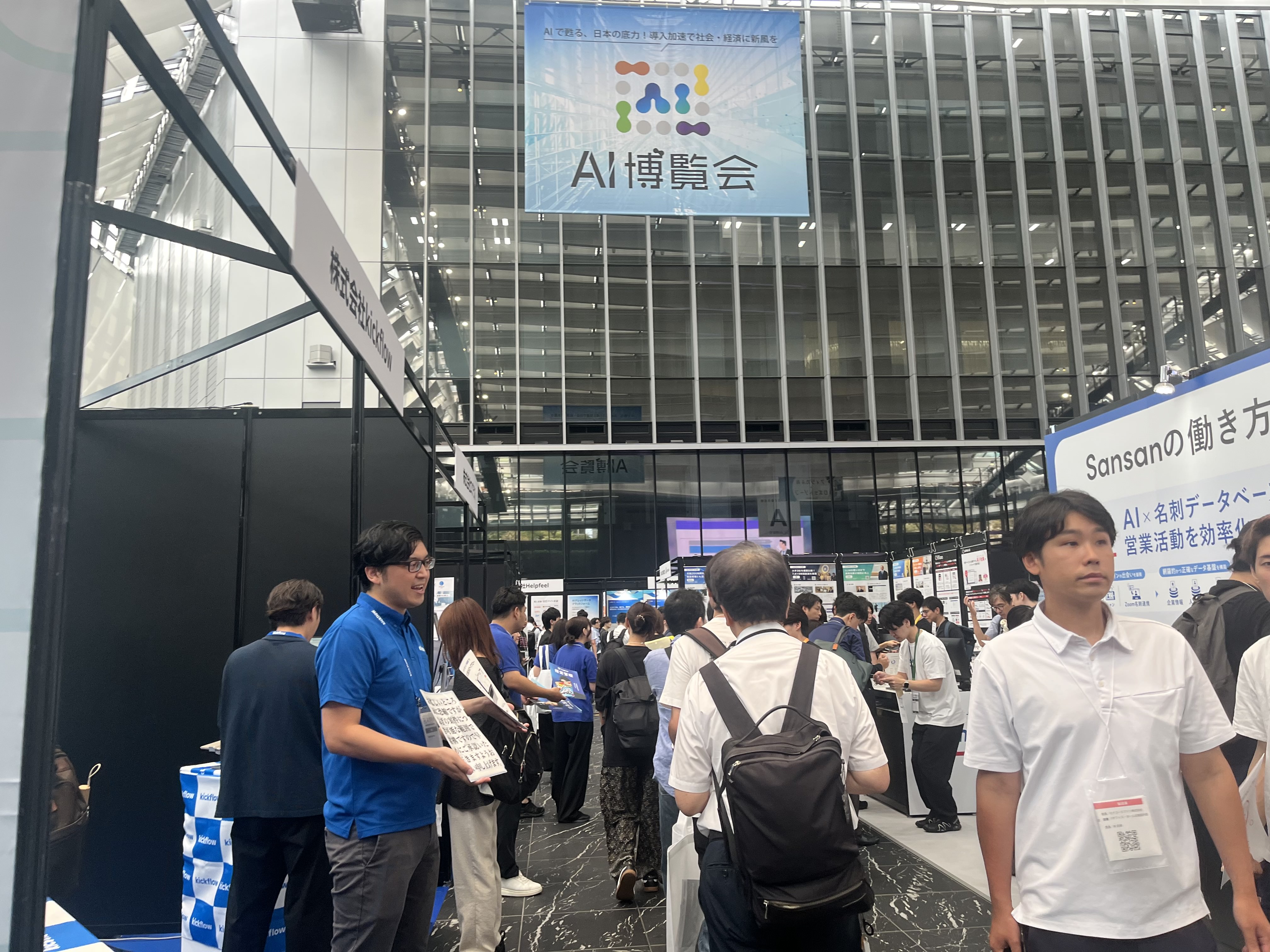
Moving deeper toward the center of the hall, however, the atmosphere changed.
The crowd became denser, and smartphones appeared above people’s heads as visitors recorded demonstrations. Television crews also positioned cameras around some of the more eye catching booths.
Although the Physical AI section occupied only a small part of the venue, it attracted a noticeable amount of public and media attention. Instead of software displayed on screens, visitors could watch machines physically move and respond to their surroundings. That difference created a different kind of energy.
Some booths focused on expressive service robots capable of greeting visitors, while others presented highly specialized industrial technologies designed for real world manufacturing environments. Together, they showed how broad the concept of Physical AI has become.
International headlines often focus on China’s rapid expansion in Physical AI, particularly its scale and speed of development. What stood out at AI Expo Japan was a somewhat different emphasis.
Rather than competing purely through faster development, many Japanese companies highlighted reliability, manufacturing quality, data infrastructure, edge computing, and safety. The focus was not simply on building robots that can move, but on developing systems that can eventually operate reliably in real world environments.
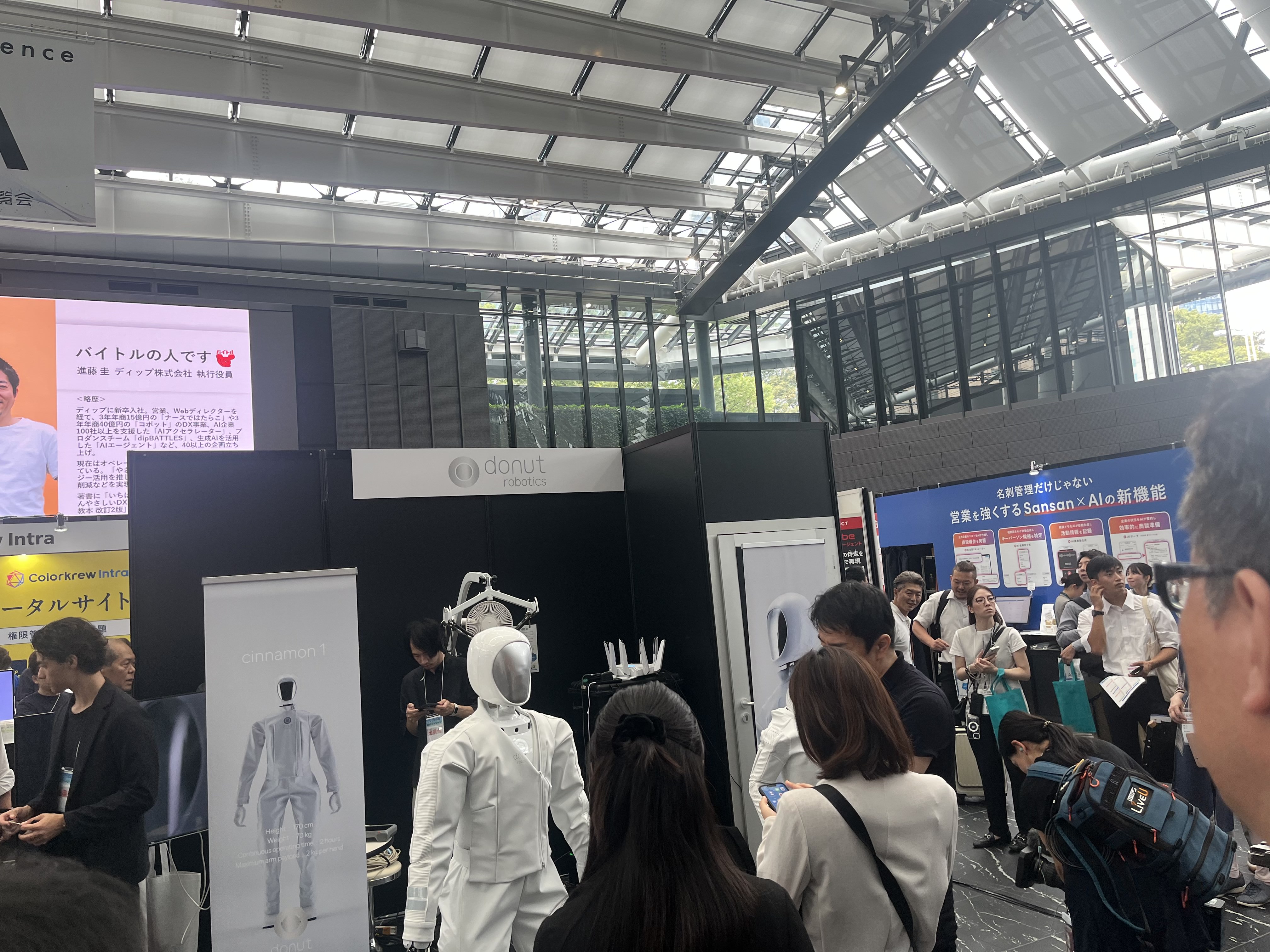
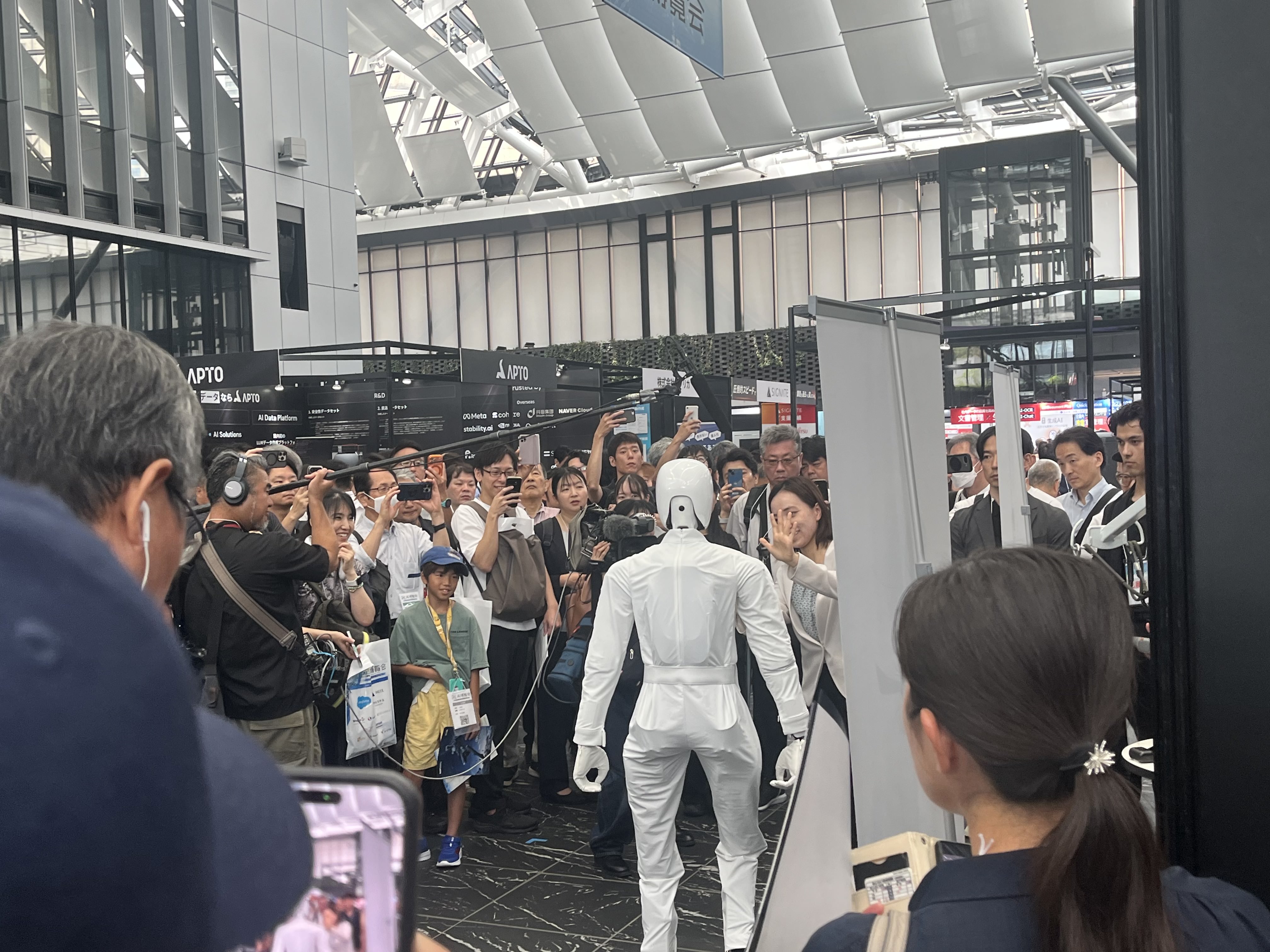
Donut Robotics attracted significant attention at the center of the exhibition. Founded in 2014 and headquartered in Roppongi, Tokyo, the company develops service robots alongside AI technologies including voice recognition and translation systems, with the goal of bringing intelligent machines into everyday physical spaces.
The booth featured Cinnamon1, a human sized robot standing approximately 170 centimeters tall and weighing around 70 kilograms.
During the demonstration, Cinnamon1 interacted with visitors by waving back at attendees, signaling instructions to nearby robots, and performing dance routines. The physical presence of the robot stood out in the crowded exhibition hall.
In conversation, founder Taisuke Ono presented a broader vision for the industry.
Rather than viewing overseas companies as rivals in a zero sum competition, he emphasized collaboration across borders. His view was that cooperation between companies and countries could accelerate the development of the entire Physical AI ecosystem and help practical robotics become part of everyday life around the world.
A few booths away, APTO represented another essential side of AI development.
APTO develops data platforms and AI development support systems that help companies collect, create, and manage the training data required to build AI models.
Before an AI system can recognize objects, understand environments, or control machines, it needs large amounts of high quality training data. APTO operates at this foundational stage of AI development, providing systems that support the collection and management of this data.
APTO was exhibiting rather than running a formal live demonstration.
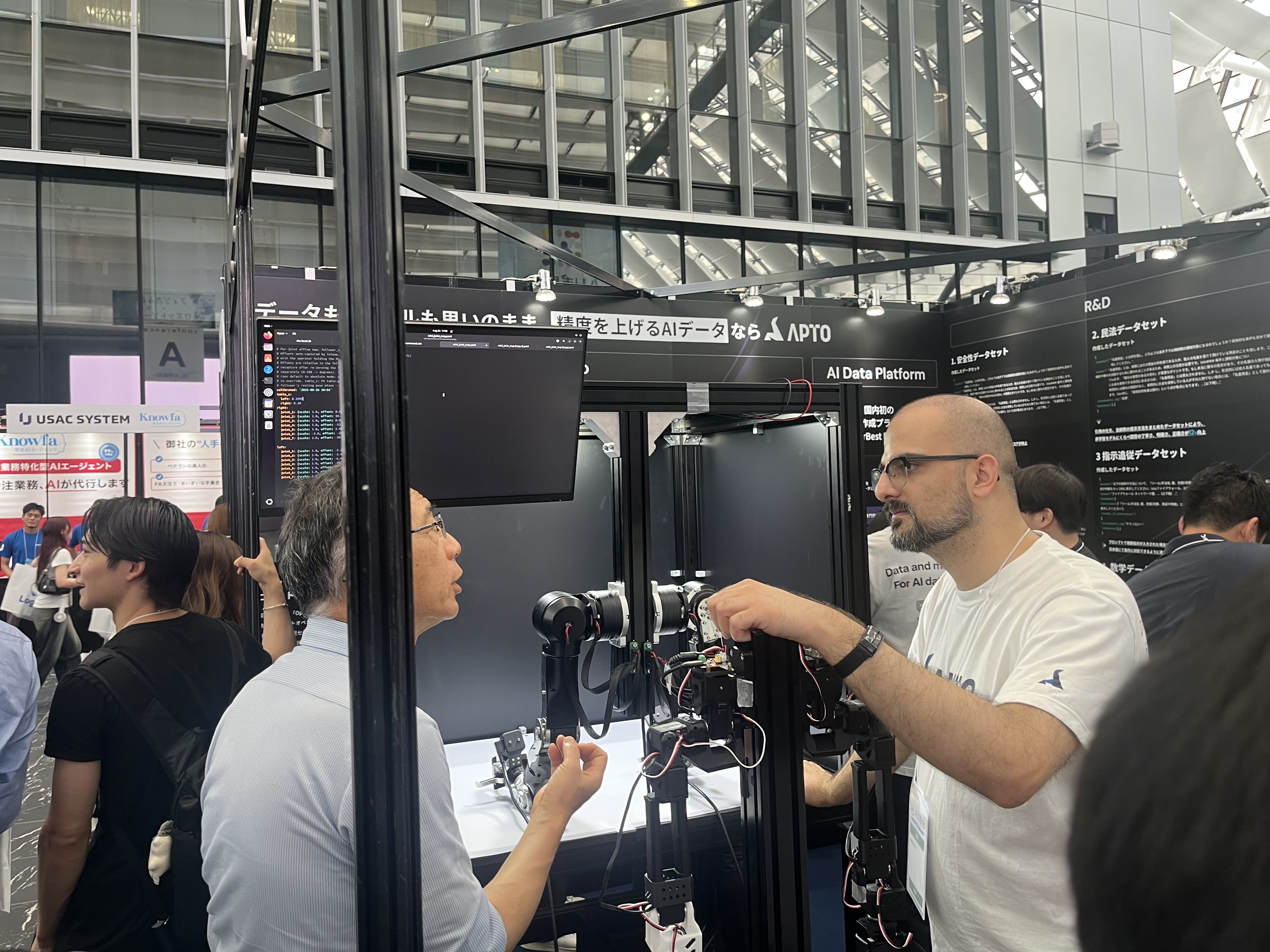
However, an actual robotic arm had been set up at the booth and operated in front of visitors, offering a glimpse of how AI related systems can be connected to physical hardware. The specific application of the robotic arm was not the main focus of the exhibition.
What stood out most during the conversation was the difficulty of collecting the data needed for AI development. The company explained that data collection and preparation can be highly labor intensive, while there is also a shortage of people available to carry out this work. Even as AI models become increasingly sophisticated, collecting, organizing, and preparing the data behind them still requires considerable human effort.
This highlighted a less visible challenge in the rapid development of AI. The future of AI depends not only on increasingly powerful models, but also on the people and infrastructure needed to prepare the data those models learn from.
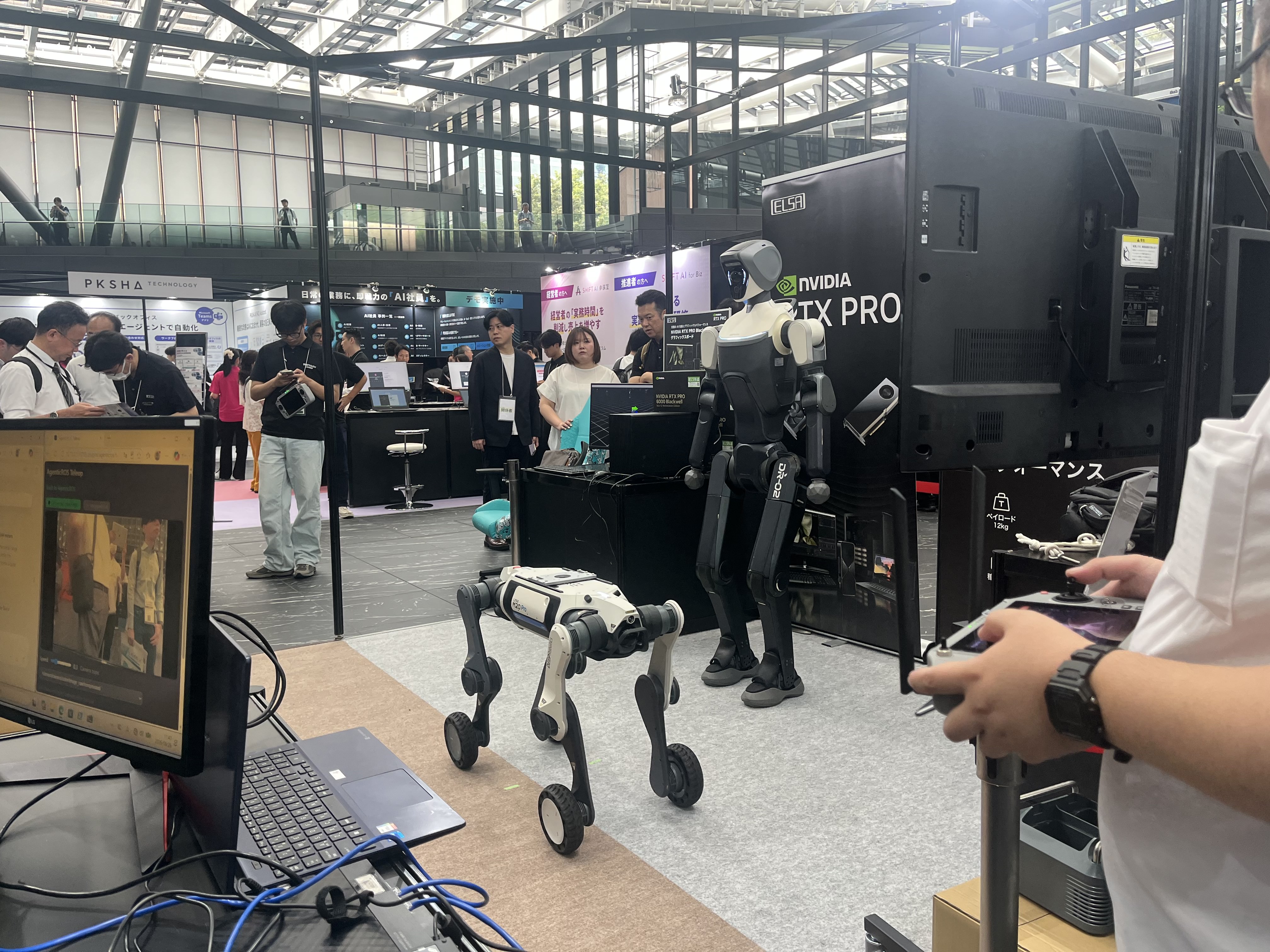
ELSA Japan offered a more engineering focused perspective on Physical AI. Established in 1997 and based in Shiba, Tokyo, the company has decades of experience in graphics boards, GPU servers, and high performance computing. In recent years, it has applied that expertise to edge AI systems capable of processing information locally and in real time. Rather than presenting general purpose humanoid robots, ELSA focused on industrial applications.
Its exhibition highlighted hardware used in automated factory inspection systems, where cameras examine products moving along manufacturing lines and detect defects in real time. These systems require rapid visual processing, making local computing performance particularly important.
Instead of sending visual information to a cloud server and waiting for a response, edge hardware allows AI systems to process data directly on site. ELSA provides the computing foundation that enables these systems to operate with the speed required in factory environments.
During conversation, an ELSA representative also raised a broader principle about robotics.
A robot should exist because there is a clear purpose for it.
If a task can be completed by a stationary robotic arm, there may be little reason to build a walking robot simply for the sake of mobility. Physical AI is not about giving every machine a body. It is about designing the right physical form for the right task. The greater challenge begins once robots leave controlled demonstrations and enter everyday environments. A machine operating inside a factory can work within relatively predictable conditions. A robot moving through hospitals, offices, or public spaces faces people, unexpected obstacles, and constantly changing surroundings.
For ELSA, this is why safety and reliability need to be considered from the beginning of development. The goal is not simply to create robots capable of moving and making decisions. It is to create systems that can operate safely and reliably in the environments where people actually live and work.
Despite continuing questions surrounding cost, safety, reliability, and data, there was a noticeable sense of optimism among the founders and engineers at the exhibition.
Several people involved in Physical AI suggested that seeing these technologies integrated into everyday life within the next five to six years is becoming increasingly realistic.
To the people building these systems, the question is gradually shifting from whether Physical AI will become part of daily life to how and when it will happen.
That prediction should still be treated cautiously. A trade show is not a market forecast, and exhibitors naturally have an interest in the future they are building.
Even so, the source of their confidence was visible on the exhibition floor.
The Physical AI and robotics area occupied only a small portion of the hall, yet it attracted a significant share of the day’s attention. Software intelligence was being connected to physical machines, while companies were simultaneously addressing the less visible challenges of data collection, computing hardware, industrial reliability, and safety.
If the enterprise SaaS floor represented where Japan’s AI industry stands today, the Physical AI corner offered a glimpse of where it may be heading next.
The next stage of AI may not be defined only by what AI can generate or analyze on a screen. It may also be defined by how well AI can sense, move, and operate in the physical world, and ultimately, whether people are willing to trust it there.


%20(1).png)

%202.png)


.png)