
Newsletter Signup
Join Our Community!
Stay updated with the latest news, exclusive insights, and more.
Stay updated with the latest news, exclusive insights, and more.
To see how we may use your information, take a look at our privacy policy.

Some Japanese words are impossible to translate into other languages.
One example is rōrō kaigo (老老介護). The character rō means “elderly,” and by repeating it, the term describes a situation in which an elderly person cares for another elderly person ; like an 80-year-old husband supporting his equally elderly wife on his own, this is the reality captured by the word.
An even more serious term is ninnin kaigo (認認介護). Here, the repeated character refers to dementia (ninchi-shō in Japanese). The phrase describes a situation in which a person with dementia is caring for a spouse who also has dementia.
The fact these concepts are common enough to have vernacular shorthand offer a stark view of the realities confronting Japan today.
While the elderly population continues to grow rapidly, the number of caregivers remains chronically insufficient. In particular, after what Japanese media often refer to as the “2025 Problem”, when the postwar baby-boomer generation surpasses the age of 75, the issue of labor shortages has evolved beyond individual care facilities into a looming crisis for the country's social infrastructure.
For decades, caregiving has depended on human hands, experience, and compassion. But the assumptions underpinning that model are beginning to collapse. As a result, technology is increasingly moving into the care sector. At the center of this transformation are physical AI and next-generation communications technologies.
As AI steps beyond screens and begins to interact with physical bodies and real-world environments, the very nature of caregiving is poised to change.
At first glance, the phrase “Japan and Physical AI” may sound somewhat paradoxical, since Japan is often ranked among the slowest adopters of AI technologies among advanced economies. Whether in generative AI utilization or software-based AI development, the country is frequently portrayed as having fallen behind the digital transformation wave.
How, then, could Japan emerge as a leader in Physical AI? One reason lies in its extraordinary robotics expertise.
Japanese companies account for roughly 70% of the global industrial robotics market. Industry leaders such as FANUC, Yaskawa Electric, and Kawasaki Heavy Industries have spent decades building the physical infrastructure of manufacturing around the world.
While Japan may have lagged in software innovation, it remains one of the world's foremost centers of expertise in building intelligent machines that interact with the physical world. Physical AI plays directly to those strengths.
Another reason is the urgency of the challenge itself.
Labor shortages are approaching levels that can no longer be addressed through recruitment efforts or wage increases alone. Increasingly, stakeholders across government, industry, and the startup ecosystem recognize that caregiving as a social service may become unsustainable without technological augmentation.
In this context, the narrative is not that “Physical AI will replace workers,” but rather that it can fill roles that there simply are not enough people willing or able to perform.
It is possible that caregiving will become the first arena in which Japan stages a meaningful comeback through physical rather than purely digital innovation.
The shortage of care workers is not simply a matter of the profession lacking popularity; it is a structural issue that has persisted for years. Heavy physical demands, relatively low wages, and high turnover rates have created a vicious cycle. At the same time, the caregiving workforce itself is aging, with younger people entering the profession in insufficient numbers.
Meanwhile, demand for care services continues to rise. Both home-based and institutional care are expanding, while requirements for dementia support, nighttime monitoring, and specialized assistance grow increasingly complex.
According to estimates by Japan's Ministry of Health, Labour and Welfare, the country could face a shortage of approximately 690,000 caregivers by the 2040s.

Until recently, AI applications in caregiving focused primarily on information processing tasks such as documentation support and monitoring-camera analytics.
Today, however, technologies such as robotic arms, autonomous mobility, and remote operation are converging to extend AI into the physical dimensions of caregiving.
Patient transfers, mobility assistance, nighttime patrols, dish collection, laundry management, and inventory replenishment are increasingly becoming tasks that AI-powered robots can perform.
For caregiving robots to function effectively, they require capabilities fundamentally different from those of industrial robots.
Every care recipient differs in physical condition, cognitive state, and daily habits. Some use canes, others rely on wheelchairs. Even a seemingly simple task such as delivering a meal tray varies depending on the circumstances.
As a result, caregiving-focused Physical AI must possess:
Rather than simple automation, the challenge is developing intelligence capable of working alongside people.
Physical AI does not function in isolation. Care robots, monitoring sensors, staff smartphones, and remote management systems must all remain connected in real time for the system to operate effectively.
Low-latency networks, private 5G, edge AI, and IoT sensor infrastructure form the foundation that allows care robots to function continuously in real-world environments.
As with logistics and supply chain operations, the robot itself may receive the attention, but it is the communications and data infrastructure behind the scenes that ultimately determines whether the system succeeds.
Based in Tokyo, Enactic is a startup specializing in Physical AI solutions for caregiving environments.

Its humanoid caregiving assistant robot, Ena, focuses on peripheral tasks such as laundry handling, dish collection, and supply replenishment.
Rather than performing direct physical caregiving, Ena takes over many of the countless routine tasks that caregivers traditionally perform alongside their primary responsibilities. This allows staff to devote more time to human-centered activities such as personal care, emotional support, and meaningful interaction with residents.
As of April 2026, the company had signed MOUs with more than 80 caregiving organizations nationwide and plans to begin pilot testing in care facilities during the summer of 2026. Enactic has also received recognition through participation in Amazon's advanced AI development programs.
Founded in Tsukuba, Ibaraki Prefecture, with offices in Tokyo, CYBERDYNE is best known for developing the wearable robotic exoskeleton HAL (Hybrid Assistive Limb).
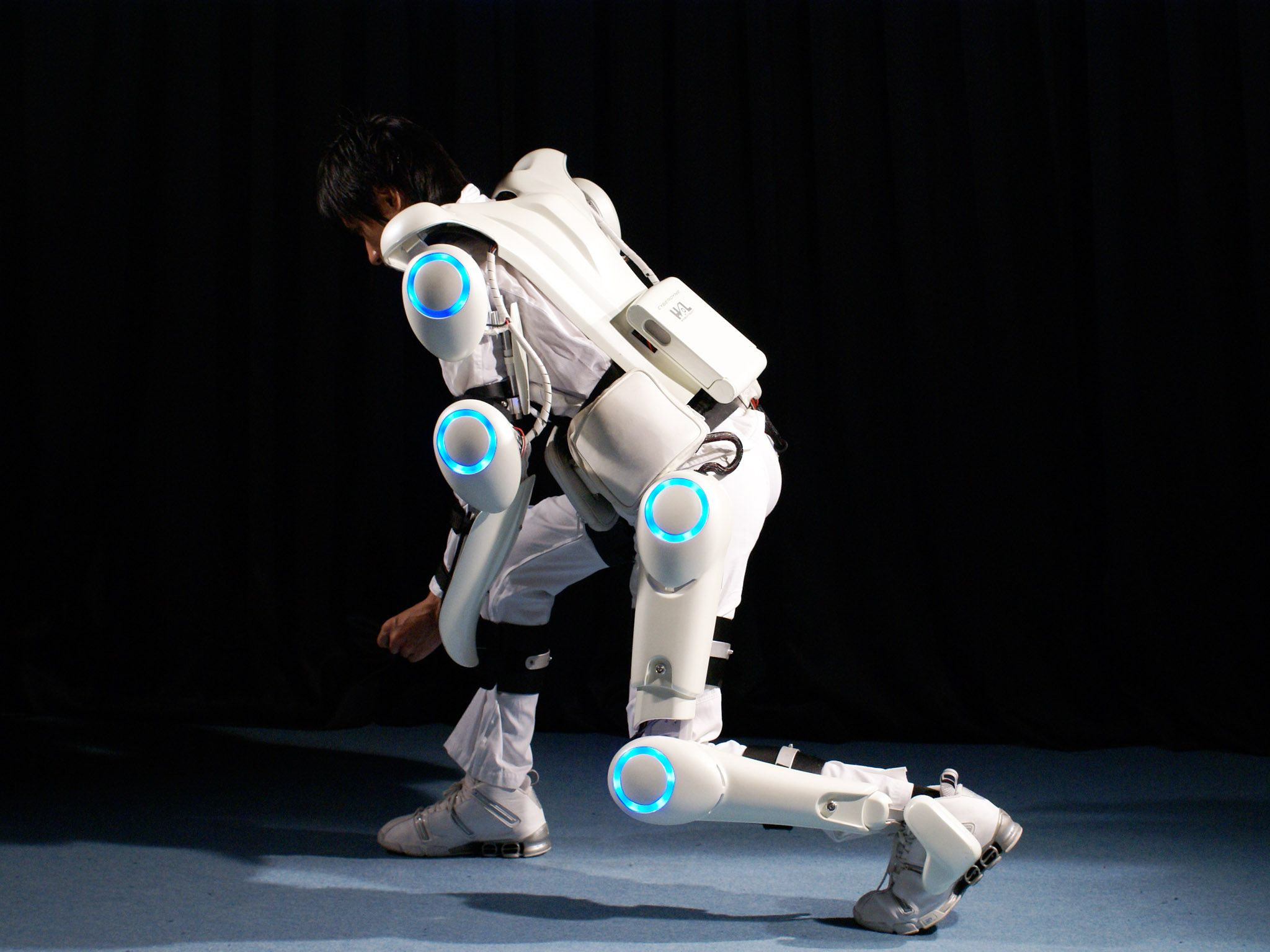
HAL interprets bioelectrical signals generated by the user's nervous system and provides muscular assistance accordingly. The technology is used for gait rehabilitation and patient transfer support.
Its defining feature is that it responds to the user's intention to move rather than simply applying mechanical force. This characteristic makes it valuable not only as an assistive device but also as a rehabilitation tool.
In care facilities and medical institutions, transfer-assistance technologies are also expected to reduce the physical strain placed on caregivers, particularly lower-back injuries. HAL has already been adopted by some rehabilitation hospitals and care facilities, making it one of the pioneering examples of Physical AI in healthcare and eldercare.
Tokyo-based ugo develops and deploys the ugo series of robotic systems that combine autonomous navigation with remote operation.
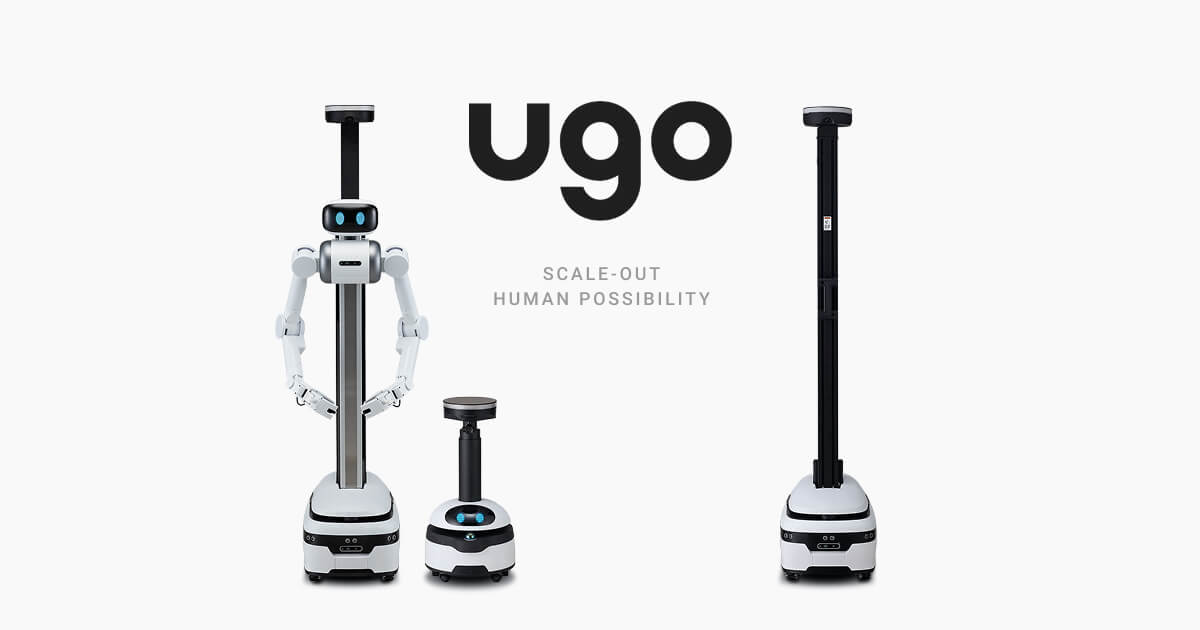
Its core innovation lies in a hybrid approach. Robots autonomously patrol predefined routes, while human operators can intervene remotely whenever detailed tasks or unusual situations require attention.
Rather than pursuing complete automation, the system is designed around flexible collaboration between humans and machines.
Applications in care facilities include nighttime patrols and monitoring operations. The platform also integrates with sensors and cameras for data collection and analysis.
Through its Robot-as-a-Service (RaaS) platform, ugo enables centralized management of multiple robots across multiple facilities, making adoption easier for operators. The company has also collaborated with major organizations such as Tokyo Gas and leading security firms. They’re extending its technology beyond caregiving into broader social infrastructure applications.
Caregiving has been viewed as a labor-intensive industry. The amount of care available was directly determined by the number of people available to provide it.
In the future, however, caregiving may increasingly resemble an infrastructure industry powered by robotics, AI, communications networks, and edge computing.
Connectivity systems, robot management platforms, and shared data networks may soon become the invisible backbone of care delivery.
The real value won't lie in just robots themselves, but in the data generated on the ground experience, and the intelligence built from it.
Can the knowledge of experienced caregivers — their instincts, their individual approaches, their hard-won best practices — be captured, learned from, and passed on? That question may define who leads this industry.
Two challenges remain at the center of it all:
・Can we protect the dignity of older adults even when there aren't enough people to care for them?
・Can caregivers do meaningful work without burning out?
Physical AI is beginning to answer both. Autonomous mobility, remote operation, edge AI, private 5G… these technologies, combined and deployed from real care environments, are laying the foundation for a new kind of caregiving infrastructure.


%20(1).png)
%20(1).png)

%20(1).png)


.png)