
Japan’s blue economy part 1: Shipbuilding

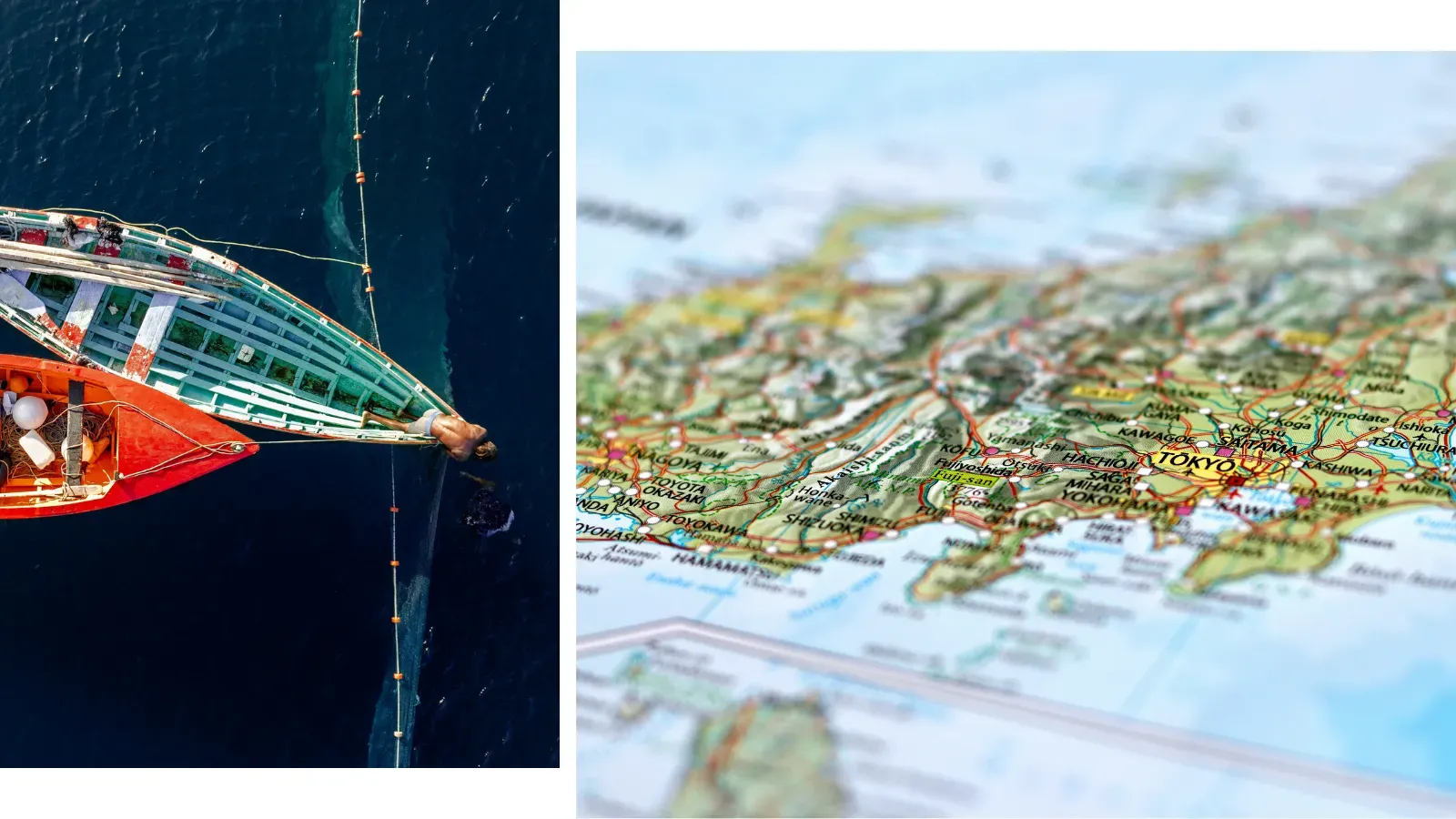
In modern global trade, about 90% of all goods—including energy resources and food—are transported by ocean. As an island nation that relies heavily on imports, Japan’s blue economy plays an important role in both economic security and national defense.
In recent years, the share of commercial-ship deliveries by region has been led by China, South Korea, and Japan, which together hold about 90% of the global total market share. On the other hand, the U.S. has dropped to less than 0.1%.
Shipbuilding was reported to be included in Japan and South Korea’s new investment framework with the United States as part of Trump's trade agreement.
In this series, we will explore Japan’s blue economy from various perspectives—including shipbuilding, fisheries, aquaculture, marine environment, and potential, looking at new tech trends in the industry.
In this first part, we look back at the history and development of Japan’s shipbuilding industry.
.webp)
William Adams and Japan’s First Western-Style Ships
The origins of Japanese ships date back to the Jomon period, when people built dugout canoes from single tree trunks. Later, shipbuilding techniques evolved to include plank-built vessels, stronger materials, and large wooden sailing ships such as the Benzaisen that were used during the Edo period.
In those days, ships were taxed based on their cargo capacity, so efficient design was important for both taxation and transport purposes.
Japan has always been active in maritime trade, and its shipbuilding technology has advanced alongside it.
During the early modern period, European culture and technology began to enter Japan. Around this time, Martin Luther’s Reformation was reshaping Europe, and the Jesuits were spreading Catholicism in Asia.
It was during this era that a Dutch ship carrying the Englishman William Adams drifted to Japan. William Adams—known in Japan as Miura Anjin— is said to become the first Englishman to arrive in Japan and the first European samurai in Japanese history. Under his guidance, the Western-style sailing ships were constructed for the first time in Japanese history.
.webp)
Modern Japanese Shipbuilding
Due to a policy of national isolation that lasted for over 200 years, Japan's maritime trade power lagged behind other countries.
In the late 19th century, the government supported Mitsubishi, a private shipping company that became a national leader. Additionally, the Nagasaki Iron Works (now Mitsubishi Heavy Industries Nagasaki Shipyard), Kawasaki Shipyard, and Yokosuka Shipyard were established, marking the beginning of modern shipbuilding in Japan.
During World War II and its massive demand for ships and shipbuilding infrastructure, Japan became one of Asia’s major shipbuilding nations. However, following that same conflict, warship production was banned in Japan. Japan instead focused on commercial shipbuilding, rapidly growing during the period of high economic expansion. By the 1960s and 1970s, Japan held the largest global market share in shipbuilding.
From the 1980s onward, however, China and South Korea began to rise to meet Japanese numbers, forcing Japan to shift to high-value-added ships, such as LNG carriers, eco-friendly ships, and luxury cruise liners.
While Western-style ships are by far most prevalant, traditional Japanese boats (wafune) still exist today—used for tourism (like yakata-bune pleasure boats) and traditional festivals. Yakata-bune cruises are particularly popular among foreign tourists, offering meals and scenic views from the water.
.webp)
Autonomous and Unmanned Ships
Nowadays, Japan’s shipbuilding industry has been entering a new phase focused on decarbonization and digital innovation. Major companies such as Mitsubishi Heavy Industries are investing in ammonia-fueled ships, electric propulsion systems, and smart ships.
Also, new dynamic projects related to autonomous and unmanned ships are accelerating:
・MEGURI2040 aims to develop fully unmanned ships
・Marindows is building a digital platform for electric and autonomous navigation
・Eight Knot promotes maritime DX with an eye on global expansion
These projects represent Japan’s effort to combine tradition with technology, ensuring that its shipbuilding industry continues to play a leading role in the next era of global maritime innovation.