
Newsletter Signup
Join Our Community!
Stay updated with the latest news, exclusive insights, and more.
Stay updated with the latest news, exclusive insights, and more.
To see how we may use your information, take a look at our privacy policy.

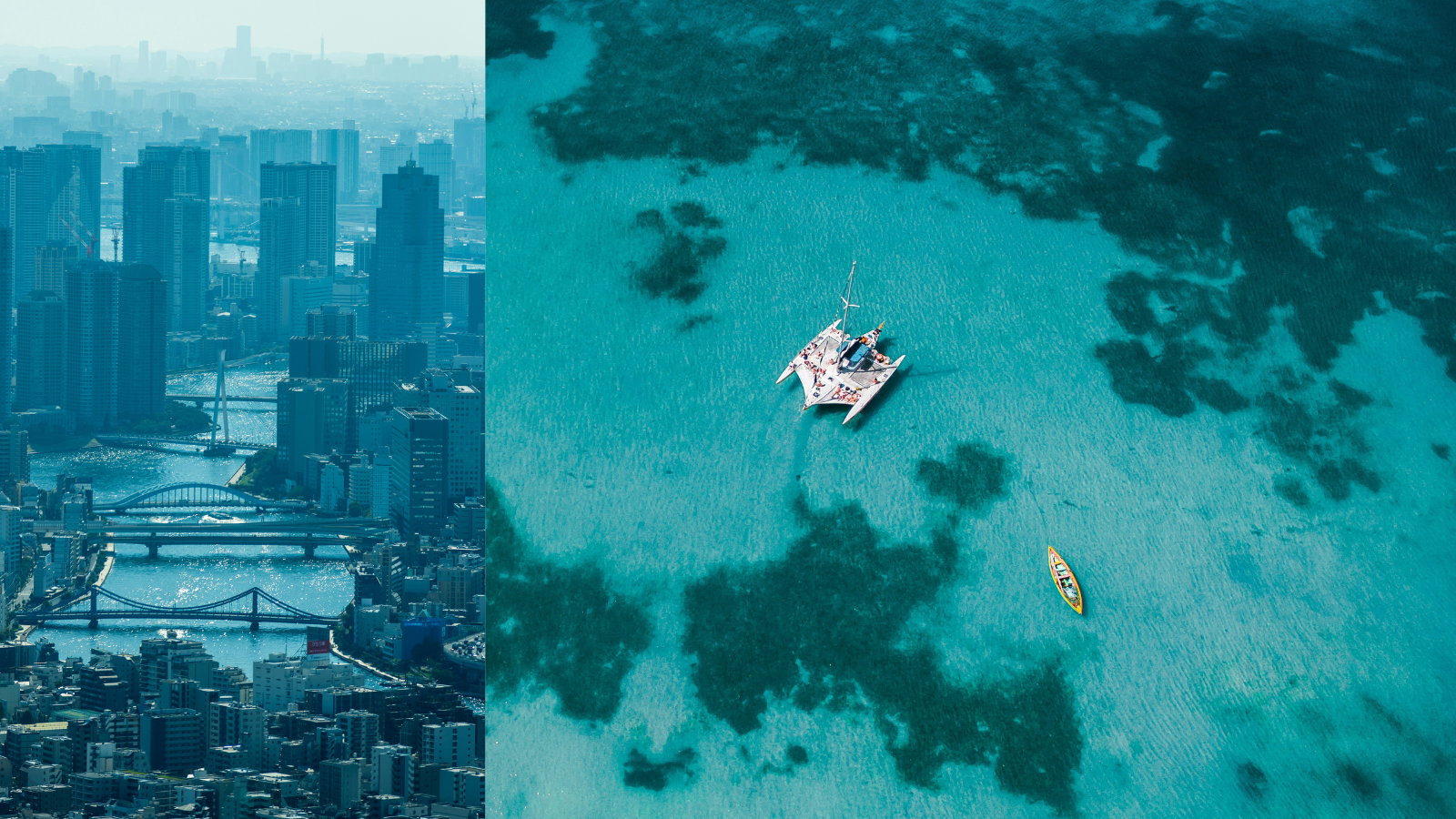
As global attention turns toward sustainable ocean industries, Japan is working to revitalize its blue economy — a key sector that links the nation’s tradition, technology, and future growth.
This article marks the final part of a four-part series exploring Japan’s blue economy from different topics.
Part 1 examined shipbuilding, part 2 focused on aquaculture, and part 3 looked at fisheries. In this Part 4, we review the key trends and discuss what lies ahead for Japan’s ocean-based industries.
.png)
Japan once led the world in shipbuilding. However, since the 1980s, competition from China and South Korea has reduced Japan’s share of the global market.
Now, the Japanese government aims to rebuild the industry. It plans to double annual ship production to 18 million gross tons by 2035 — about 20% of the global market.
Companies in this industry are also taking action. Imabari Shipbuilding, Japan’s largest shipbuilder, is partnering with other firms to strengthen its international competitiveness.
Industry turns to next-generation, eco-friendly ships. To reach Japan’s 2050 carbon-neutral goal, it is believed that a little or no carbon emissions perspective will be more important in shipbuilding in the future.
In academia, organizations like OCEANS at Osaka University are researching how AI and digital technologies can make the maritime supply chain more efficient and resilient.
.png)
Like fisheries, aquaculture in Japan is heading to be more digital and smart. But its growth also raises environmental concerns. For example, in Southeast Asia, shrimp farming has been linked to the loss of mangrove forests. Waste and uneaten feed from fish farms can also pollute local waters and seabeds.
In Japan, especially red tides continue to cause serious damage to fish farms and fisheries.
Companies like Meistier Corporation are trying to utilize AI in red tide detection and monitoring. It's for building real-world systems that can predict and prevent red tide damage.
.png)
Japan’s blue economy is deeply tied to its fishing villages (Gyoson in Japanese) — small coastal communities that have supported the country’s maritime and food culture for centuries. It is said that there are more than 3,000 such villages across the country. These communities could play a key role in shaping the future of the blue economy.
Generally, fishermen get up early, ocean-centered lives, heading out before dawn and selling fresh fish in local markets. In fact, many fishing villages face population decline and aging, as well as the impacts of climate change and natural disasters.
The government estimates that the Noto Peninsula earthquake that occurred on January 1, 2024, caused damage to the fishing industry in the four prefectures of Niigata, Toyama, Ishikawa, and Fukui worth between $7.4 billion and $17.6 billion.
To reduce future risks like this, organizations such as the Nippon Foundation and the Japan Hydrographic Association are using airborne LiDAR Bathymetry (ALB) to map the seabed up to 20 meters deep over ten years. This data will support coastal management and disaster prevention as well.
Researchers from the Institute of Science Tokyo and private companies announced the study of an innovative tidal energy seawall system that can generate electricity while protecting coastlines.
Illegal fishing remains a major issue. To solve this problem, the government and local authorities are approaching AI-based surveillance systems and tightening legal regulations.
Seafood consumption in Japan continues to decline. People have eaten more meat than fish in recent years, and the gap remains.
Still, across shipbuilding, aquaculture, and fisheries, new technologies are being used to make Japan’s blue economy smarter, cleaner, and more sustainable. With innovation and cooperation, Japan aims to build a brighter, ocean-friendly future together.


%20(1).png)



.png)