
Japan’s blue economy part 2 : Aquaculture

In Part 1(Shipbuilding), we looked at the history of Japan’s shipbuilding, from its early stages to the latest developments such as AI-powered autonomous ships.
In part 2, we turn our focus to aquaculture: an area where Asia has become the global leader… and by a lot.
In 2022, a historic shift took place: the world’s aquaculture production surpassed that of traditional wild fisheries for the first time. China alone accounts for over 60% of the world’s aquaculture production, followed by Indonesia and India.
In Japan, research and development in aquaculture have also been very active. As Japanese consumers’ tastes have diversified, producers have continued to improve aquaculture methods. One key player in this progress is the Kindai University Fisheries ****Laboratory, which developed the world-standard method known as net cage aquaculture.
.png)
Kindai University and the Birth of Modern Net Cage Aquaculture
Aquaculture is said to have originally begun as a way to reduce the instability of fishing and to provide a stable income for fishers.
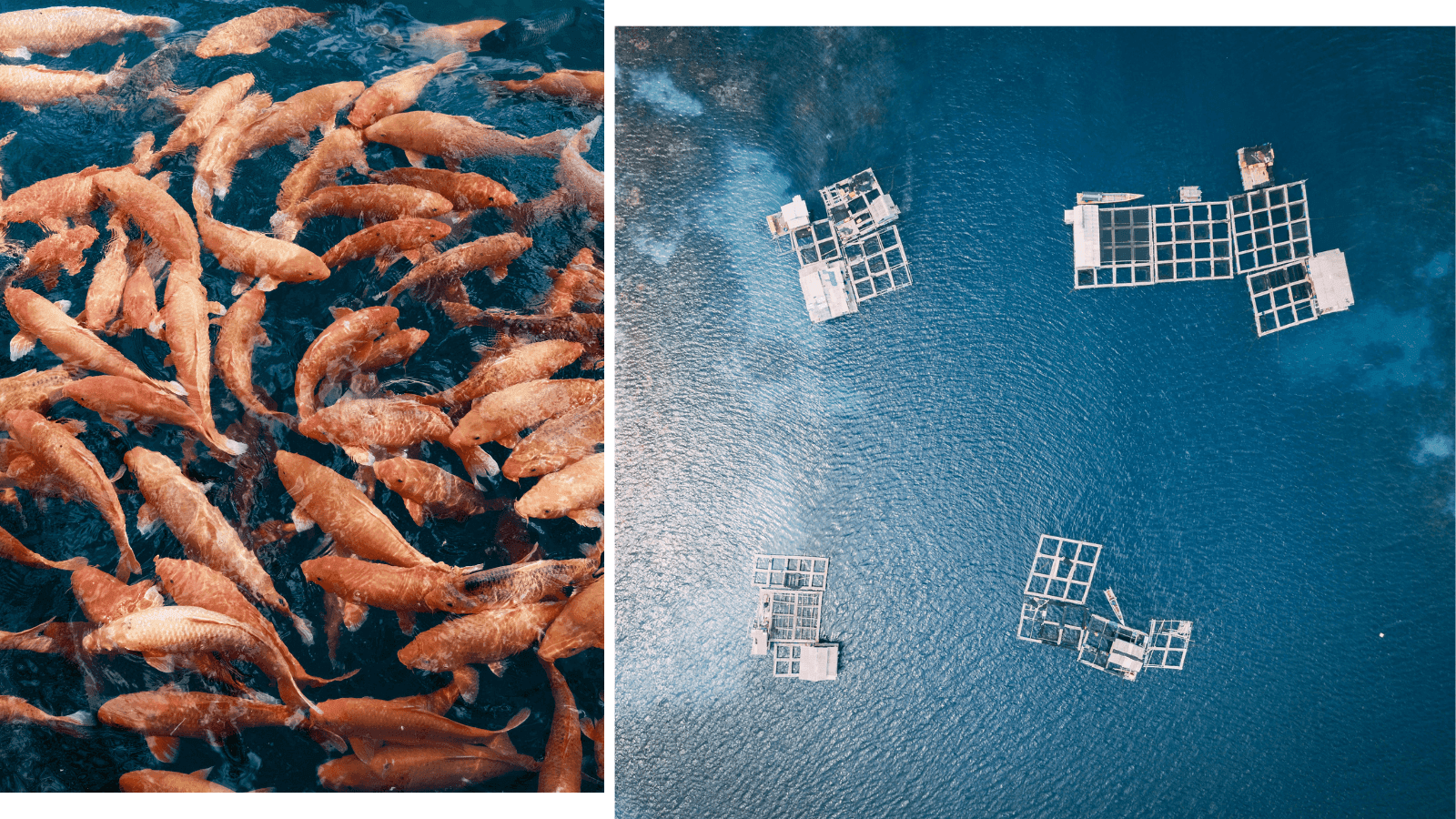
As mentioned previously, it was Kindai University Fisheries Laboratory that conceived Net Cage Aquaculture, which has become the global standard. Before this, aquaculture was mostly done by dividing off a bay. The “Net Cage” method changed this by suspending an open-topped cage made of nets both on the sides and bottom in the sea, allowing fish to be raised safely and efficiently within it.
Kindai University has many other achievements, such as producing fry (baby fish) from artificial hatching for 18 species and successfully achieving full-cycle aquaculture of bluefin tuna.
.png)
The Origin and Spread of Conveyor Belt Sushi (Kaiten-Sushi)
Today, conveyor belt sushi has become a symbol of Japanese food culture. These restaurants offer a wide variety of fresh fish at reasonable prices. Because of the progress of aquaculture, we can enjoy even luxury fish such as yellowtail and sea bream there now quite easily.
The history of conveyor belt sushi began in 1958. Genroku Sushi, the first rotating sushi restaurant, opened in Osaka. The concept gained huge attention after appearing at the 1970 Osaka Expo. After that, many new conveyor belt sushi chains entered the market.
Today, the conveyor belt sushi chains such as Sushiro, Kura Sushi, Hama Sushi, and Kappa Sushi are primary national chains, and this unique model has spread across the world.
.png)
How Conveyor Belt Sushi Chains Are Driving Aquaculture Innovation
Japan’s major conveyor belt sushi chains are also taking part in the development of new aquaculture technologies to improve quality, variety, and sustainability.
FOOD & LIFE COMPANIES (F&LC), which runs Sushiro, focuses on land-based and full-cycle aquaculture. It showcased land-farmed sea urchin and mackerel during the 2025 Osaka Expo. The company plans to start sea urchin farming with the startup Uninomics next year.
Kura Sushi is developing “smart aquaculture” using AI and ICT. It also promotes the Fish 100% Project, which reuses natural fish bones and scraps as feed.
Zensho Holdings, which operates Hama Sushi, sources yellowtail from aquaculture farms near Uwajima, Ehime Prefecture.
Kappa Create, the company behind Kappa Sushi, is also focusing on land-based aquaculture.
Through these efforts, aquaculture-grown fish have become an essential part of Japan’s fish food market and culture.