
Unlocking Japan’s Healthcare Potential: Dr. Yoshiki Sawa’s Vision for a Global Innovation Hub at Nakanoshima Qross

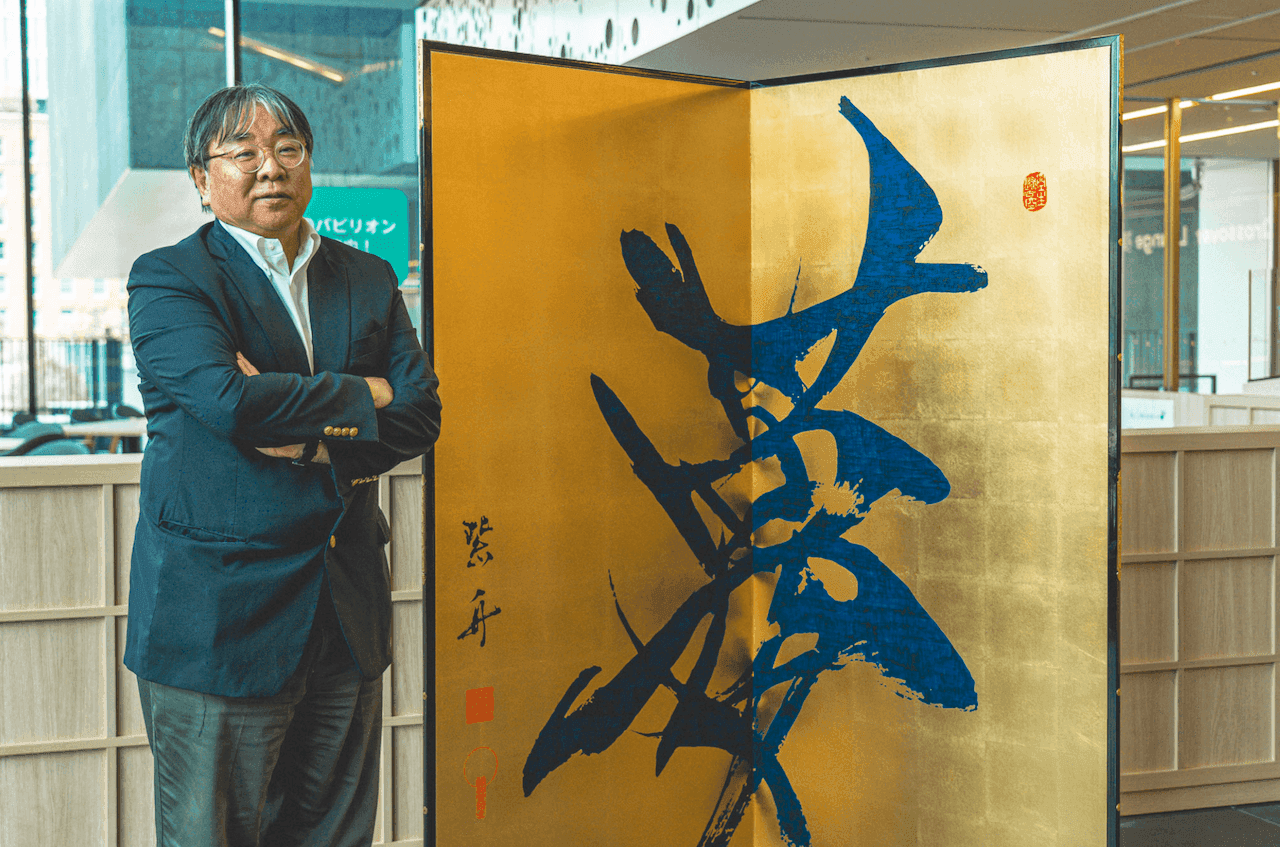
Japan’s startup ecosystem—especially in deeptech and healthcare—has seen both its share of successes and challenges. At the center of a bold attempt to reshape that landscape stands Dr. Yoshiki Sawa, a pioneer in regenerative medicine and one of the driving forces behind Osaka’s newest life sciences hub, Nakanoshima Qross.
Soft-spoken and self-effacing, Dr. Sawa describes himself as “just a small player.” Yet his decades of experience, global exposure, and hard-earned achievements tell a very different story. Through Nakanoshima Qross, he is attempting nothing less than a structural transformation of how Japan brings healthcare innovation to the world.
Can you tell us about your career before Nakanoshima Qross?
I graduated from Osaka University Medical School in 1980 and entered surgical training. At that time, I was in the hospital almost every day of the year. I would return home briefly—sometimes only to change clothes—and then go back. It was an intense period, but it shaped my philosophy: medicine exists to save lives. Everything else is secondary.
I specialized in pediatric cardiac surgery, treating children born with severe heart conditions. Seeing families confront these life-threatening realities strengthened my determination to advance better treatments. I wanted to go beyond surgical technique. I wanted to change outcomes.
A major turning point in my life came in 1989, when I received a Humboldt scholarship and went to Germany to conduct research at the Max Planck Institute. While I was there, the Berlin Wall fell. German reunification unfolded before my eyes. The Gulf War began. Living through those historical moments made me realize how insulated Japan can sometimes be—and how essential global collaboration is for scientific advancement.
After returning to Japan, I gradually shifted my focus toward regenerative medicine. Around that time, I crossed paths with Shinya Yamanaka, whose groundbreaking work on induced pluripotent stem (iPS) cells would later earn him a Nobel Prize. I was deeply convinced that iPS technology could transform cardiovascular treatment, and I became committed to bringing it into clinical practice.
A major government grant—amounting to tens of billions of yen over a decade—accelerated this effort. Eventually, we founded CUORiPS, a startup dedicated to iPS cell–based heart therapies. We successfully treated eight patients. Later, the company went public. That journey proved to me that Japanese biomedical innovation can reach patients and markets—but it requires extraordinary persistence.
How did Nakanoshima Qross come about?
Working within Japan’s startup ecosystem raised some concerns with how things are done. Too often, we focus on IPOs as the ultimate goal. But an IPO is not the purpose of healthcare innovation. Delivering treatment to patients is the purpose. In Japan, research quality is extremely high, yet the number of ventures emerging from that research remains limited. Many researchers aim to secure competitive grants rather than build sustainable, product-driven businesses.
I often describe our challenge as crossing “Darwin’s Gap”—the difficult transition from research to real-world commercialization. While Japan has bridging programs to support early-stage research, the step into global markets and scalable implementation remains fragile.
Incubation infrastructure must also evolve. Many bio and life science facilities provide laboratory space but insufficient strategic mentorship. Physical space alone does not create globally competitive companies.
Another issue is that major Japanese pharmaceutical companies increasingly invest overseas rather than domestically. I experienced this firsthand with CUORiPS. Only after we established a presence in Silicon Valley did Japanese pharmaceutical companies show stronger interest. The perception was that the probability of success in Japan is low—partly due to long and uncertain regulatory approval processes.
If we want change, we must address these structural realities directly.
This is why I became deeply involved in building Nakanoshima Qross, which officially launched in 2024.

How does Nakanoshima Qross tackle these challenges?
I do not see it as a conventional incubator. I see it as an ecosystem builder grounded in global strategy, with a clear focus on commercializing academically born startups.
I sometimes describe Nakanoshima Qross as an “Academic Casino.” By that, I mean that we act as the facilitator—the dealer—presenting promising startups to venture capitalists and corporate investors in a way that encourages capital flow. If money flows, research can advance. Without capital circulation, even the most brilliant discoveries remain dormant.
Japan is full of what I call “raw diamonds.” Our scientific discoveries are high quality, but they require refinement and global positioning. At Nakanoshima Qross, our mission is to polish those diamonds so they can shine internationally.
To do this, we actively pursue international partnerships. I strongly encourage startups to aim for FDA approval from the beginning rather than defaulting to domestic regulatory pathways. If you aim globally from day one, your standards, documentation, and strategy naturally become stronger.
I also challenge the idea that IPOs are the ultimate goal. In healthcare, mergers and acquisitions are often a more effective route to delivering therapies to patients. Many major global medical device companies grew primarily by acquiring successful startups—not by relying solely on public offerings.
What challenges do you see arising?
My concerns extend beyond startups to Japan’s broader healthcare system.
Japan’s universal health insurance system is remarkable in ensuring access and long life expectancy. However, it has also created a culture of high medical spending. Compared with neighboring countries, Japan’s annual healthcare expenditure is extremely high. Expensive procedures are often heavily subsidized, leaving patients with minimal out-of-pocket costs.
While this provides security, it reduces pressure for efficiency and innovation. Reform is politically sensitive, as adjustments to co-payment structures can carry electoral risks. Yet we must begin discussing sustainability.
At the same time, I firmly believe healthcare innovation must not be driven by profit alone. The purpose is to serve humanity. Financial return is a means to sustain innovation—not the end goal.
Why Kansai, and not, for example, Tokyo?
Unlike Tokyo’s highly commercialized medical sector, Kansai’s national universities have a strong culture of rigorous research and foundational medicine. By collaborating rather than competing, these institutions could create a unified ecosystem comparable in scale to Silicon Valley.
I envision a coordinated regional framework that brings together multiple universities and research centers to systematically generate and implement medical innovations. Through collaboration, Kansai can amplify its global relevance.

A Global Invitation—and a Kansai Proposition
Dr. Sawa’s vision for Nakanoshima Qross extends beyond building a successful innovation facility. It is about positioning Osaka—and the broader Kansai region—as a globally recognized epicenter for bio/life sciences, and academically-born startups.
His message to international investors, venture capital firms, and corporate partners is direct: come to Nakanoshima Qross. The presence of global capital, he believes, will catalyze further domestic investment and elevate Japan’s ecosystem to new heights.
Kansai is home to some of Japan’s most prestigious national and research universities, with deep strengths in regenerative medicine, pharmaceuticals, medical devices, and translational science. The density of academic excellence across Osaka, Kyoto, and Kobe creates a unique concentration of research-driven innovation. Unlike ecosystems driven primarily by commercial acceleration, Kansai’s strength lies in its scientific rigor and foundational breakthroughs—precisely the kind of “raw diamonds” Dr. Sawa believes the world has yet to fully discover.
Through Nakanoshima Qross, Osaka is building a gateway that connects these academic seeds to global capital, regulatory strategy, and international mentorship from day one. Alongside this effort, and reflecting the broader expansion of Kansai’s deeptech ecosystem, initiatives such as DeepTech Frontier Kansai are also emerging to continuously showcase the region’s research and startup activities. Together, these efforts are helping to communicate the current landscape of Kansai-born deeptech to domestic and international audiences, with their future trajectory drawing increasing attention.