
Agrivoltaics: a billion-euro market has been created, but start-ups are struggling

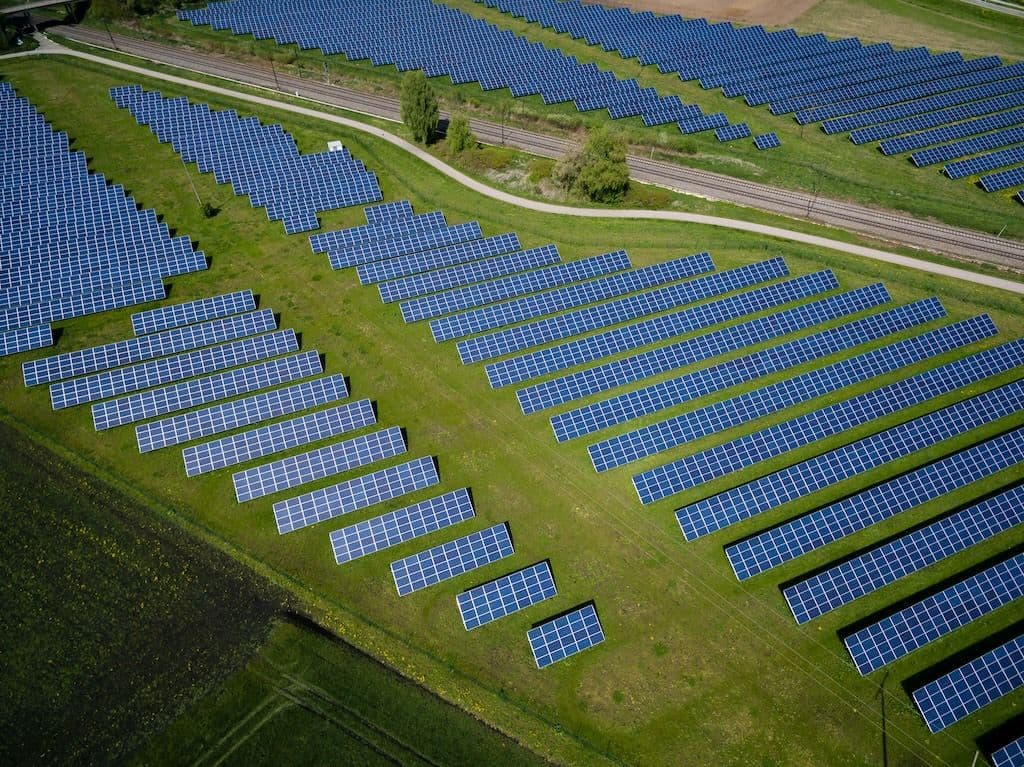
One billion euros for 2,016 megawatts of agrivoltaics. In the GSE’s first round of concessions, covering 650 projects totalling 1.5 gigawatts, the funds go to developers, investment funds and energy companies: European Energy, Repower, Next Energy and DCH. Among the major players, there are no start-ups. On 2 October 2026, Next2Sun, a German pioneer in vertical photovoltaics, admitted that the five million it had sought to avoid insolvency had not materialised. The state creates the demand, those who own the plants reap the rewards, whilst hardware start-ups are either bought out or face legal action. Yet the part of the supply chain that determines whether the incentive remains in place – growing crops beneath the panels and demonstrating this for twenty years – is something those reaping the rewards are unable to do. That is where the market remains open.
The context: one billion in public funding and a rule to be followed for twenty years
Agrivoltaics – that is, solar panels raised or spaced out to allow farming to continue beneath and around them – has a clear origin in Italy: the decree of December 2023, which allocated 1.1 billion euros in PNRR funds for at least 1.04 gigawatts of ‘advanced’ installations. Modules must be at least 2.1 metres high, with 70 per cent of the area remaining agricultural. The package is generous: 40 per cent of the investment as a non-repayable grant, plus a tariff of 85–93 euros per megawatt-hour for twenty years. German auctions pay for agrivoltaics at the same rate as ground-mounted photovoltaics – around 5 cents per kilowatt-hour – without any additional subsidy. Demand has doubled the target: two application rounds, 2024 and 2025, and funds have run out.
The PNRR decree, converted into Law 4/2026, has referred the matter to the GSE: a concession agreement must be in place by 30 June 2026, with 24 months from that date to commence operations. The same law has laid down the key requirement: a qualified professional must certify at the outset that the plant retains at least 80 per cent of its gross saleable output, and the local authority must verify this within five years. Anyone failing to guarantee the continuity of agricultural use risks a fine of up to 100,000 euros and the requirement to restore the land. The GSE adds: these requirements must be maintained for the entire duration of the incentive, or the subsidy will be forfeited. The State will only pay for rural photovoltaic installations if agricultural use is maintained: someone will have to prove this, field by field, for twenty years.
The map: who is receiving payments, who has been bought out, and who is trying to farm
Public funds go to developers and those who buy from them. European Energy (Denmark) has secured 215 megawatts in Sicily, DCH (Di Carlo Holding) over 140, and Solarig 122. Repower has the largest project in Palermo under the first concession round, at 62.4 megawatts. The 73-megawatt project in Campania, listed under the name Next Energy, was acquired in August 2025 by NextEnergy Capital’s NextPower V fund, worth $843 million: 140 hectares, with a 20-year contract for difference covering 100 per cent of production. The plants already in operation are owned by established groups, not start-ups: Engie, with its 66 megawatts across 115 hectares in Mazara del Vallo – the energy from which is sold to Amazon – and the Caviro cooperative, with its one-and-a-half-hectare vineyard in Forlì.
The startup’s journey is a different story. Ombrea (Aix-en-Provence), a manufacturer of mobile sunshades, raised €10 million in 2021 from Mirova and CMA CGM: in September 2023, it was acquired by TotalEnergies. Sun’Agri, the French company specialising in dynamic agrivoltaics, is a division of the Sun’R Group, which was recapitalised in 2021 with over 30 million from RGreen Invest and Bpifrance: infrastructure capital, not venture capital. The Swiss company Insolight (Lausanne), a company specialising in translucent covers for soft fruit, has raised 5 million francs in Series A funding and 10 million in EU grants. Its largest site – 1.8 hectares of blueberries, opened at the end of September in Lovatens – is financed and managed for thirty years by Romande Energie: the start-up designs the project, whilst the energy supplier owns it. The German TubeSolar (Augusta), with 140 employees, went into administration in June 2023 and was wound up within two months. And Next2Sun (Dillingen), double-sided vertical panels between the rows; on 22 September 2026, it stated: there is no shortage of customers, projects or technology, but there is a lack of investors and banks; without five million new shares by the 25th, an insolvency petition would be filed. By 28 September, subscriptions had exceeded that figure; on 2 October 2026, the company admitted that two major commitments had not materialised: the binding sum was not in place, and the insolvency petition was the inevitable consequence.
In Italy, the pioneer of hardware is REM Tec (Asola, Mantua): its first industrial plant was established in 2011; it holds around fifteen patents; and there has been no venture capital funding in its public history. The rest of the start-up sector is in services and, more recently, in land. xFarm Technologies, an Italian-Swiss company, has raised €36 million in a Series C funding round in 2024, led by Partech, with ResFarm It states that it has secured the agronomic monitoring contract for 250 megawatts under the PNRR, one-eighth of the total funded, with a further 350 megawatts currently being finalised. Alessio Pinzone, CEO of ResFarm, chairs the Agrivoltaica association, which was founded a year ago with European Energy, DCH and Repower on its board. Oxy EOS (Naples), an agricultural company founded in 2023 by Stefano Visalli, plants super-intensive olive groves amongst the solar panels – over a thousand trees per hectare – takes on the investment and agricultural management for thirty years, and sells the oil to Olio Dante under a thirty-year supply chain agreement. “Many solar investors are prepared to pay the farm tenant; in our case, we bear the full cost of the operation,” said Visalli in an interview, adding that over one gigawatt of installations are currently under development. It is the missing piece, though still at an experimental stage.
The dark side, appearances, timing and public acceptance
The first risk has a name: compliance without agriculture. Caviro’s one-and-a-half-hectare site in Forlì produces 1.3 gigawatt-hours a year, which, at the PNRR tariff of 85 euros, would be worth over 70,000 euros per hectare; the super-intensive olive grove beneath the panels, according to Oxy EOS, can yield 3,000–4,000 euros in gross saleable produce per hectare. Agriculture accounts, roughly speaking, for one-twentieth of the revenue and determines the fate of the remaining nineteen-twentieths. According to Legambiente’s 2026 report, 89 per cent of Italian projects for 2021–2024 are inter-row installations. Buffer zones take up to 30 per cent of the crop area, and if machinery is not compatible with the row spacing, operational efficiency can drop to 45 per cent. The 80 per cent restriction does exist, but local authority inspections have a five-year timeframe, and no one has yet seen a plant lose its tariff.
The second risk is implementation, and this is according to the very people selling the service: in May 2025, ResFarm was overseeing 750 megawatts of projects and considered two-thirds of them – around 500 megawatts – to be at risk due to deadlines and authorisations. The queue is long: over half of the environmental impact assessments carried out in 2025 concerned agrivoltaics, according to the Politecnico di Milano. Part of the two gigawatts will remain on paper, and those who won the auction without a serious agricultural plan will find that the non-repayable grant must be returned.
The third risk concerns local consent. The ban on ground-mounted photovoltaic systems on agricultural land, upheld in July by the Constitutional Court, has made agrivoltaics the only avenue for solar power in the countryside, and the Court itself rejected the Sardinian ban. However, protest groups are multiplying, Coldiretti welcomes the ban, and Confagricoltura’s president, Massimiliano Giansanti, describes agrivoltaics as an opportunity to be channelled towards abandoned land. A sector divided over agricultural representation has not yet won the cultural battle.
Where can you build, if you want to?
The lesson from Europe is clear: start-ups that developed agrivoltaic hardware have either been bought out or faced the risk of closure; those who sell services or grow crops for plant owners are still in the running. The most dreaded obligation is the clearest market reality: for twenty years, across two gigawatts, someone will have to cultivate, measure and defend agricultural production before the GSE and local councils. Anyone who has read the article here on foundation models will recognise the mechanism: certified data paid for over twenty years by a public incentive.
The first step is agronomic monitoring and certification: the first contracts have been signed, and the amount stated by xFarm indicates that payment is due. The second is the land. If the two gigawatts are similar to the Mazara del Vallo project – 115 hectares for 66 megawatts – there will be around 3,500 hectares to be cultivated beneath the panels, and those who own a plant are not farmers. This is confirmed, in his own way, by those who develop the plants: Rolando Roberto, vice-president of Italia Solare with responsibility for agrivoltaics and managing director of Aedes Group, calls for solutions “capable of sustaining themselves even beyond the incentives”. “Agrivoltaics requires professional, productive agriculture organised on an industrial scale: agricultural businesses too are called upon to evolve, expand in size or merge, and be able to guarantee continuity and results in the field.” Those who organise agricultural enterprises capable of managing olive groves, medicinal plants, horticultural crops and fodder crops amongst the trackers are on the right side of the challenge, on one condition: contracts that compensate for agronomic risk and not just the lease payment. The third avenue is technology that reconciles the two forms of production – greater heights, dual-axis trackers, selective modules – which remains experimental until it demonstrates, on a replicable scale, that the agricultural benefit justifies the additional cost. This is validated by third-party data, which is beginning to emerge: in July, Italia Solare launched, in collaboration with TSpin – a spin-off from the Catholic University – an observatory analysing real-world data from installations. These figures should be treated with the caution befitting those who collect them, but they represent more than the sector previously had.
Whilst photovoltaic systems dominated the countryside over the past decade, in the coming decade they will have to prove they can cultivate it. Whoever provides that proof can look forward to twenty years of guaranteed revenue, and for once the customer is already seated at the table, with the GSE contract in hand.
This article was originally published by our media partner Startupbusiness.it. You can find the original article here.