
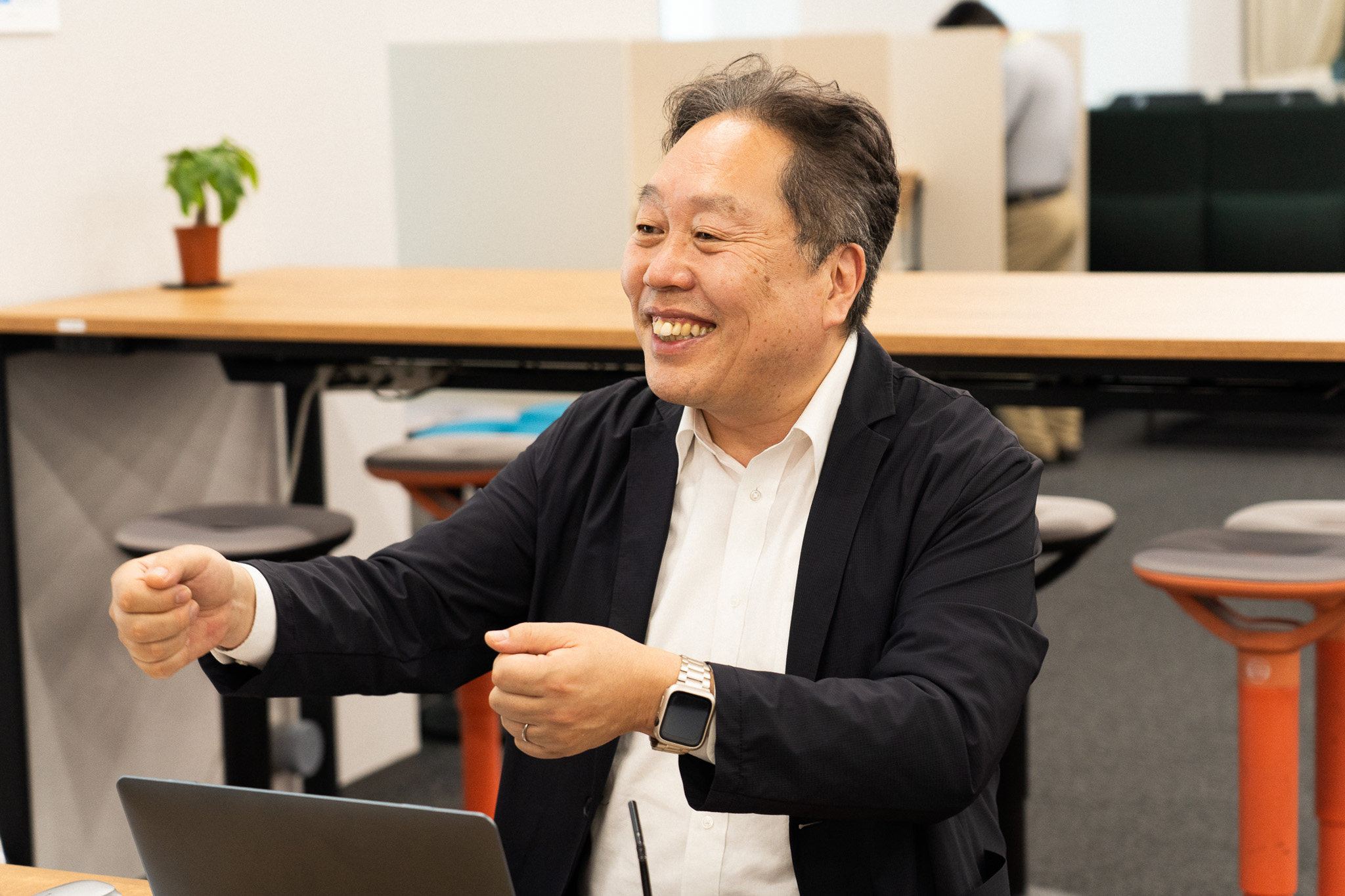
Takashi Miki, CEO of Solid Surface: the focus is not on robots, but on ‘operation’

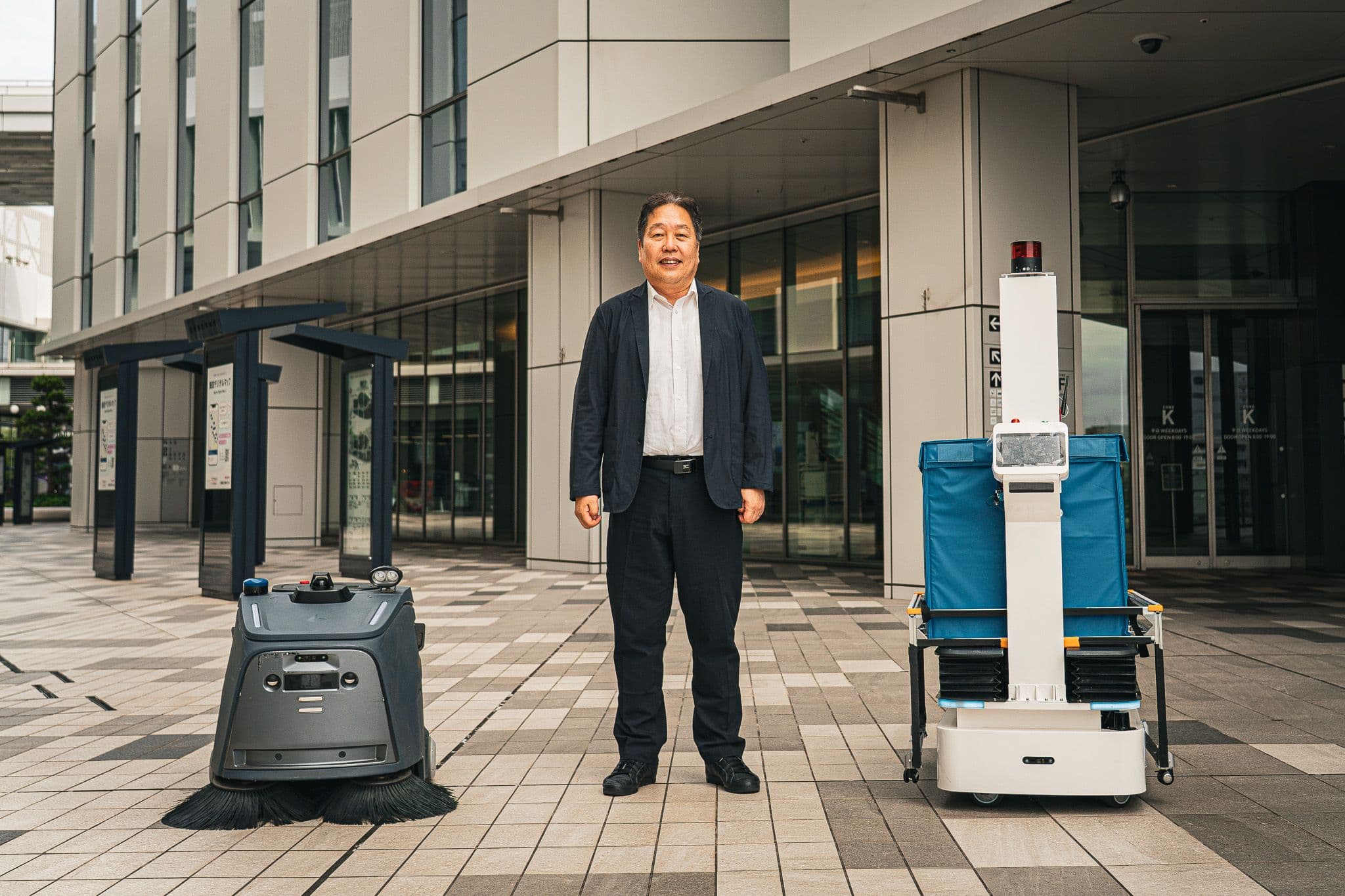
We are increasingly seeing food-serving and cleaning robots on our streets. However, it is still difficult to say that robots have become widely established in our work and daily lives. Takashi Miki, CEO of Solid Surface, believes the reason for this lies not in the performance of the robots themselves, but in the ‘operations’ required to ensure they continue to be used effectively on site.
Solid State does not manufacture the robots themselves: instead, it provides an operational platform that connects multiple robots from different manufacturers with people, building infrastructure and the cloud, enabling them to operate in a way that suits the specific site. We spoke to Mr Miki at the company’s Haneda Innovation City office.
What sort of company is Solid Surface?
I started out as an engineer specialising in systems development. However, as I continued working in the technology sector for many years, I came to realise that there are many issues that cannot be resolved through engineering alone.
Even if there are companies with excellent technology, there are times when a single company cannot implement it within society on its own. In particular, large corporations often have differing policies and structures, which can make direct collaboration difficult.
That is why start-ups like ours act as intermediaries, connecting companies with companies and technologies with technologies. That is the role of Solid Surface.
Robotics and AI are just some of the tools we use to achieve this. We founded the company not to create a society reliant on AI, but to build a society where people can live more enjoyably and comfortably through the use of AI and robots.
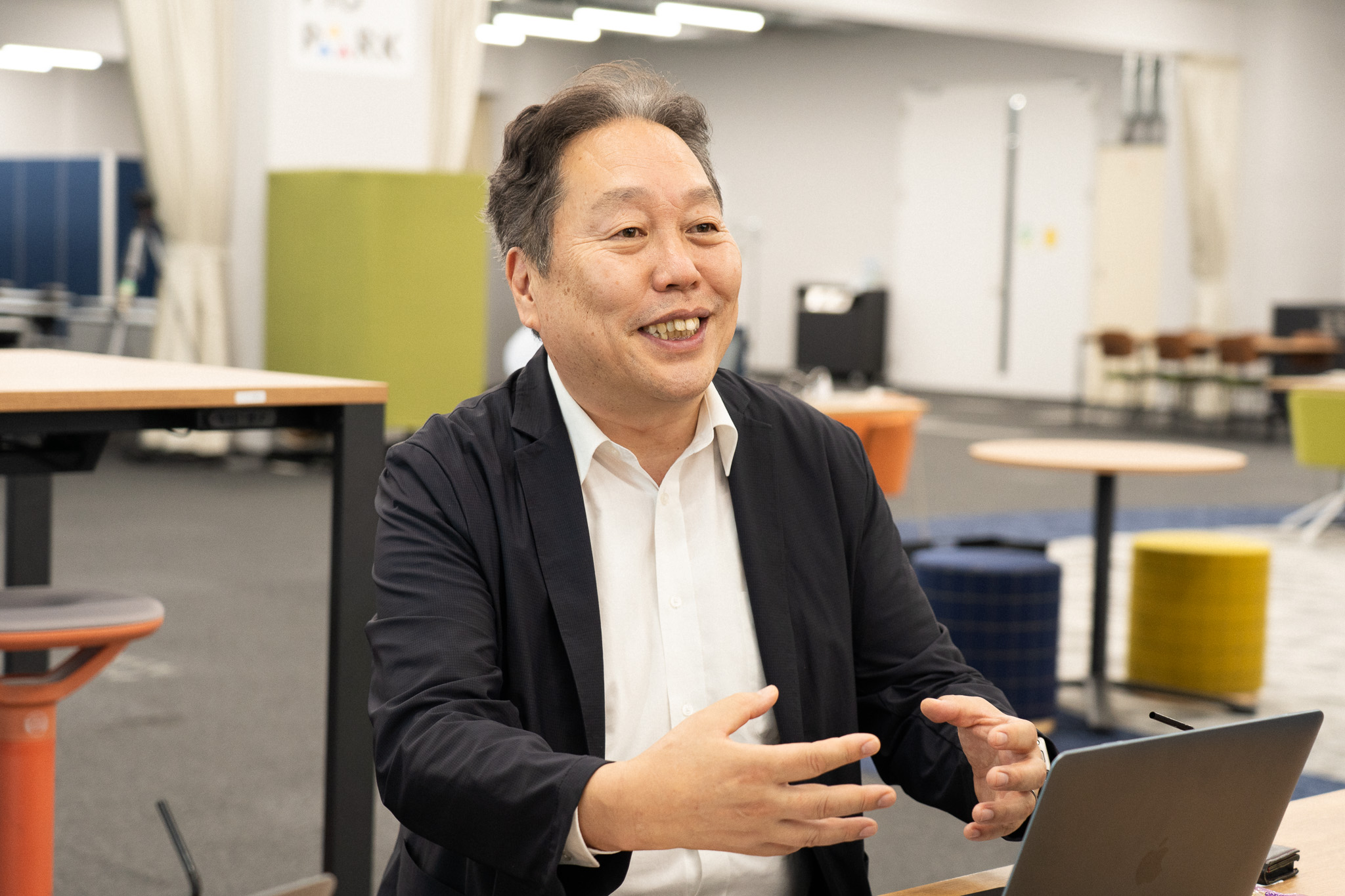
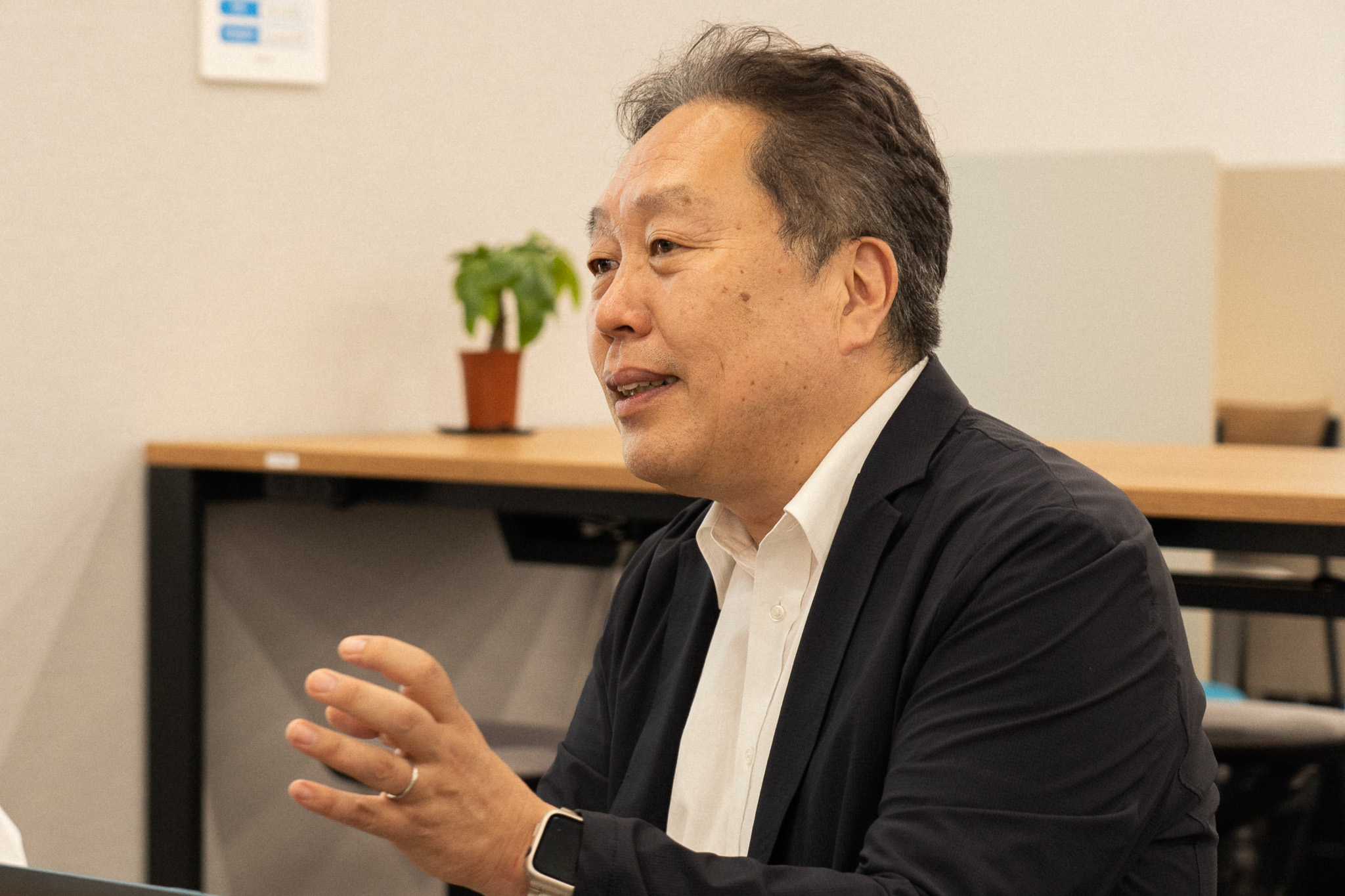
Could you tell us about your career path leading up to your current role?
My first job was with a well-known construction machinery manufacturer. This was around 1984, and at that time the company did not yet have a dedicated software development team. At a factory in Ishikawa Prefecture, I was involved in the development of industrial robots, electronic control systems and software. Although industrial robots themselves did not become widely adopted, the servo-press technology I developed there was applied to press machinery.
By replacing conventional hydraulic control with electronic control, it became possible to precisely adjust the application of force and movement; this technology is now utilised in the complex, smooth body shapes seen in cars all over the world.
Technology that could not fully demonstrate its value in one field generates significant value when linked to another. This experience is also relevant to my current business.
We are now seeing robots serving food and cleaning, but the uptake is slow. Why is that?
In factories where industrial robots are used, there are specialists known as production engineers. These are the people who design solutions tailored to the specific site, deciding where to place the robots, what tasks to assign them, and how to coordinate them with surrounding machinery. However, in commercial facilities such as offices, hospitals and restaurants robots are expected to be introduced and work in the same space as humans.
Also, even when a robot is right in front of them, users do not know ‘what it can do’ or ‘how it will help with their work’. Whilst manufacturers’ manuals may describe the robot’s functions and how to operate it, they do not explain how to use it within that specific facility to create real value.
Robots are deployed on-site whilst this remains a mystery known only to the developers. I believe this is a major issue hindering their widespread adoption.
So it’s not just a matter of the robot’s performance.
Performance is verified in the laboratory, but not in environments with large numbers of people. That’s why they become confused when encountering crowds or obstacles. It’s not that the robots are underdeveloped; it’s simply that they haven’t been researched or operated in such environments. Current robots aren’t very good at speaking, so humans need to take a step towards them and ask, “what can you do?” or “can you carry this?” Designing that division of roles is what we mean by ‘operational design’.

What are the social issues you are seeking to address?
The major challenges are labour shortages and wage disparities arising from working conditions. However, I believe the root cause is not simply that ‘there aren’t enough people’, but rather that there is a mismatch between workers’ skills and preferred working hours, and the conditions required by the workplace.
For example, there are people who find it difficult to work at night but are able to work during the day. There are also people who, whilst unable to carry heavy loads, can excel at customer service or roles requiring decision-making. By using robots and AI to fill the gaps where humans cannot work, or during times when few people are available, more people will be able to work in a way that suits them.
For this reason, we do not aim to replace all jobs with robots. By appropriately dividing the roles between humans and robots, we want to create a society where people can work during the hours they wish to, utilising their strengths to earn the income they need. We believe that robots and AI should serve to bridge the gap between people and work.
What we provide is a cloud-based operational platform that acts as an intermediary between people and robots. Currently, various manufacturers are developing robots for tasks such as cleaning, transport, security and guidance. However, the operating methods, data formats and connection methods differ from robot to robot.
When facility operators introduce robots from multiple manufacturers, the management interfaces and operating methods differ for each robot, making operations complex. Furthermore, integrating them with building systems such as lifts and automatic doors requires the development of individual systems.
We design a user-friendly operational framework in the cloud and, behind the scenes, connect robots and equipment from different manufacturers. In a sense, we act as a ‘translator’ between people and robots, and between robots and the building.
What are some of your latest developments?
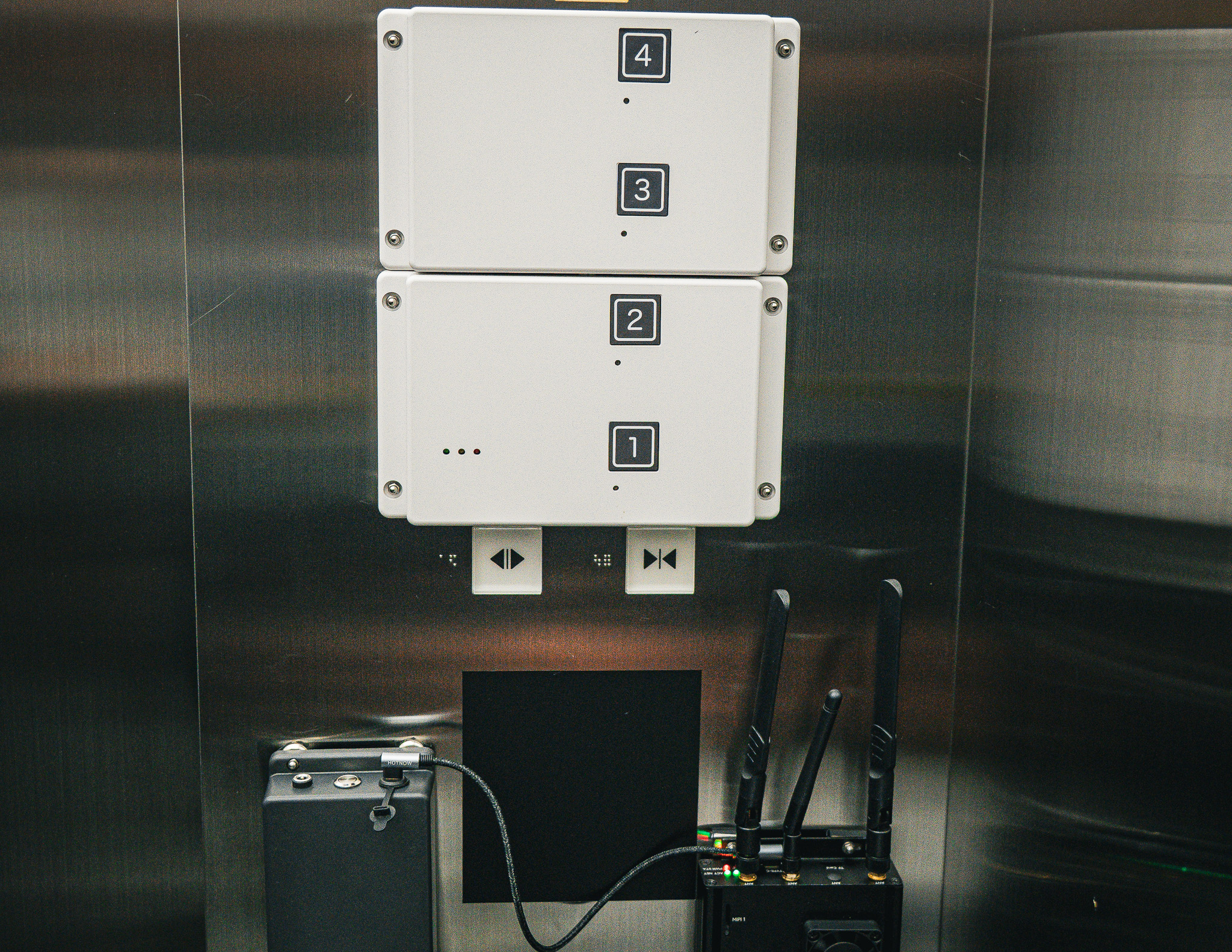
Recently we have developed a robot that can use a standard elevator. This was one of the topics I was researching at a national institute. At the time, there was no technology available to control elevators via the cloud. So, I thought, ‘if we can’t communicate with the lift, we’ll just have to press the buttons physically,’ and developed a device to do just that.
In the first prototype, we attached a finger-shaped device to press the buttons, but it looked so realistic that it was a bit eerie… so we redesigned it into a plain, square shape (laughs).
It may seem like a primitive method at first glance, but there is great value in being able to integrate with robots without having to carry out major modifications to existing facilities.
Rather than replacing equipment with new systems, we create an environment where robots can work whilst making the most of existing buildings and equipment. This kind of flexible design, tailored to the specific site, is one of our company’s strengths.
Providing support from the sidelines for this pilot project is ‘MoRo’, a cluster launched as part of the Tokyo Metropolitan Government’s start-up support initiative, TIB CATAPULT. Established by DMM.com, the MoRo cluster aims to accelerate the societal implementation of next-generation mobility and robotics technologies. In this project, we are accelerating Solid Surface’s pilot trial in collaboration with our partner, Haneda Mirai Development, in Haneda Innovation City.
Previous event report: https://www.blackboxjp.com/stories/tib-catapult-spotlight-how-moro-is-accelerating-real-world-adoption-of-mobility-and-robotics-technologies
How are you utilising Haneda Innovation City?
This site is great as a venue for verifying the social implementation of robots. Whilst many people visit on event days, it can be quite quiet on weekdays or at certain times of the day.
For this reason, I am particularly pleased that we can operate the robots under a wide range of conditions, such as environments with high and low footfall, day and night, and indoors and outdoors.
In a real-world city, footfall, obstacles and communication environments are constantly changing. By testing in such environments, we can identify the challenges necessary for real-world deployment; not only the performance of the robots themselves, but also their communication, integration with building systems and interactions with users. It is rare to find a test bed with such a diverse range of characteristics.
HICity: https://haneda-innovation-city.com/en/
What does Solid Surface aim to achieve next?
To date, through pilot trials and system development, we have accumulated expertise in operating robots on-site. The next stage is to translate that expertise into services that will be utilised on an ongoing basis.
Simply having a robot operate once does not constitute true social implementation. Long-term operation within actual facilities brings to light challenges that were not apparent during pilot trials alone, such as fluctuations in user numbers, equipment faults and changes in operational staff.
We aim to address these challenges one by one, creating a service that leaves users feeling that it was worthwhile. Going forward, we intend to deliver the technology we have cultivated to real-world settings and build up a track record of continuous operation.
I believe that, in the future, humans and robots will be able to communicate more naturally.
As people have more opportunities to interact with robots, they will come to understand ‘what this robot is good at and what it struggles with’. I also think that robots will gradually come to understand what people are looking for.
Humans do not need to constantly demand perfection from robots, nor do they need to expect them to behave exactly like humans. Just as people have their strengths and weaknesses, so do robots.
Life-sized humans and life-sized robots working together whilst understanding each other’s characteristics. We aim to realise a society where robots are accepted not merely as machines, but as natural partners, through both technology and operational practices.
Finally, could you tell us what drives you?
Now that I’m 61, I’ve made up my mind to spend my remaining years doing only what I want to do. I no longer have any desire for a bit of extra cash.
Once I realised that, my mind felt clear and organised. I’m working my hardest to achieve that goal (laughs).
Company information
Company name: Solid Surface.Inc
URL : https://www.solidsurface.co.jp/
Address : Kanda Nishikicho, Chiyoda-ku, Tokyo
Representative : Takashi Miki
Business Activities:
Cloud-based operational infrastructure connecting people and robots; wireless communication (local wireless); multi-vendor robot integration; utilisation of generative AI; system development
■.make Mobility & Robotics (MoRo)
‘MoRo’, a cluster established by DMM, aims to accelerate the societal implementation of next-generation mobility and robotics technologies, and has been selected for the Tokyo Metropolitan Government’s start-up support programme, ‘TIB CATAPULT’. Bringing together multiple companies and organisations, it connects the insights and technologies each has accumulated to create ‘practical’ solutions for everyday life and industrial settings through co-creation. (Operating Secretariat: DMM.com LLC)
Official website: https://akiba.dmm.com/moro
.png)
■TIB CATAPULT
Since the Reiwa 6 financial year, the Tokyo Metropolitan Government has been implementing the ‘Project for the Creation of Clusters Challenging Global Innovation’ (commonly known as ‘TIB CATAPULT’) to provide focused support for technology and industrial sectors with high growth potential, using the ‘Tokyo Innovation Base’ (TIB)—an innovation hub operated by the Metropolitan Government—as its starting point. This initiative supports ‘innovation clusters’—consortia comprising multiple entities such as large corporations and investors—in nurturing global start-ups by leveraging their respective strengths.
Official website: https://tibcatapult.metro.tokyo.lg.jp/
.png)