
TIB CATAPULT Spotlight: How MoRo Is Accelerating Real-World Adoption of Mobility and Robotics Technologies

Japan is home to some of the world's most advanced robotics and mobility technologies.
Yet despite its technological advances, relatively few of these innovations successfully make the leap from the R&D phase to widespread, real-world adoption. Many promising technologies face challenges related to operations, regulation, and deployment environments before reaching commercial scale.
MoRo (.make Mobility & Robotics), one of the industry clusters selected under Tokyo Metropolitan Government's TiB CATAPULT startup support initiative, was established to address exactly this challenge. Its mission is not only to support technological innovation, but also to implement the real-world adoption of mobility and robotics solutions.
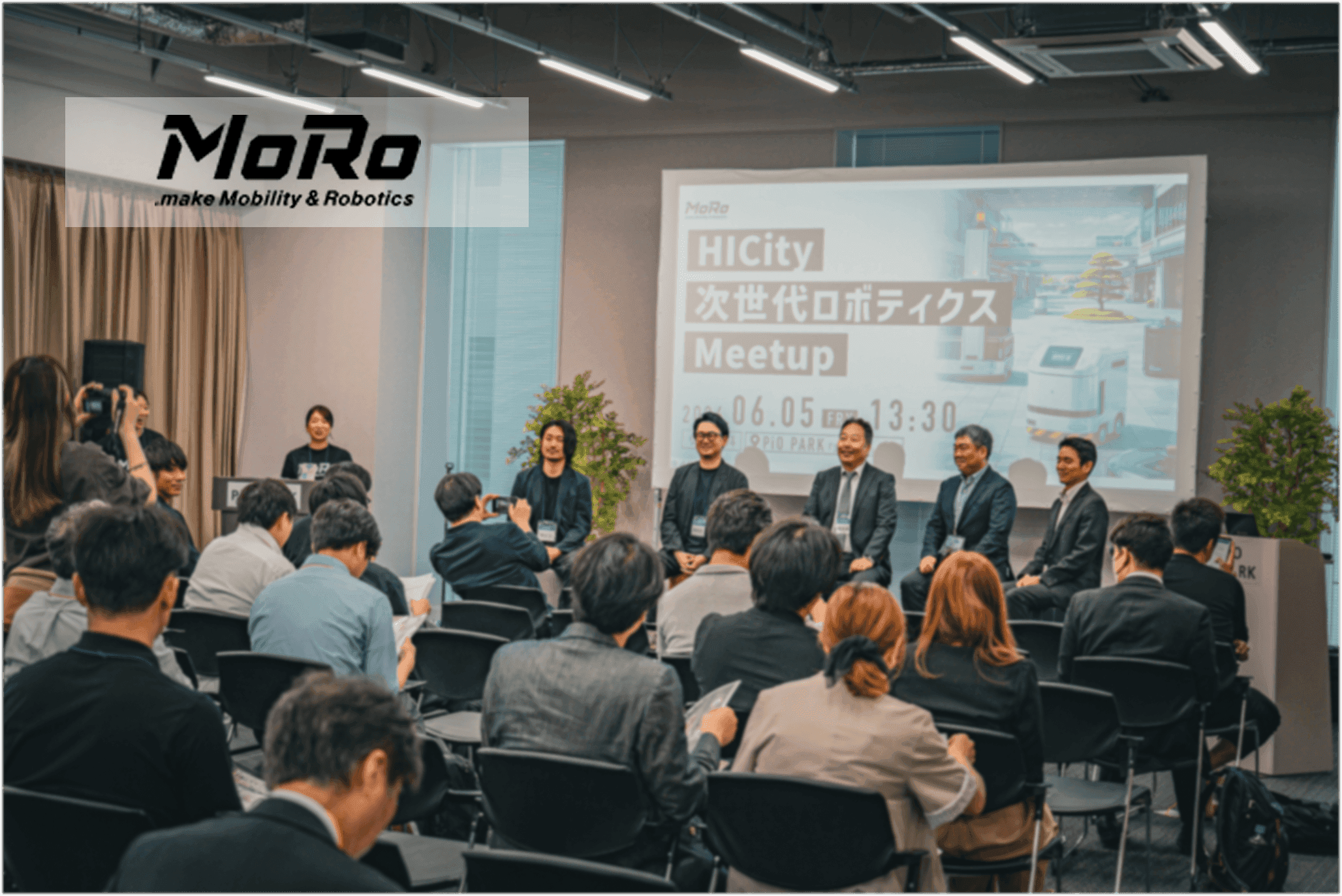
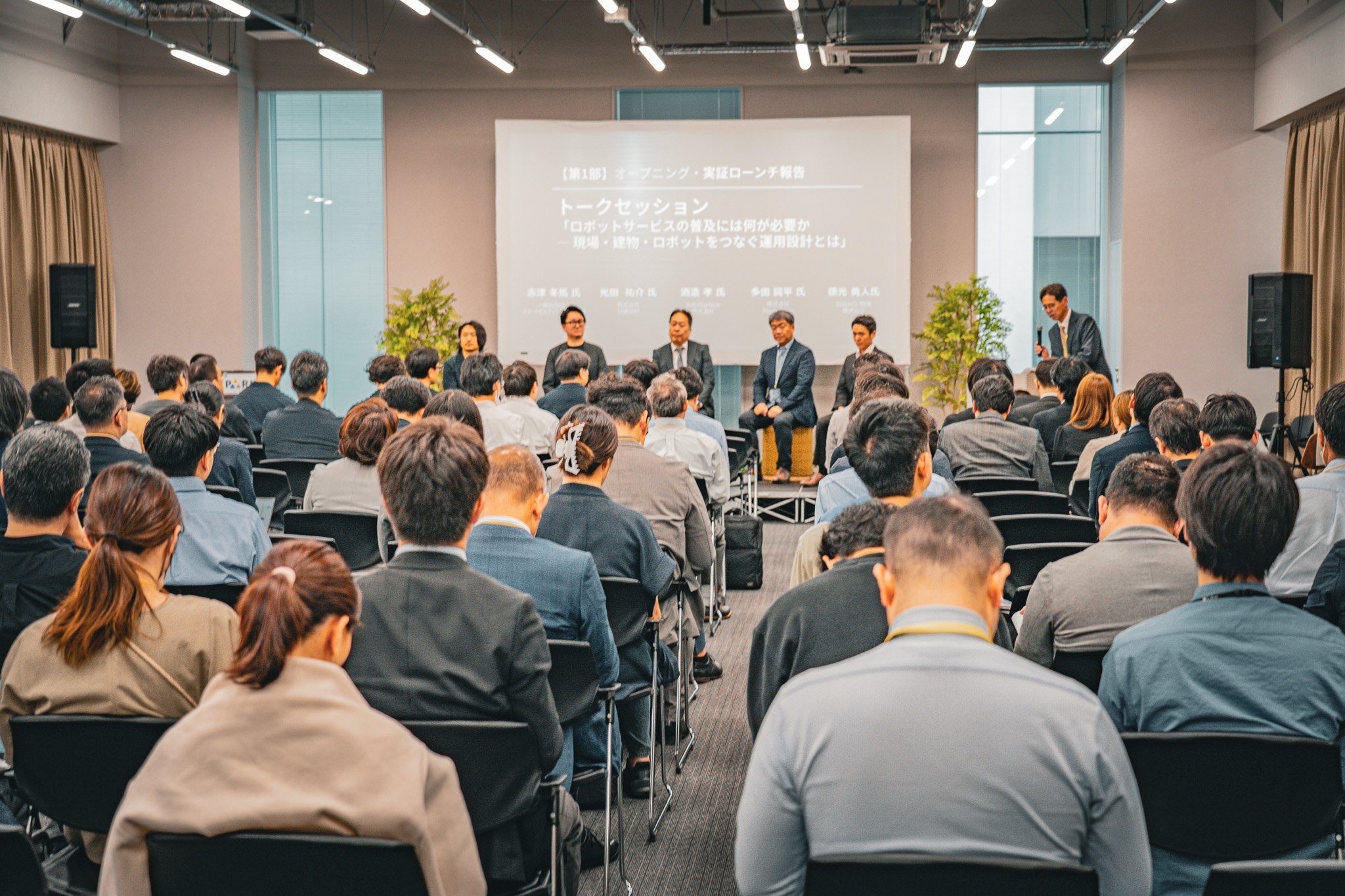
In June 2026, MoRo hosted its Showcase Event at Haneda Innovation City (HICity), bringing together startups, facility operators, robotics manufacturers, and ecosystem partners to discuss both the challenges and opportunities surrounding robotics deployment.
What emerged from the event was not simply a showcase of new technologies. Rather, it offered a glimpse into a new ecosystem being built to address some of Japan's most pressing societal challenges.
What is MoRo?
MoRo is an industry cluster focused on next-generation mobility and robotics, operating under Tokyo's TiB CATAPULT startup support program.
Led by DMM and supported by a diverse network of corporate and institutional partners including Haneda Future Development, MoRo is designed to support startups throughout the entire commercialization journey, from technology development and field testing to initial deployment and international expansion.
The program provides participating startups with:
- Access to testing an demonstration environments
- Matching opportunities with large corporations
- Financial support of up to ¥10 million
- Support with international expansion
- Technical and business development assistance
What distinguishes MoRo from traditional accelerator programs is its ecosystem-driven approach.
Rather than focusing solely on technology developers, the cluster brings together deployment partners, facility operators, infrastructure providers, and other stakeholders necessary for successful market adoption.
Its goal is not simply to help startups build better products, but to help create the environments where those products can thrive.
A Global Robotics Deployment Market
From a robotics deployment perspective, Japan represents one of the world's most unique and compelling markets.
The primary driver is demographic change.
Japan's aging population and shrinking workforce have created severe labor shortages across industries such as logistics, facility management, security, cleaning services, and infrastructure maintenance. As workforce constraints continue to intensify, robotics is increasingly becoming a necessity rather than an option.
While these challenges pose significant societal risks, they also create substantial market opportunities.
Japan is also recognized as one of the world's most robotics-friendly societies. Decades of investment in industrial automation and robotics research have fostered a relatively high level of public acceptance and institutional familiarity with robotic systems.
In this sense, Japan is not only a country that develops robotics technologies—it is also where those technologies can be tested, validated, and refined in real-world environments.
For robotics startups around the world, Japan represents more than a potential customer base. It offers a proving ground for building scalable deployment models.
The Challenge is No Longer Technology—it's Deployment
One of the most striking themes throughout the showcase event was the consensus among speakers that technological capability is no longer the primary bottleneck.
Deployment is.
Japan has long been a global leader in robotics research and industrial automation. Its universities, research institutions, and startups continue to produce world-class innovations. However, successful deployment requires much more than technical excellence.
Panel discussions highlighted several persistent challenges:
- Most buildings were not designed with robotics operations in mind.
- Regulatory frameworks are still evolving.
- Many organizations lack deployment expertise.
- Expectations often exceed what current systems can realistically deliver.
Perhaps the most insightful observation was that many organizations approach robotics adoption backwards. The goal should not be to deploy robots. The goal should be to solve operational challenges. The critical questions are not, "how many robots should we introduce?" but rather, "which tasks should be automated? How should humans and robots share responsibilities? What value will this create?"
As labor shortages continue to affect nearly every industry in Japan, these questions are becoming increasingly important.
The challenge ahead is not building more robots—it is building systems that allow robots to function effectively within society.
.png)
Haneda: A Living Laboratory for Urban Deployment
One of the most significant announcements at the event was the development of a new open testing environment led by Solid Surface in partnership with Haneda Future Development.
Located at Haneda Innovation City (HICity), the site occupies a unique position between laboratory research and real-world urban deployment.
Unlike controlled testing facilities, HICity is a varied environment populated by office workers, visitors, tourists, and event attendees. Human traffic patterns change throughout the day, creating conditions that more closely resemble real-world operations.
Haneda Future Development describes the facility as "a place that bridges the gap between the laboratory and the city."
This distinction is critical. Many robotics systems perform well in controlled environments but encounter significant challenges when deployed in public spaces. Human behavior is unpredictable. Operational conditions constantly change. Every facility has different requirements.
Bridging that gap is one of the most important—and often overlooked—steps toward commercialization. The open testing infrastructure at HICity represents a concrete effort to address this challenge.
MoRo is Building More Than Robots; it's Building a Market
Perhaps the most important takeaway from the event is that MoRo is not primarily focused on robotics technologies themselves.
It is focused on market creation.
Robotics adoption cannot be driven by manufacturers alone. Successful deployment requires collaboration among startups, facility operators, systems integrators, building owners, corporate users, and government stakeholders.
MoRo is designed to bring these groups together.
Its ecosystem approach recognizes a reality that has long challenged Japan's innovation landscape; the country often excels at developing technologies, but struggles to create markets around them.
In that sense, MoRo is not merely supporting startups. It is attempting to build the infrastructure necessary for a sustainable mobility and robotics industry.
A Global Standard Originating in Tokyo
What makes MoRo particularly noteworthy is its ambition beyond domestic deployment. The program includes support for international expansion, certification processes, and global business development, reflecting a long-term vision that extends beyond Japan's borders.
Japan has produced countless robotics innovations over the years, yet many have struggled to achieve significant global market penetration. Building globally successful robotics companies requires more than technological excellence. It requires proven deployment models, operational expertise, and validated use cases.
By helping startups establish those foundations within Japan, MoRo aims to position them for success on the international stage.
The Future of Robotics is Not About Replacing People
Robotics is often framed as a technology designed to replace human labor. The vision presented at the MoRo Showcase was different.
Rather than a future without people, speakers described a future in which humans and robots work together. A future where robots become integrated into cities, buildings, and operational systems rather than functioning as standalone machines.
Achieving that future will require more than innovation. It will require deployment environments, regulatory frameworks, operational expertise, and market infrastructure. That is the foundation MoRo is working to build.
Whether this initiative becomes a new model for Japan's robotics industry remains to be seen. But the experiments now taking place in Haneda may offer an early glimpse into what the next generation of robotics adoption could look like—not only for Japan, but for the world.
Read our previous article about TiB CATAPULT here.