
Newsletter Signup
Join Our Community!
Stay updated with the latest news, exclusive insights, and more.
Stay updated with the latest news, exclusive insights, and more.
To see how we may use your information, take a look at our privacy policy.

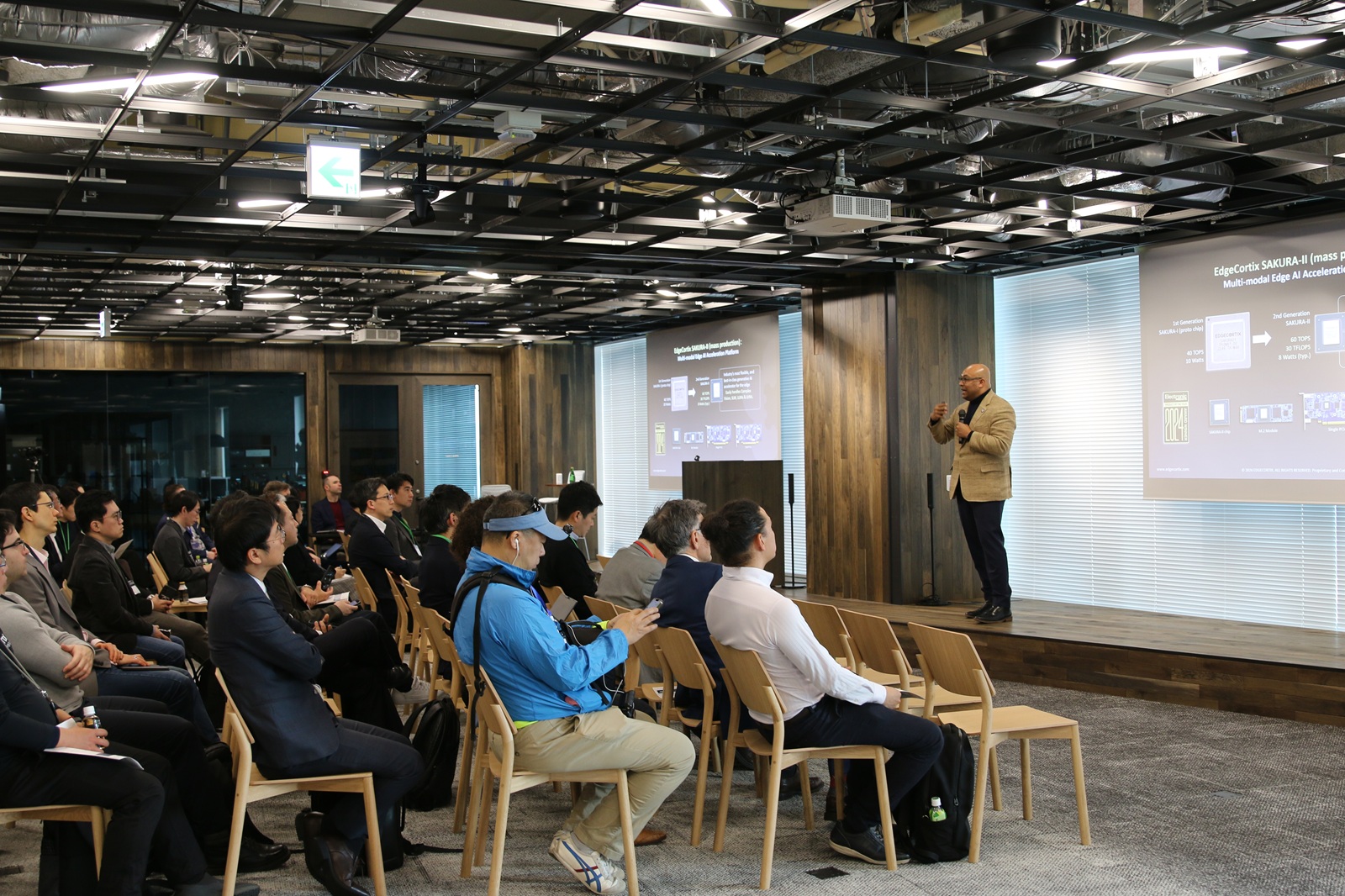
Hello Tomorrow Japan Deep Tech Summit 2026, held in Tokyo this February, brought together founders, investors, researchers, and corporate leaders to explore a central question: how can breakthrough science be translated into sustainable business?
The morning program focused on execution rather than vision alone. The discussion centered not on how deep tech is invented, but on how it is implemented. Through keynote sessions, panel discussions, and international startup pitches, the summit highlighted Japan’s evolving role within the global deep tech ecosystem.
Japan is increasingly seen not merely as a consumer market or expansion destination, but as a “finishing phase” environment. In this context, it refers to a setting where advanced technologies are refined, validated through industry collaboration, and structured into globally viable business models.

Deep tech startups rarely struggle with scientific originality. Many enter the market with validated research, patented technologies, and promising prototypes. However, technical excellence alone does not ensure commercial success.
The more difficult questions emerge after the breakthrough:
• At what stage does an investor develop conviction?
• When does a customer commit to adoption?
• How much implementation risk are partners willing to share?

Speakers challenged the idea that early-stage deep tech can be evaluated using conventional startup metrics.
Unlike fast-scaling SaaS ventures, deep tech companies operate within long research cycles and high uncertainty. Early KPIs such as rapid growth or short-term revenue often fail to reflect long-term defensibility or technical feasibility at scale.
Japan’s industrial base offers a distinctive environment. Strengths in manufacturing, advanced materials, electronics, robotics, and life sciences provide access to deep expertise in quality control, reproducibility, and process optimization.
Rather than emphasizing speed, Japan was described as a place to methodically test foundational assumptions. Technical feasibility and production scalability can be examined carefully before global expansion.

Funding marks the beginning, not the end, of the journey.
Once capital is secured, deep tech startups enter an extended validation phase: proof-of-concept trials, pilot deployments, manufacturing preparation, and regulatory coordination. Success depends less on valuation headlines and more on collaborative ecosystems.
Japan’s strength lies in proximity and network density. Corporations, universities, research institutes, government agencies, and customers operate within closely connected networks. This structure enables repeated cycles:
Test.
Fail.
Adjust.
Retest.
What may appear gradual from the outside systematically transforms technical possibility into implementation-ready business.
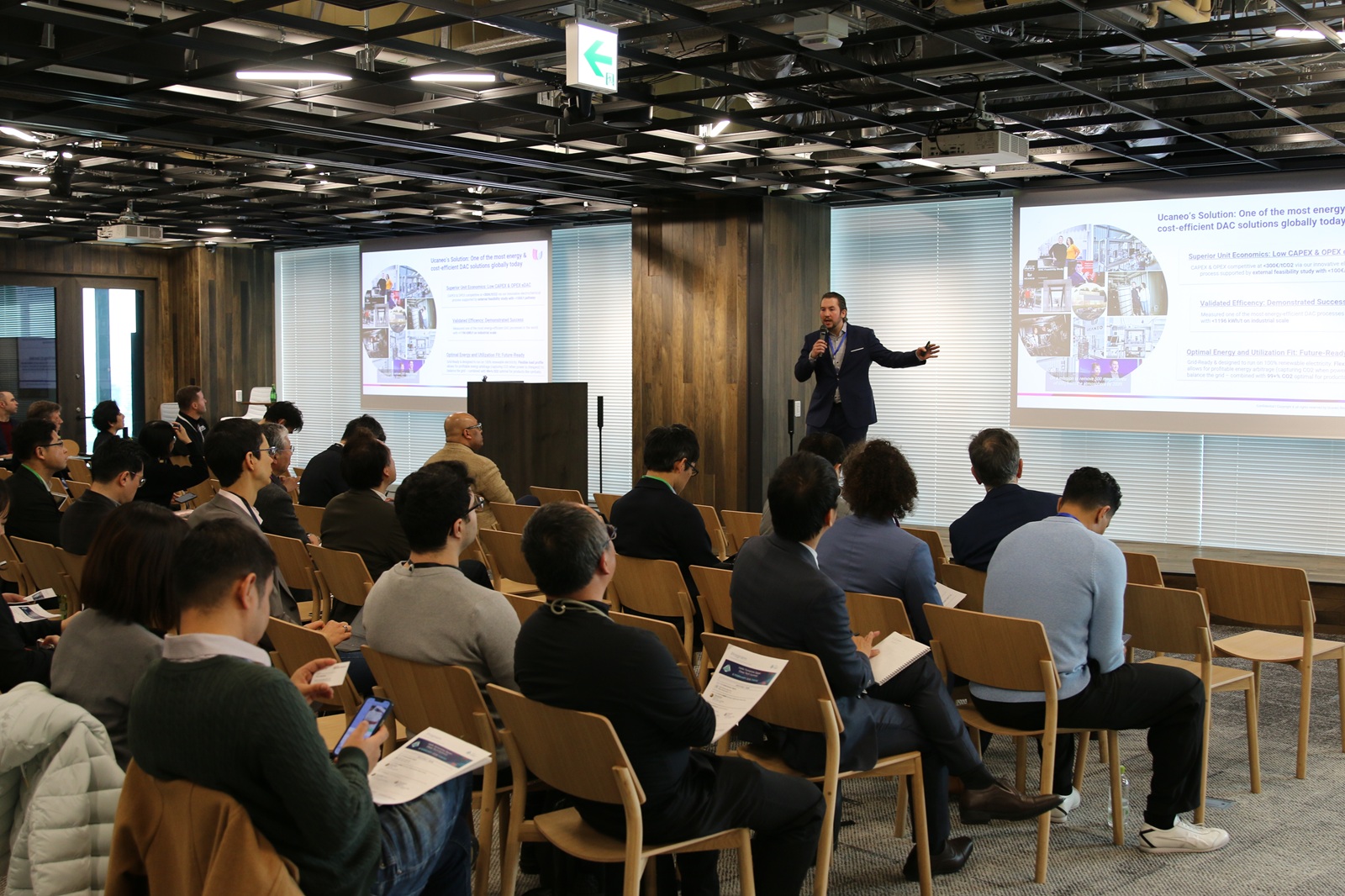
International startups pitching at the summit reflected this mindset. The focus was not on polished final products or large total addressable market figures.
Instead, investors and partners concentrated on practical indicators:
• Where has the technology already been validated?
• Who are the current implementation partners?
• What is the next concrete deployment milestone?
This evaluation lens prioritizes viability over perfection. It measures whether a solution works under real-world constraints rather than how compelling the narrative appears.
The result is a culture of assessment grounded in practical integration.
Several startups demonstrated that deep tech must be designed for integration, not just novelty.
Ucaneo — Turning CO₂ into Industrial Feedstock
Ucaneo positioned its carbon capture technology as a supply chain solution. Instead of focusing only on emissions reduction, the company explained how captured CO₂ could be used in fuels and raw materials.
The pitch highlighted plant construction plans and operational partnerships, emphasizing how the technology fits within existing industrial systems.
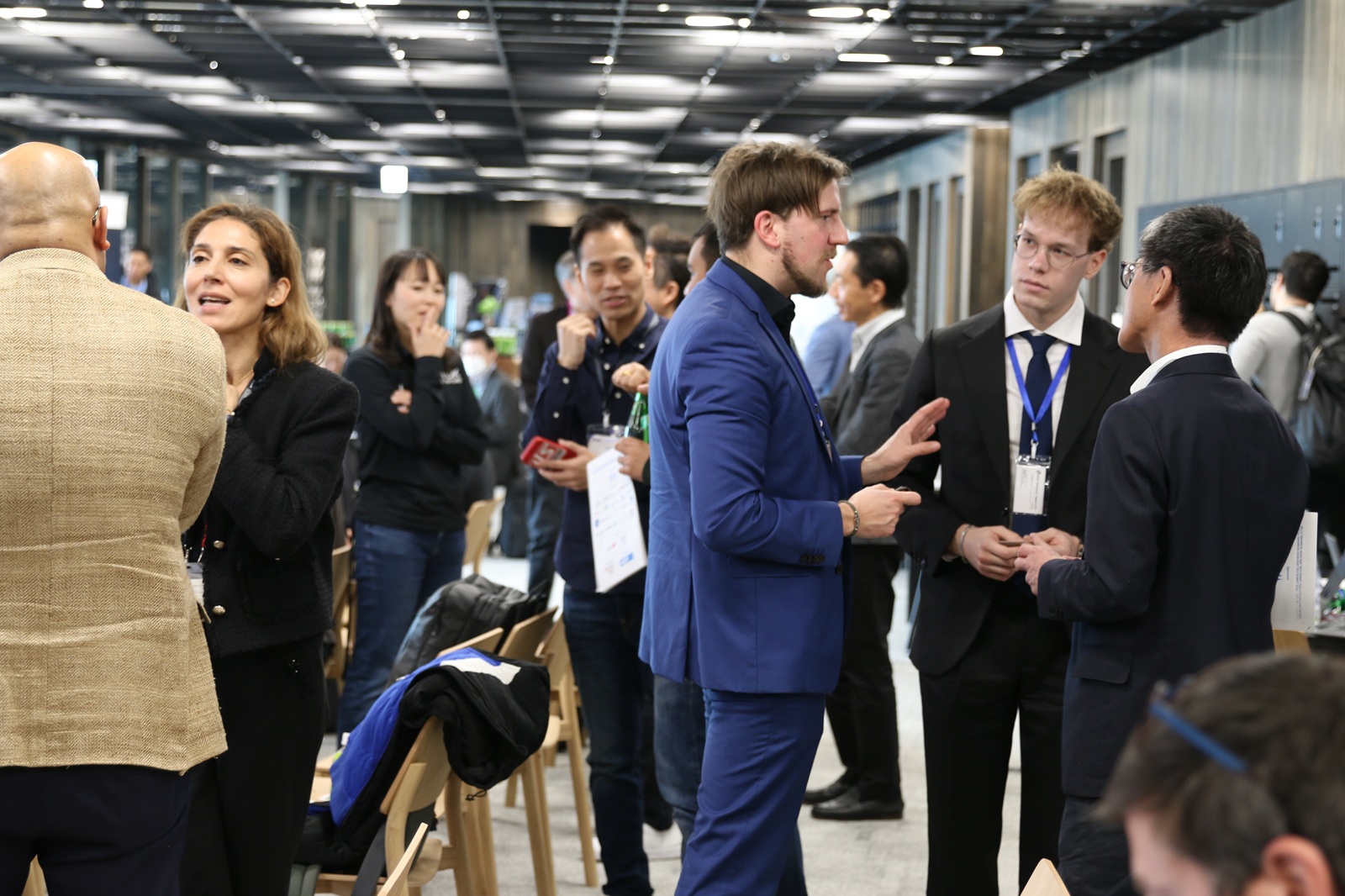
ryp labs introduced a biologically inspired preservation technology. The presentation focused on practical considerations:
• Where waste occurs in the supply chain
• Who makes purchasing decisions
• How adoption differs across crops and regions
The message was clear: sustainability solutions must function within real logistics and distribution constraints.
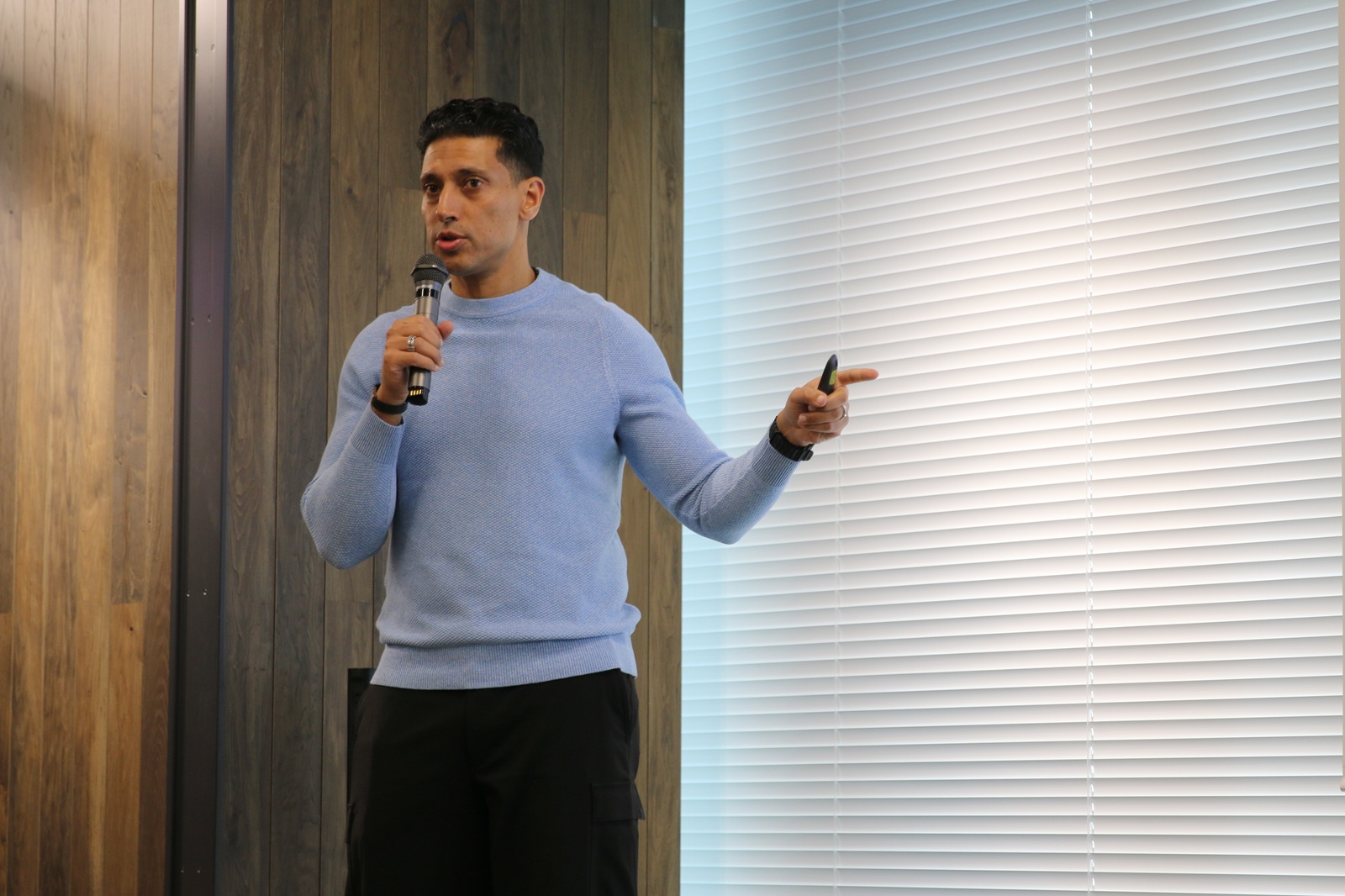
In AI and semiconductors, performance benchmarks often dominate presentations. EDGECORTIX took a different approach.
Rather than emphasizing raw computing power, the company focused on system integration. By combining hardware and software optimized for low-power, latency-sensitive environments, it positioned its solution as adaptable infrastructure.
The key question was not who leads in performance, but whether the technology can be embedded across diverse industrial settings.

Across the summit, a clear pattern emerged. Japan is increasingly functioning as a bridge between laboratory validation and global expansion.
Startups use this environment to:
• Align technical claims with industrial standards
• Validate manufacturability and scalability
• Build implementation records before entering new markets
This “finishing phase” strengthens ambition. By accumulating operational evidence and forming durable partnerships, startups can enter global markets as deployment-ready enterprises.The summit underscored that deep tech success depends on structured implementation, not invention alone.
Japan’s ecosystem, rooted in industrial depth, collaborative networks, and long-term thinking, provides a setting to refine and validate emerging technologies.
It enables startups to transform scientific breakthroughs into commercially credible businesses prepared for global deployment.
As technological progress accelerates, environments that prioritize implementation rigor may become increasingly valuable.
Japan is emerging as a key stage in the journey from research breakthrough to global reality.


%20(1).png)
%20(1).png)

.jpeg)


.png)