
Newsletter Signup
Join Our Community!
Stay updated with the latest news, exclusive insights, and more.
Stay updated with the latest news, exclusive insights, and more.
To see how we may use your information, take a look at our privacy policy.

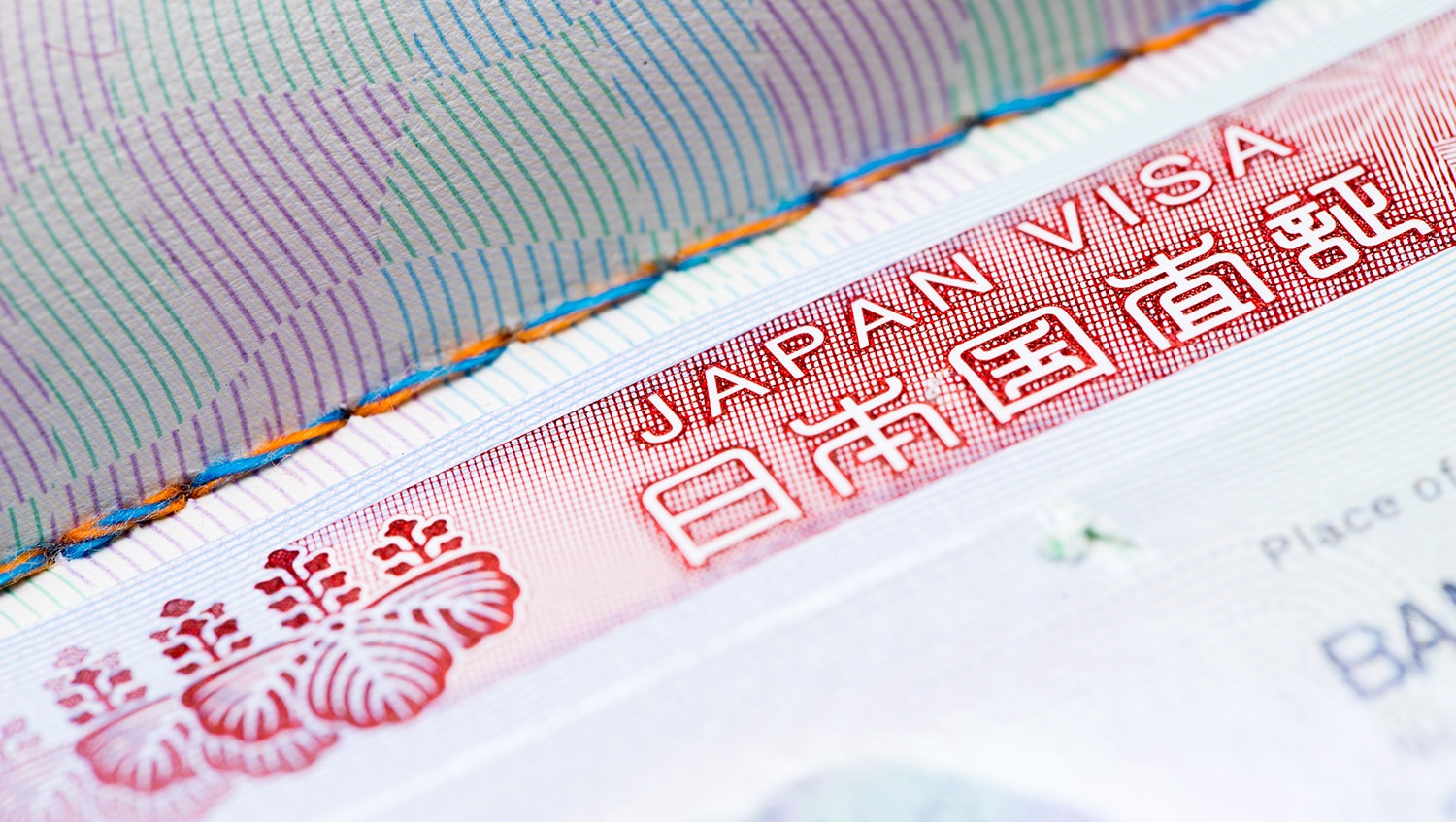
Japan raised the minimum capital requirement for its Business Manager Visa from ¥5 million to ¥30 million in October 2025, a sixfold increase that effectively price-tags foreign entrepreneurship at around US$200,000, before a single hire is made.
The short version: Japan is deliberately narrowing the front door for foreign entrepreneurs while quietly expanding a side entrance. Whether this is visionary policy or self-defeating bureaucracy depends entirely on who you are, and what you're building.

At the end of 2024, 41,600 foreign nationals held a Business Manager Visa in Japan; more than double the 18,100 holders recorded a decade earlier. That explosive growth is precisely what triggered the clampdown.
Here's the problem hidden inside that statistic: of those 41,600 businesses, only an estimated 4% had capital exceeding ¥30 million. That means the new threshold would, in theory, disqualify 96% of the current visa-holder population from qualifying under the revised rules.
The government's diagnosis was stark. Japanese immigration authorities had accumulated evidence of systematic abuse: a single broker was alleged to have operated almost 600 dummy companies, using them to cycle Sri Lankan nationals through visa statuses—first as engineers, then repositioned as company "executives" to obtain Business Manager status. Users reportedly paid brokers between ¥500,000 and ¥1 million each for the scheme.
Justice Minister Keisuke Suzuki framed the October 16, 2025 reforms as a quality-over-quantity realignment, stating the changes were designed to "filter out applications lacking long-term investment intent."
The new Business Manager Visa requirements, effective October 16, 2025:
A three-year transitional period (until October 16, 2028) applies to existing holders, who can renew without full compliance if they demonstrate clear progress toward meeting the new standards.
This matters because the Business Manager Visa has been the primary long-term residency pathway for foreign entrepreneurs in Japan. And the new capital bar is now set much, much higher.
For context: the average seed round for an early-stage startup in most markets ranges from $150,000 to $500,000. Japan is now asking founders to have that capital committed before proving market fit, before a single customer, and before the business has demonstrated any traction. That's not how most startups work.
The businesses most affected are exactly the ones that have contributed to Japan's regional revitalization: service-based firms, boutique consultancies, creative studios, and community-embedded small businesses. The minpaku (short-term rental) operators that dominated Business Manager applications in some municipalities are now priced out.
[IMAGE: Foreign entrepreneur working at a modern Tokyo co-working space, overlooking the city skyline]
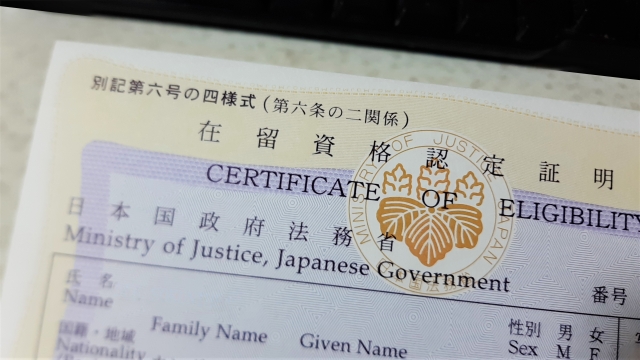
Here's the contradiction worth sitting with: in January 2025, just nine months before tightening the Business Manager Visa, Japan expanded its Startup Visa program nationwide.
Previously available only in select cities—Tokyo, Fukuoka, Kyoto, Shibuya—the Startup Visa is now accessible through approved organizations across virtually every region of Japan. The program was also extended from a maximum of 12 months to two full years, giving foreign founders more time to build toward the requirements of the Business Manager Visa.
As of May 2024, 716 individuals had used the Startup Visa. Of those, 359 had successfully transitioned to Business Manager status — a conversion rate of roughly 50%, which is not negligible.
The government's intent, reading between the lines, is to create a two-tier system:
Importantly, time spent on a Startup Visa now counts toward the three-year management experience requirement for the Business Manager Visa. The pathway still exists.
Japan's reforms don't happen in a vacuum. Foreign entrepreneurs choosing where to plant their flags weigh Japan against Singapore, South Korea, and increasingly Southeast Asian hubs.
Singapore's EntrePass program, widely regarded as Asia's most entrepreneur-friendly visa, requires a minimum SGD 50,000 (~$37,000 USD) in capital—roughly one-sixth of Japan's new threshold. Processing takes three to six weeks. South Korea's K-Startup Grand Challenge goes further, offering funded acceleration programs that pay founders to test their ideas in-country.
Japan's counterargument: it offers access to the world's fifth-largest economy, 125 million consumers with high purchasing power, and an underdigitized B2B market where foreign solutions face relatively little domestic competition. Patient Japanese investors, known for long-term commitments rather than quarterly pressure, are a genuine differentiator for founders in deep tech, robotics, and healthcare.
But that argument gets harder to make when the entry ticket costs $200,000.

Strip away the policy details and what emerges is a philosophical bet about who Japan actually wants.
The pre-2025 Business Manager Visa attracted a wide range of actors: genuine entrepreneurs, wealthy immigrants, and—let’s face it—hucksters. The ¥5 million threshold was permissive by design: Japan was trying to signal openness. The signal worked, perhaps too well.
The new framework is a bet that the right foreign entrepreneur for Japan is not the bootstrapped first-timer, but the second- or third-time founder with an established track record, real capital to deploy, and a specific thesis for the Japanese market. Someone who can hire a Japanese-speaking employee, navigate a bank relationship, and commit to a five-year horizon.
This is a fundamentally different customer profile than the one the Startup Visa is designed to attract. And that's the point. Japan isn't abandoning foreign entrepreneurship. It's bifurcating it into a fast lane for serious capital and a slow lane for promising prospects who need institutional support to get there.
Whether that bet pays off depends on one variable the policy cannot control: whether the founders with ¥30 million to deploy actually want to build in Japan, or whether they'll take their capital to Singapore, Dubai, or Austin instead.
For founders with established capital and a Japan-specific thesis: The Business Manager Visa remains viable. The new requirements are substantial but not unreasonable for a serious market entry. Get a business plan certified, hire a Japanese-speaking team member, and engage an immigration lawyer early.
For early-stage founders exploring Japan: The Startup Visa is now your first and only realistic entry point. Apply through an approved municipality or support organization, build your two years of operational record, and treat that period as the runway it's meant to be.
For existing Business Manager Visa holders: You have until October 2028 under the transitional period. Use it strategically: document progress, build toward the capital and staffing requirements, and consult a specialist before your next renewal.
For investors watching Japan's inbound deal flow: The volume of foreign-founded companies entering Japan will likely drop in the short term. The quality, measured by capital commitment and operational seriousness, may improve. That's either good news or bad news depending on what you're optimizing for.
Japan has spent a decade saying it wants more foreign entrepreneurs. The 2025 reforms reveal a more precise ambition: it wants better-capitalized foreign entrepreneurs, channeled through a more controlled process. Whether that nuance translates into sustainable inbound startup activity, or simply redirects motivated founders toward more accessible markets, will define Japan's standing as a global startup destination for the rest of the decade.
Data sources: Immigration Services Agency of Japan, JETRO, Ministry of Justice Japan, Ministry of Economy Trade and Industry (METI), KPMG Global Immigration Flash Alert, Japan Times, Asia Times.


%20(1).png)





.png)