
Newsletter Signup
Join Our Community!
Stay updated with the latest news, exclusive insights, and more.
Stay updated with the latest news, exclusive insights, and more.
To see how we may use your information, take a look at our privacy policy.


When expanding a business into Japan, the biggest barrier isn’t just the language. It’s a unique Japanese business culture. We spoke with Mr. Someno, the founder of YOUNEEDS, a firm that has been driving the marketing and sales of foreign companies in Japan since 2020.
When global companies struggle with "the unique characteristics of Japan’s business," YOUNEEDS offers more than just consulting. From navigating complex internal approval processes to fine-tuning design details that build local trust, they provide hands-on execution to ensure every aspect of your business is fully optimized for the Japanese market.
%202.jpg)
I run YOUNEEDS, a firm dedicated to supporting marketing and sales for global companies expanding into the Japanese market. We launched in 2020 and are now entering our sixth year.
Before founding this company, I served as a business head for marketing services and SaaS platforms. This experience gave me a deep understanding of Japan-specific nuance, from identifying the right target accounts to navigating the complex internal approval processes known as Ringi. Foreign business owners struggle to read between the lines of Japanese business culture. That is where we come in. We leverage our deep-rooted local instincts to act as a bridge, ensuring our clients don't just 'enter' the market, but actually drive serious, high-stakes business growth in Japan.
Actually, from an outside perspective, Japan is still a gold mine. I see three main motivations.
First, it’s about sheer market scale. For companies in Southeast Asia, like Vietnam, Singapore, or Hong Kong, their domestic markets have limits. To them, Japan is still a massive economic powerhouse. When they hit a growth ceiling at home, they see Japan as the logical next step to fuel their expansion.
Second, the value of “Made in Japan.” Many global players use Japan as a proving ground. Japanese clients are notoriously picky about quality, right? So, if you can succeed here and clear those strict standards, that's your ultimate 'seal of approval' worldwide. They take that Japan-certified prestige back home or use it to launch globally. It’s a strategic move to build instant trust.
Third, and very common with US and European executives, is 'Japan as a stable asset.' Given global instability, Japan is seen as a safe haven. Many wealthy founders genuinely love Japanese culture and want a physical presence here. Like a factory or a subsidiary as a status symbol. They’re looking to acquire Japanese companies or secure their assets in a reliable environment. It's as much about protecting their wealth as it is about business.

Honestly, language isn't the biggest issue! You can solve that with AI tools in the near future. The real killer is the cultural mismatch in business logic. Global leaders often end up saying, 'Japanese people are too unique, I can't work with them!'
Take the phrase kento-shimasu (We will consider it). Global execs think it's a positive sign, but in Japan, it usually means 'No thanks.' They can't read those unwritten rules.
But the core problem is the gap between 'vision' and 'details.' Global leaders are great at selling a dream, like how they'll change the world. But a Japanese company only cares about: “What's the benefit for us? Exactly how much will it cost? What's the ROI?” Global firms have the dream but no concrete plan. Japanese firms have the details but no dream. They're on totally different wavelengths.
So I help bridge that gap between the goal and the means. Deals don't start until you speak the same language of results. Even with a simple slide deck, a Japanese professional can tell in a split second whether or not the company understands the local business etiquette. It’s the fonts, the line breaks, the white space, the text size... those tiny details are the signals of trustability in Japan. I localize their materials to show that they truly understand Japanese business culture. Only then can the global 'dream' finally click with the Japanese 'reality.’
Actually, SaaS is incredibly difficult. The Japanese market is already a 'red ocean'—it’s overcrowded. Just because a SaaS is popular abroad doesn't mean it’ll win here. When I work with SaaS firms, I don't recommend an easy entry. My first job is to push them to define exactly how they differ from the fierce local competition.
On the other hand, the ones seeing immediate results right now are OEMs and software development firms. Japan’s IT sector is suffering from a chronic labor shortage. So, the strongest model right now is targeting Japanese system integrators and IT firms with a value proposition: "We have talented engineers in our home country who can develop for you faster and at a lower cost." By acting as a partner or subcontractor and handling the development offshore, they solve Japan’s two biggest pain points: high costs and lack of talent. I think that is currently the most reliable path to success in this market in the short term.
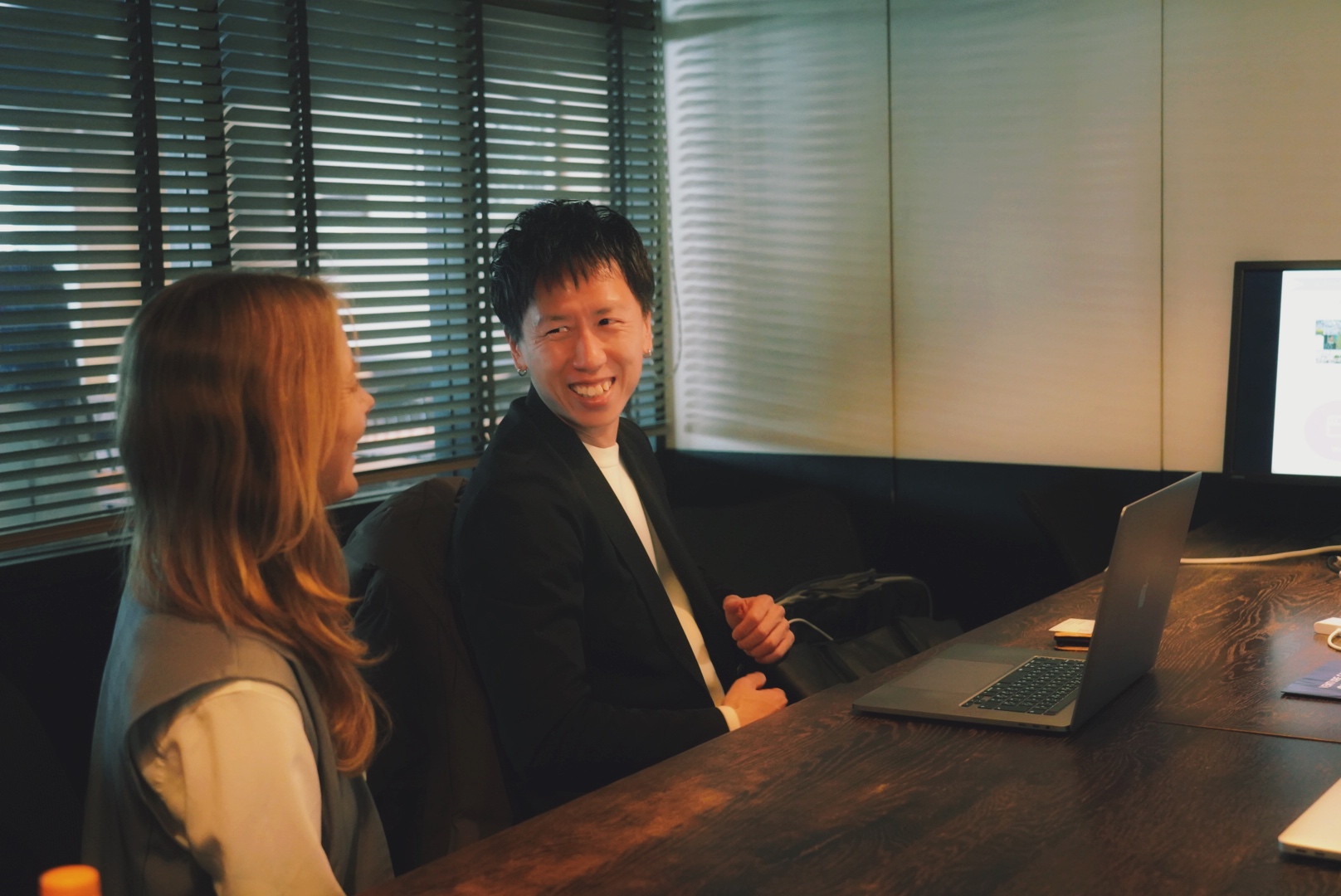
Supporting global firms entering Japan is just the first step. My true goal is to leverage the worldwide network we’re building to eventually support Japanese companies exporting to the world. I’m aiming to build a Modern General Trading Company (Shogo Shosha). But unlike traditional firms, our edge is speed. I want to differentiate through lightning-fast responses. I want clients to feel, 'If we leave it to YOUNEEDS, it’s done.' I want to build that level of brand trust.
Personally, I want the Japanese business market to be a place where global talent and Japanese professionals naturally form teams. As I mentioned, global players excel at vision and abstraction, while the Japanese excel at detail and execution. It’s not about one being better than the other, they just have different roles. When these two forces truly unite, the synergy is incredible.
Right now, I’m focused on expanding my influence and building connections worldwide. By bridging the 'Dream' and the 'Reality,' I believe we can make Japan a much more exciting place. YOUNEEDS will be at the forefront of that change.


%20(1).png)



.png)