
Jillian Chaplin: co-founder of 18CLUB tattoo studio

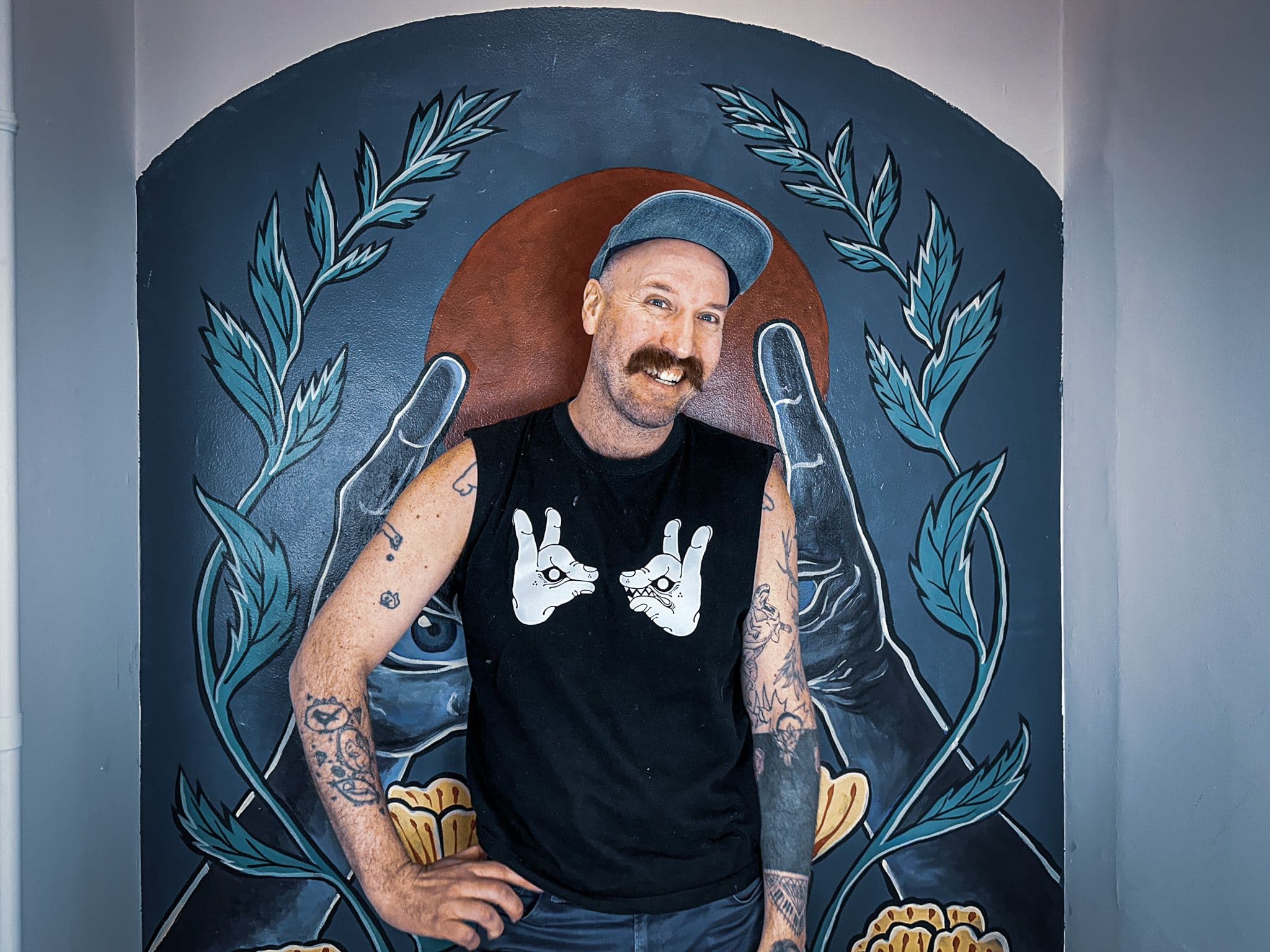
Tattoos famously (infamously?) carry a social stigma in Japan. So how does a foreign tattoo artist go about making a living here? The short answer is, "with difficulty." The long answer involves commitment, hard work, and the will to challenge preconceptions about what tattoos are or represent.
Today we're sitting down with Jill, co-founder of Tattoo Studio 18CLUB in Kobe to hear about his journey opening a business in Japan.
So, Jill: tell us about yourself.
I'm from the U.S., originally California, but I started tattooing in Washington State. I've been an artist my whole life and a tattoo artist for about 17 years, though I started a bit before that.

How did you end up in Japan?
I actually didn’t intend to live here. My partner is half Japanese, and we came to take care of her grandmother, who we lived with for six years. We were doing full-time elderly care, which is why there are gaps in my tattooing career — it wasn’t really possible to work steadily during that time. I’d go back to the U.S. occasionally to tattoo, and honestly, I wasn’t sure I could tattoo as a real job in Japan anyway.
After that, I moved back to the States for a bit and thought I wouldn’t return to Japan. But eventually I came back and settled in Kobe, which I love. That’s when I decided to seriously try tattooing here.
How did you end up opening 18 Club?
Well… without getting into anything legally questionable, I started by opening a private studio. I rented a small space and worked part-time in a bar, so many of my first clients came from people I met there. It was a slow, low-key start—just easing into it.
A friend of mine was doing the same thing—running a private studio. We’d been talking for about a year about collaborating, and eventually we merged our studios. The name comes mostly from his original studio brand, which already had some recognition.
He’s been tattooing in Japan for about five years and is Japanese, which definitely helps.
Right now the two of us are the main artists here, and we recently took in a junior artist, Naomi, who’s been tattooing about a year and a half. She’s apprenticing until she’s ready for her debut as a resident artist, hopefully in a few months.
Do you plan to expand further?
Yes. Our current space could support about four artists, which is probably the maximum for this location. But long-term, we’d like to grow—maybe expand into a larger space, build our client base, add more artists, and eventually hold events or tattoo conventions.
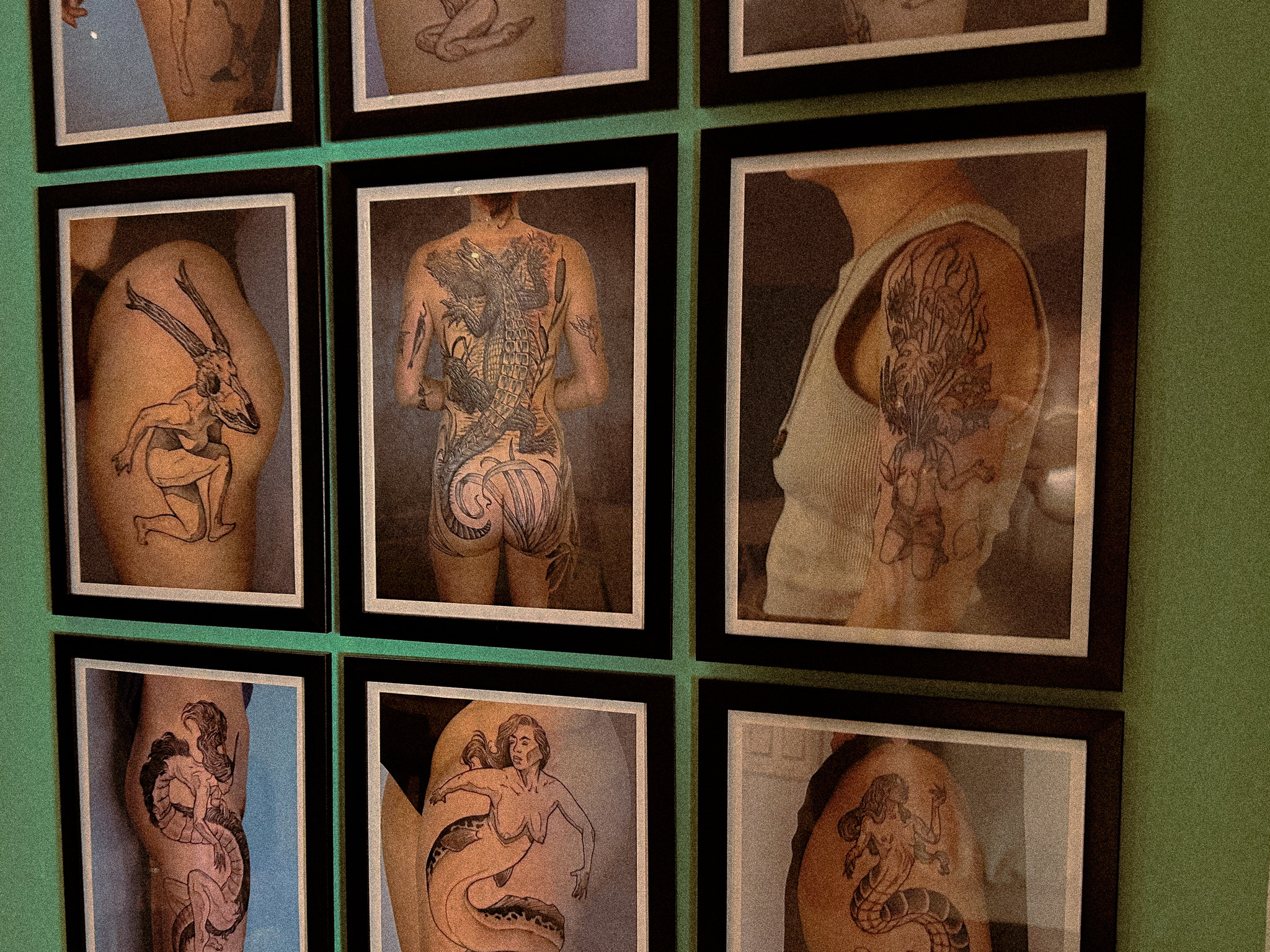
What tattoo styles do you specialize in?
This shop is a bit different from many in Japan. In the U.S., there’s a huge variety of styles, but here I’ve seen mostly Japanese traditional and American traditional.
My style is more illustrative—lots of figures, trees, animals, nature, a bit surreal, but not tied to any formal tattoo genre. It’s very art-forward and very “my own style,” which isn’t super common here.
Tom blends Japanese traditional and American traditional with his own psychedelic twist—lots of color, some neotraditional elements. Overall, our shop focuses on original artwork rather than Pinterest-style flash or the stereotypical “tough guy” vibe. A lot of our clients are women and people looking for a calm, comfortable experience.
How is the clientele here different from the U.S.?
In the US, I mostly worked at a queer tattoo shop, so most clients were women and queer folks. Here it’s more evenly split between men and women, and around 80% or more are Japanese. Most are ages 20 to 50. And they’re not trying to be “badasses”—they just want art.
This shop is a bit different from many in Japan. In the US, there’s a huge variety of styles, but here I’ve seen mostly Japanese traditional and American traditional.
My style is more illustrative; lots of figures, trees, animals, nature, a bit surreal, but not tied to any formal tattoo genre. It’s very art-forward and very “my own style,” which isn’t super common here.
Was it difficult to find customers at first?
Yes. Tattooing still carries a stigma in Japan. Even in this building, we’re allowed to operate, but we can’t put a sign out front saying we’re a tattoo shop. We’re on a busy street but can’t get walk-in customers.
Another challenge is reaching Japanese clients. Many see a foreigner and assume, “They won’t speak Japanese—that’s too scary for something permanent,” so they don’t even send a message.
Even my coworker Tom gets this sometimes because he doesn’t look fully Japanese, even though he’s half and speaks only Japanese. Collaborating with him has helped me access the Japanese market—he gets clients who then feel comfortable working with me.
I speak Japanese well enough for consultations, but I’m not fluent, so that’s always a hurdle.
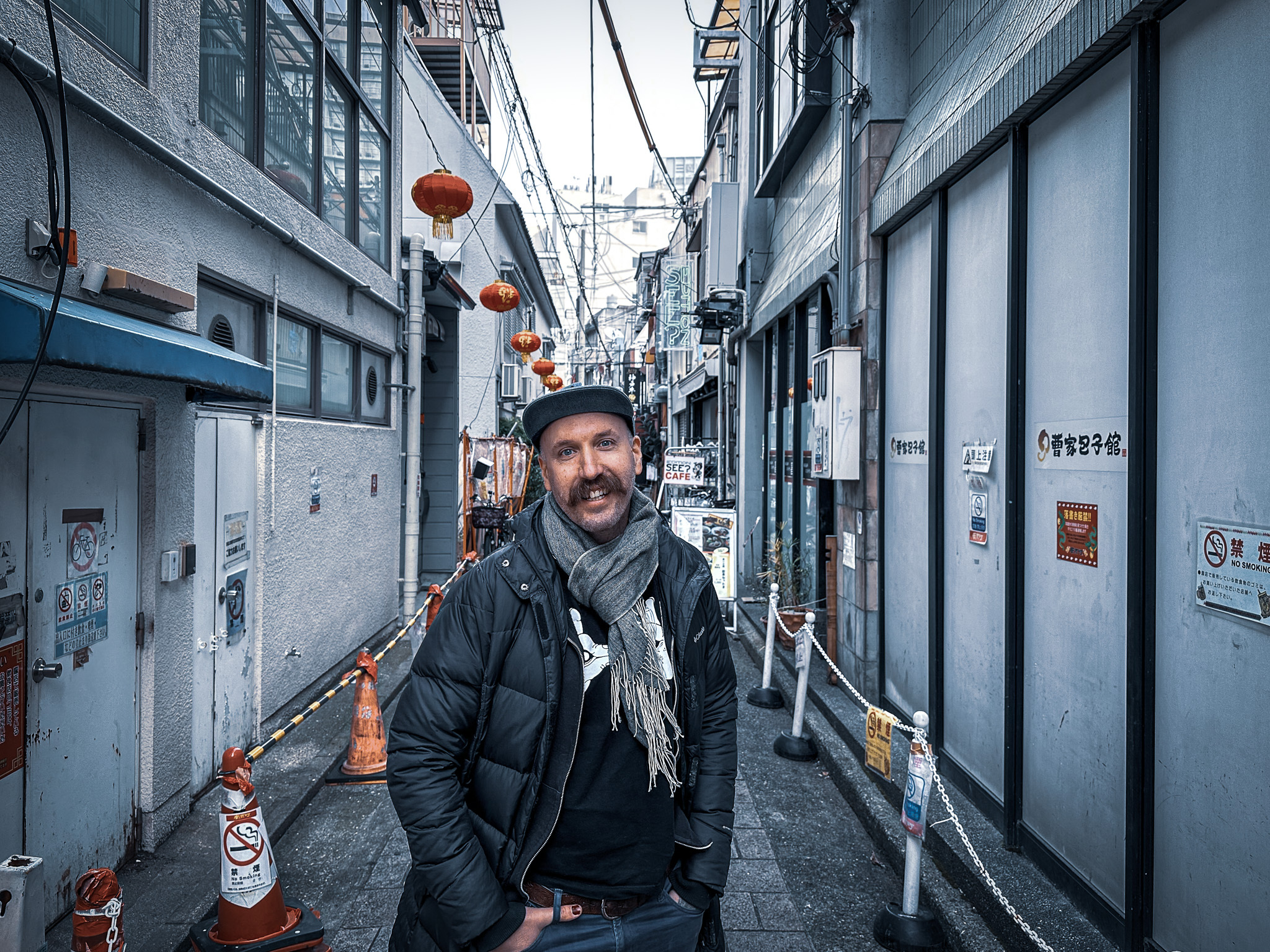
What other obstacles did you face opening a business here?
Finding a place to rent is hard—many landlords don’t want tattoo studios. Our last place even evicted us once they realized what we were. Other studios have had the same experience. Often, people feel they have to pretend it’s a clothing shop or a café just to secure a rental.
Visas weren’t a problem for me personally since I’m married to someone with Japanese nationality.
On the flip side, do you have advantages as a foreigner in Japan’s tattoo market?
The main advantage is being able to serve English-speaking clients easily. Beyond that, I’m not sure. Maybe some customers think it’s “cool” to get tattooed by a foreigner, but if they do, they haven’t said so. Mostly, people just want my style of art.
Working in Japanese is still the biggest challenge.
What advice would you give a foreigner wanting to start a business in Japan?
Get a Japanese business partner! Seriously—don’t do it alone. This shop wouldn’t exist without Tom and his wife. They handle the bureaucracy, paperwork, taxes, utilities—everything. Navigating that system alone would be nearly impossible.
So yes: get local help and don’t be afraid to ask for it.
And advice for a foreigner thinking of moving to Japan in general?
If you’re a tattoo artist—honestly, choose another country. I love Japan, but it’s one of the harder places to be a tattoo artist because the culture just isn’t fully mainstream here yet.
For anyone else: learn Japanese. Don’t rely on English. The better your Japanese, the more access you’ll have and the smoother your life will be.
And don’t just become an English teacher unless you actually want to.