
Kansai deeptech steps onto the global stage with KSAC

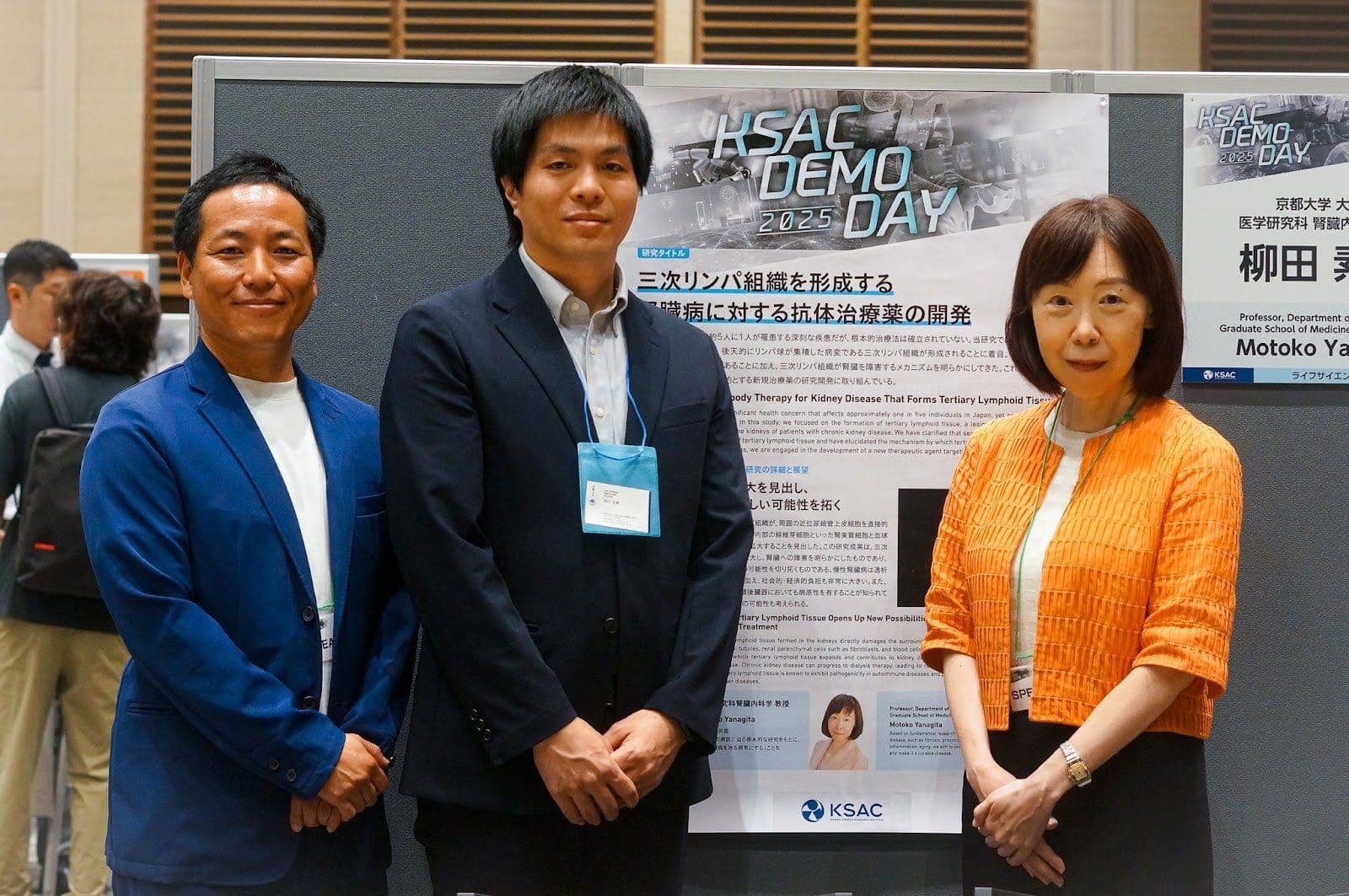
In Japan’s Kansai region (which includes Osaka, Kyoto, Hyogo, Shiga, and Nara), a quiet transformation is underway. Once defined by its manufacturing and trade, the region is now becoming a serious contender on the global deeptech stage—a shift driven in no small part by initiatives like the Kansai Startup Academia Coalition (KSAC).
At this year’s KSAC event, held as part of Umeda Innovation Week alongside the Osaka Expo, a host of local researchers-turned-entrepreneurs presented breakthroughs that spanned the frontiers of medicine, chemistry, and materials science. But beyond the individual pitches, the real story was the collective one: an ecosystem finding its stride, learning to speak the language of global innovation without losing its scientific soul.
From Cutting-Edge Research to Global Impact
KSAC is built to bridge the gap between the world-class research issuing from Kansai and the international market. Kansai has a wealth of universities and research institutions, counting among them some of the very best in Japan—and therefore the world. But in a business environment where the research-to-business pipeline is historically slow and mired in bureaucracy, the appeal of modern university-launched startups is vast.
You can read our one-on-one interview with Professor Tatsuya Yoshida of Kyoto University where he discusses KSAC’s goals and activities [here]LINK.
Deeptech is, by nature, specialised; so a lot of the topics were very scientific and perhaps beyond the reach of the layman. To get a better handle on things, we interviewed several of the KSAC pitchers, asking them to explain their research—and its potential applications—to us.
Professor Atsutaka Minagawa, CAR-T Therapies
Professor Minagawa introduced his team’s cleavable CAR (Chimeric Antigen Receptor) T-cell therapy—an elegant solution to one of cancer immunotherapy’s thorniest problems, trogocytosis, where cancer cells “steal” identifying markers from immune cells, reducing treatment effectiveness.

Professor Minagawa’s design allows for precise control of receptor activation, improving tumor targeting and potentially lowering production costs. His roadmap envisions a 2027 enterprise launch, with a licensing-based business model that could make CAR-T therapy both more effective and more accessible worldwide.
Professor Minagawa reflected on the challenges ahead: the need for large-scale manufacturing partnerships, regulatory navigation, and investor education. Yet his confidence was clear—a reminder that Japanese academia is learning not just to innovate, but to commercialize.
Dr. Motoko Yanagita, Chronic Kidney Disease
Dr. Motoko Yanagita’s research on chronic kidney disease (CKD) has uncovered a surprising culprit behind worsening outcomes: tertiary lymphoid tissue (TLT), a structure formed by chronic inflammation. Her team discovered that TLT expansion is driven by the interaction between aging immune cells; and that by interrupting this pathway, disease progression can be slowed.
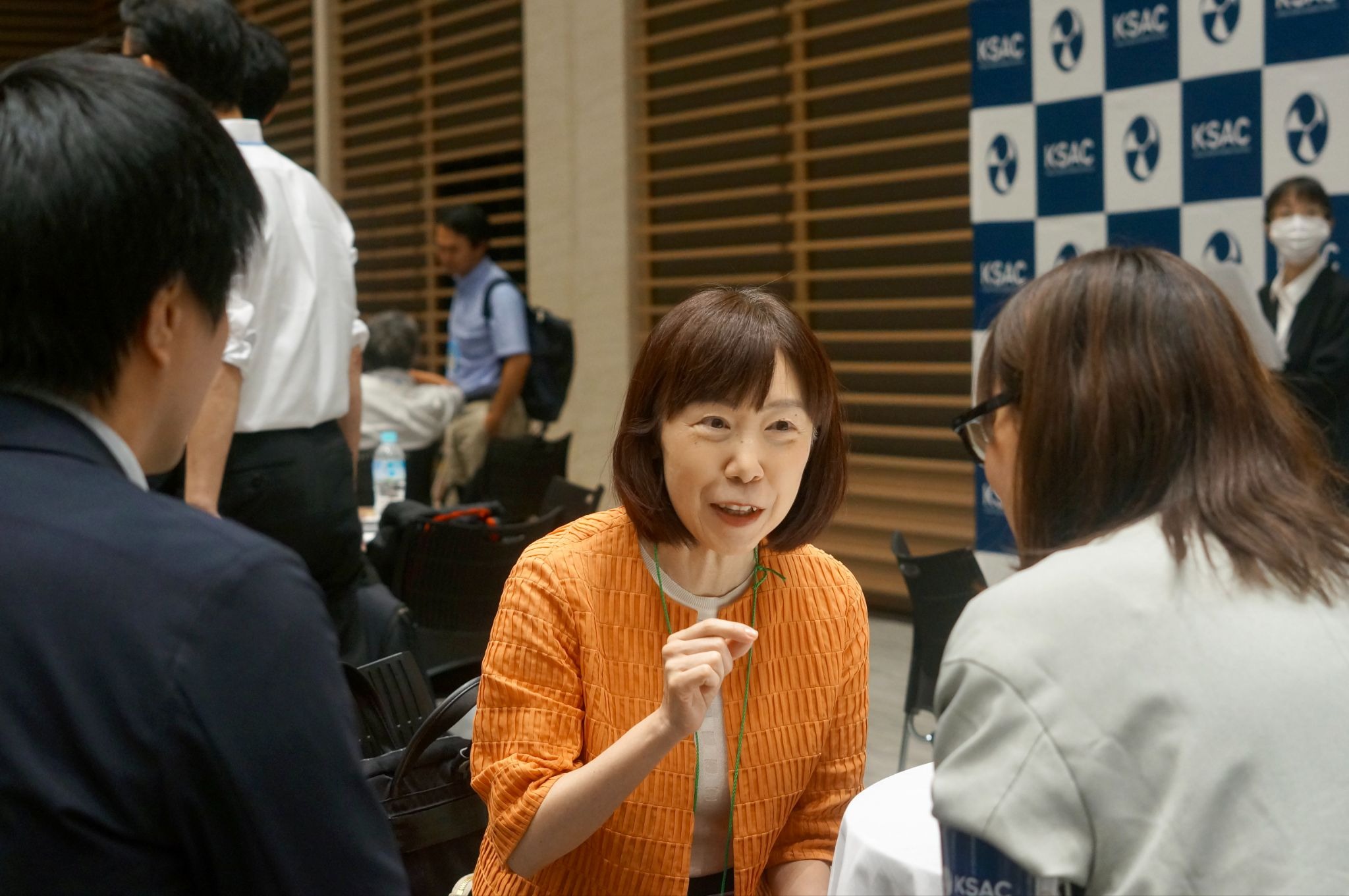
What makes this discovery commercially compelling is its diagnostic potential. The team identified glutathione as a biomarker for TLT, opening the door to non-invasive testing that could guide treatment for millions of CKD patients worldwide. With plans to launch a startup, Yanagita’s group aims to bring a Japan-developed therapy to the global stage — an emblem of how translational research can begin in a Kyoto lab and end in clinics across the world.
Dr. Keisuke Miyake, Diabetic Foot Ulcers
Another pitch addressed a more visible, yet equally devastating medical issue: diabetic foot ulcers. Dr. Keisuke Miyake presented a new device that promises to change how these chronic wounds are treated. Designed as a soft, sock-like covering, it combines sterilization and healing technologies to target bacterial biofilms, the stubborn source of recurring infections that often lead to amputation.

Unlike traditional hospital-based wound care, Dr. Miyake’s solution enables home treatment, potentially shortening hospital stays and lowering costs. As a startup, their global strategy begins with the United States—the largest market for diabetes care—before expanding into Southeast Asia and the Middle East, regions where diabetic complications are rising sharply. It’s a classic example of Japanese engineering precision applied to a humanitarian challenge.
Professor Atsuo Tamura, Peptide Transformation
Not all the innovation on display was medical. Professor Atsuo Tamura from Kobe University plans to launch a startup born from his research. The slated company, Peptide Transformation, will offer a biotechnology-driven alternative to traditional metal recovery. Using peptide-coated paper filters, Professor Tamura’s process can selectively extract rare metals and rare earths without heat, pressure, or toxic solvents from sources like the euphemistic ‘urban mines’: industrial waste and landfills.
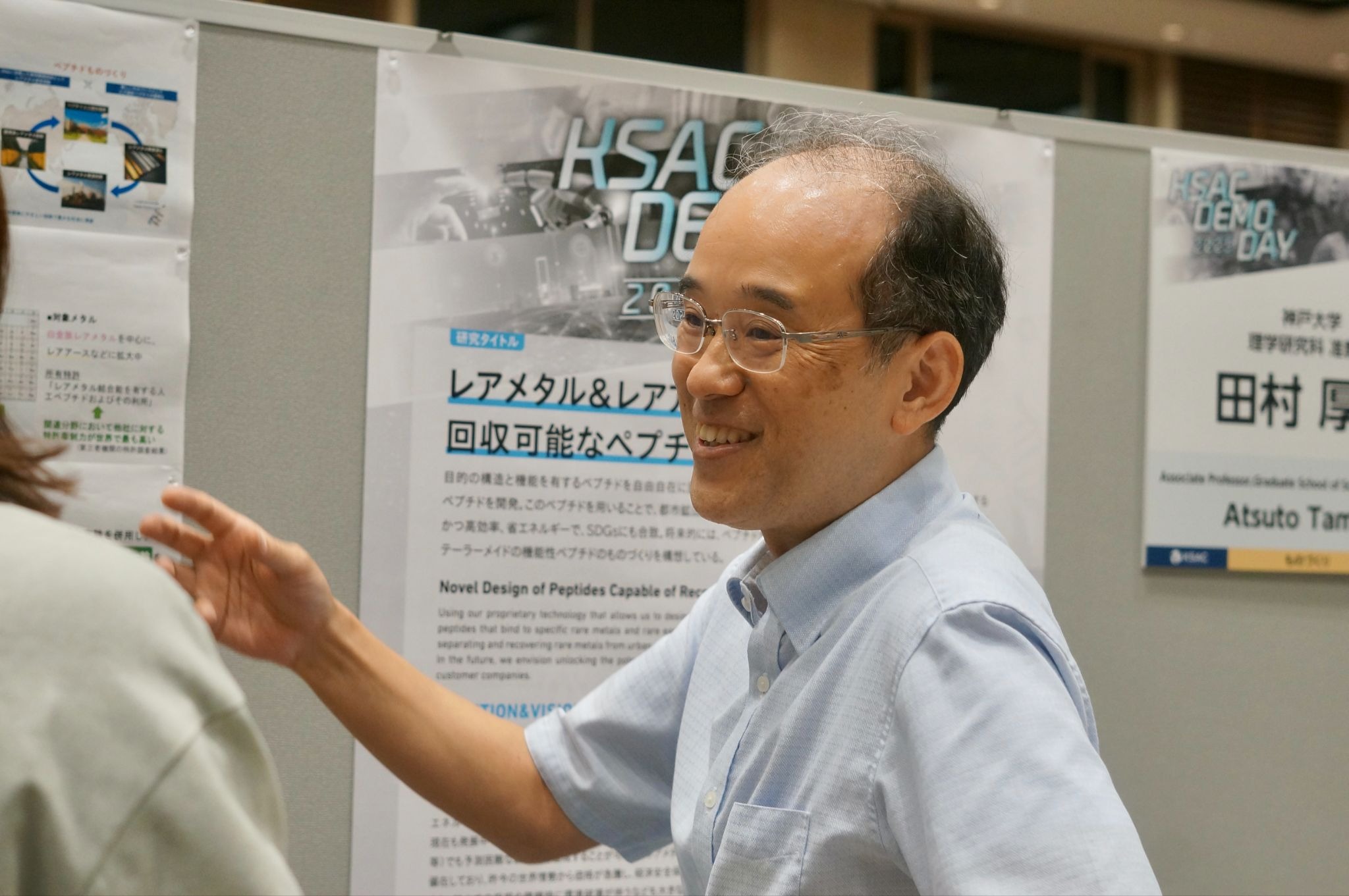
In an era of geopolitical competition over critical minerals, Tamura’s solution is both ecological and strategic. It addresses Japan’s dependence on imported resources while presenting an exportable technology for recycling industries in North America and Europe. “We’re not just talking about efficiency,” Tamura explained, “we’re talking about redefining how industrial societies recover value from what they discard.”
The Kansai Model: Deep Research, Global Vision
We have just picked a few, but other pitches covered a dizzying array of topics: a new method for converting sulfur waste into high-performance plastics, a helium-free gas analysis system for laboratories, and a photoelectron holography platform for ultra-precise materials characterization, for example. Together, they reflected the diversity of Kansai’s research strengths—and its growing awareness of global industrial needs.

What emerged from KSAC was not merely a collection of promising technologies, but a vision of what Japan’s regional innovation ecosystems can become when academia, government, and entrepreneurship align.
To that end, KSAC has launched overseas hubs in New York and Singapore, intended to serve as gateways for Japanese startups expanding abroad. These outposts will also invite inbound collaboration: foreign researchers, investors, and corporations seeking to partner with Japan’s next generation of scientists.
Read more about KSAC here.