
Newsletter Signup
Join Our Community!
Stay updated with the latest news, exclusive insights, and more.
Stay updated with the latest news, exclusive insights, and more.
To see how we may use your information, take a look at our privacy policy.

Many foreign founders underestimate how structured Japan’s systems are until they start building. Language, paperwork, licensing, trust. None of it is impossible. All of it takes time.
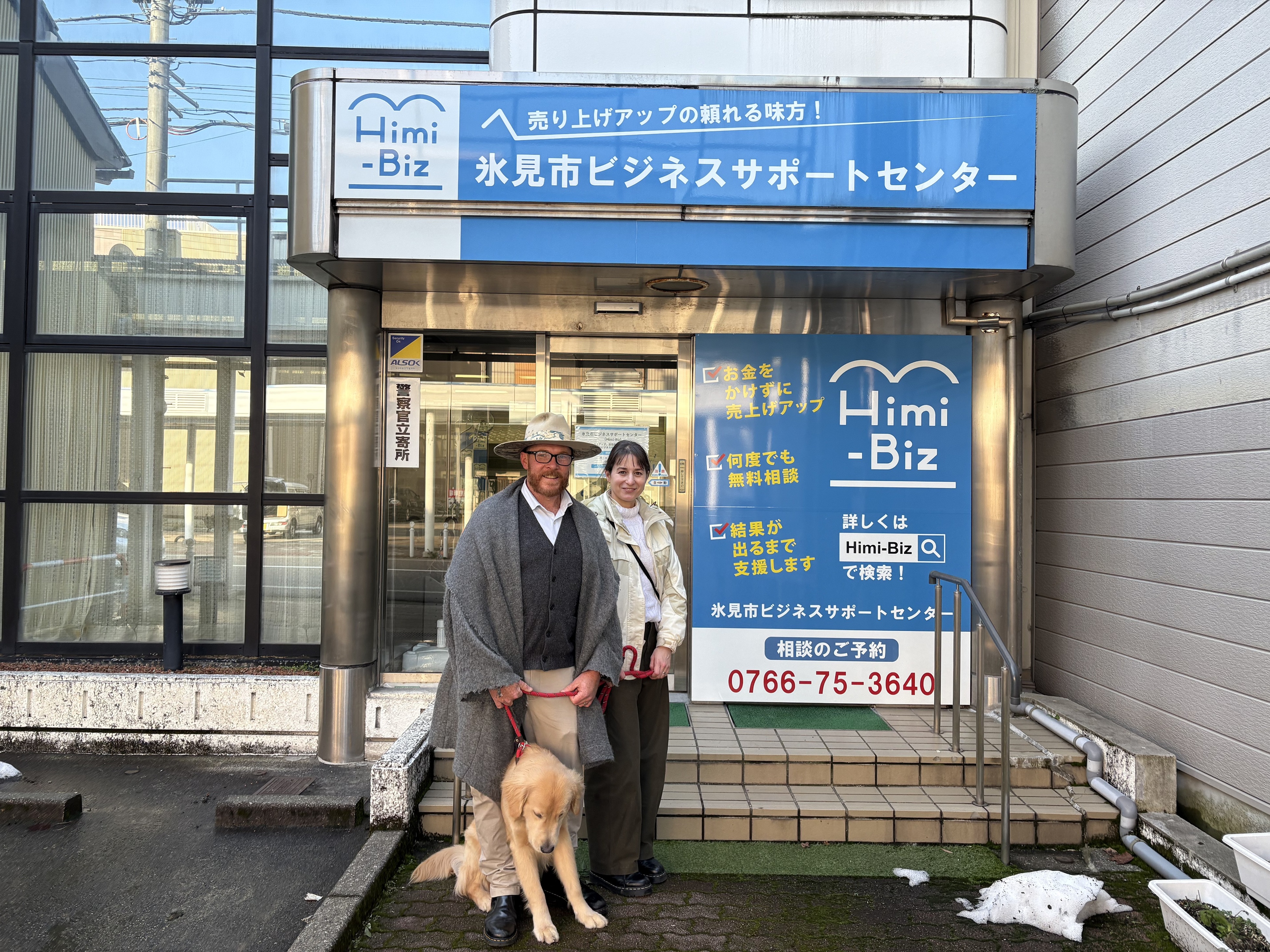
Four years ago, Sebastien Hebert decided to build his company in rural Japan. That decision has meant going back to language school at 40, navigating regional startup visa rules, searching for office space in a small coastal town, and restarting operations after an earthquake.
A founder building automation and AI-agent workflows from rural Japan, Sebastien’s path shows what slows you down here—and what moves you forward.
I’m French, but I grew up on a small French overseas island in the Indian Ocean. At 18, I moved to Paris during the early 2000s internet boom and started as a web designer. Back then, that meant design, coding, and building internal systems.
From there, I moved into digital marketing—email, search, social. Later, I relocated to Sydney and went deeper into SEO, paid media, and eventually IT and automation. The pattern was always the same: if a process is repetitive, you automate it.

My wife and I moved to Japan about four years ago. Instead of aiming for Tokyo or Osaka, we intentionally chose rural Japan. The pace is slower, and daily life pushes you to engage with the community.
In the countryside, almost nobody speaks English. So you either learn Japanese or you stay stuck. We realized quickly that we needed the basics, so we went back to school in Nagano Prefecture.
Going back to school around 40, surrounded by younger students, was different. But it worked. Learning Japanese wasn’t just about speaking the language—it helped us understand the culture and how communication and expectations actually function here.
During language school, we started searching for a permanent place to live. We were drawn to Kanazawa and the Noto region. We wanted an old traditional house and found one in Nakanoto, over 100 years old. We spent weekends renovating it before moving in. It wasn’t the easy route, but it made sense for the life we wanted.
At the time, Ishikawa didn’t offer the Startup Visa, so we contacted the Toyama side. Nakanoto is close to Himi, so it was practical.
Finding office space in a rural area is genuinely hard. There aren’t many ready-to-go options. We were fortunate to secure a good-sized space, and being in the same building as a local support organization helped.
The timing was brutal. We had just secured the office when the earthquake happened. Recovery became the priority—housing, rebuilding, basic logistics. Things stalled for months.
At the same time, it strengthened our motivation. If we were going to build here, we wanted to do it properly and contribute to the region.
Automation and AI-agent workflows. End-to-end systems that take information coming into a company—forms, emails, internal data—and turn it into action: classify it, summarize it, route it, log it, and trigger the next step.
AI is useful where thinking is required—extracting key points, drafting responses, supporting decisions. Humans stay in control. The system removes the mechanical work. For example, when a lead form comes in, the system enriches it with context, creates a short brief, pushes it into the CRM, and notifies the right person. It saves time and ensures consistent follow-up.
It’s less of a jump than it sounds. When you manage multiple clients, you build automation to keep up—capture, follow-up, reporting, and coordination. That mindset naturally evolves into today’s AI layer.
AI isn’t magic. It’s another tool to remove friction from time-wasting workflows.
Two things. First, bureaucracy is heavy. You go to office after office with forms and more forms. Even hiring can trigger another wave of administrative work. If you try to DIY everything, it gets painful fast.
Second, winning Japanese B2B clients takes longer than you expect. Building trust is slow, especially as a non-Japanese founder. I thought we’d secure Japanese clients within six months. It took about a year and a half for the first one.
Momentum starts with one genuinely happy customer. Once a customer trusts you and is satisfied with the work, introductions happen. Step by step, the network builds. In Japan, credit history matters. People want proof that someone else trusted you first.
It helped a lot.
The Toyama side gave structure—what to prepare, what comes next, which documents matter. In Himi, local support organizations made introductions and reduced friction. In rural areas, where networks are tight, that kind of facilitation makes a difference. And it was free.
Learn Japanese. You don’t need perfection, but you need enough to function and build relationships. Translation tools don’t help in real conversations.
And don’t build alone. Get support—accountant, legal, and visa help, local ecosystem staff. Administrative work in Japan can be brutal if you try to do everything yourself.
Don’t romanticize Japan. It’s not paradise. Every country has strengths and weaknesses. If you idealize it, reality will frustrate you. Accept the trade-offs. Stay flexible. Let things unfold instead of trying to control everything.
If there’s one thing people aren’t prepared for when moving to Japan—especially to the countryside—and it’s probably the last piece of advice I’d give anyone considering it, it’s this: the food is dangerously good.


%20(1).png)

.jpg)


.png)