
Newsletter Signup
Join Our Community!
Stay updated with the latest news, exclusive insights, and more.
Stay updated with the latest news, exclusive insights, and more.
To see how we may use your information, take a look at our privacy policy.

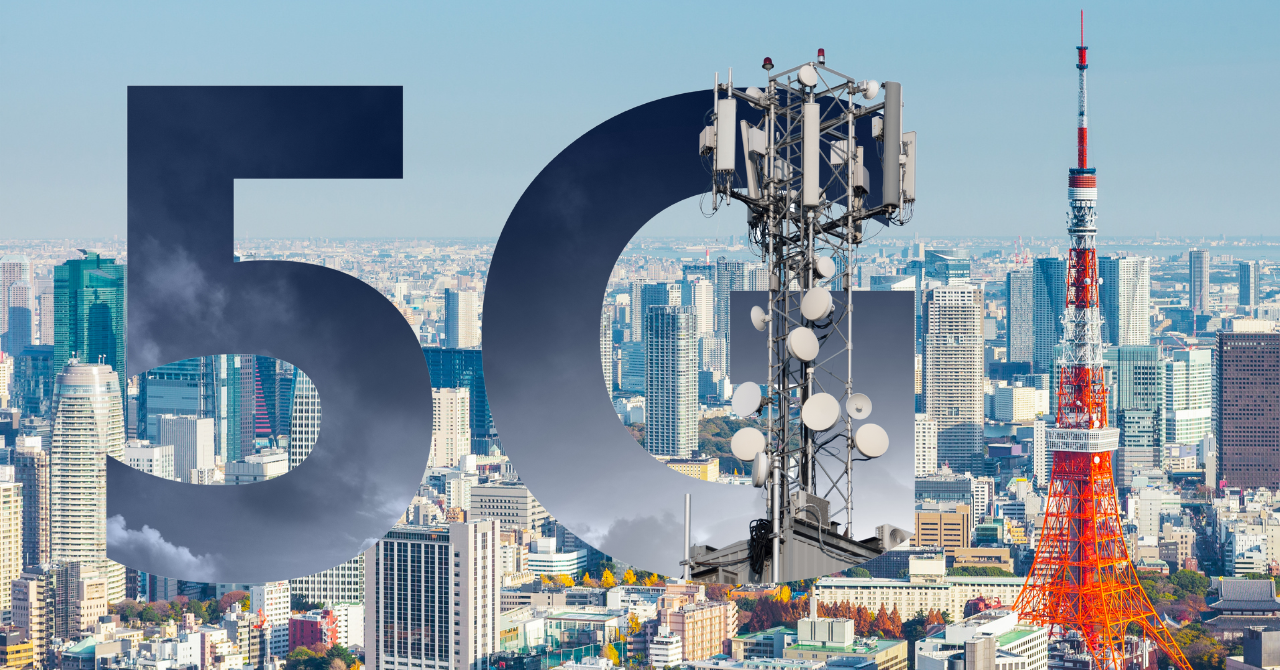
When people talk about Japan's startup ecosystem, the conversation quickly turns to artificial intelligence, climate tech, or deeptech. Telecommunications infrastructure rarely makes the headlines. Yet 5G (the fifth generation of wireless communication technology) is quietly becoming one of the most consequential foundations for nearly every industry of the future.
The Tokyo Metropolitan Government has, in recent years, moved aggressively to position Tokyo as a global hub for 5G innovation. Through initiatives such as the Tokyo 5G Boosters Project, Tokyo is actively identifying, supporting, and accelerating startups working at the intersection of 5G and real-world applications.
This article explains why 5G matters as a business opportunity, outlines Tokyo's strategic approach to the sector, and introduces some of the startups emerging from this ecosystem.
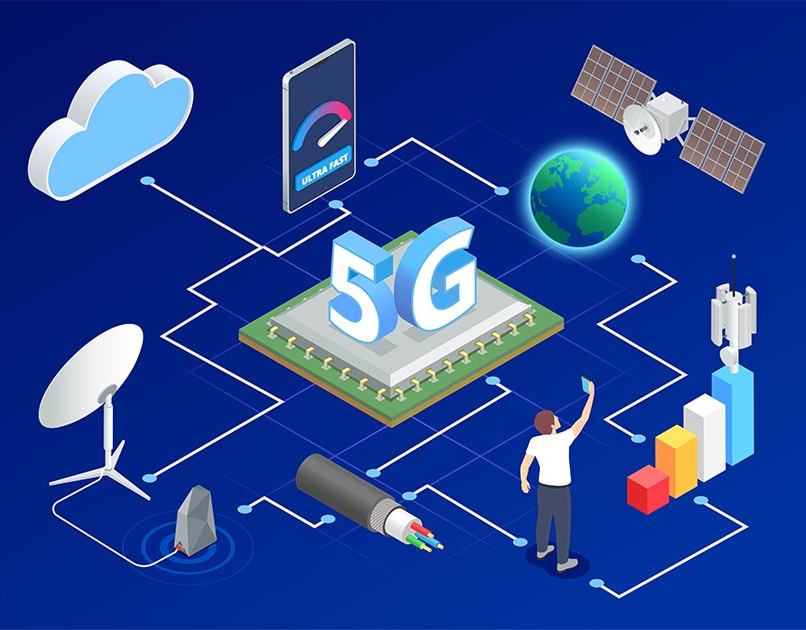
5G is the latest generation of mobile network technology, succeeding 4G LTE. The headline differences include theoretical peak download speeds roughly 100 times faster than 4G, latency (the delay between sending and receiving data) reduced to as low as 1 millisecond, and the capacity to connect up to one million devices per square kilometre.
But specifications alone don't tell the full story. What 5G unlocks is a new class of applications that were previously impossible, or at least very impractical.
High speed means that large volumes of data such as high-definition video, 3D spatial data, and streams from sensor equipment can be transmitted in near-real-time. Low latency makes remote control of physical systems viable without dedicated infrastructure, from surgical robots to autonomous vehicles. Massive connectivity allows entire cities worth of sensors, cameras, and devices to operate simultaneously on a single network.
For startups, this creates entirely new categories of business opportunity:
In each case, 5G is not the product being sold; it is the infrastructure that makes the product possible.
As the world's most populous metropolitan area, Tokyo is both a proving ground and a market. Successfully demonstrating 5G applications at Tokyo's scale, across its transport networks, hospitals, construction sites, and public spaces creates a model that can be exported globally.
Several startups are already translating Tokyo's 5G ambitions into tangible business results, advancing from proof-of-concept trials toward commercial deployment.
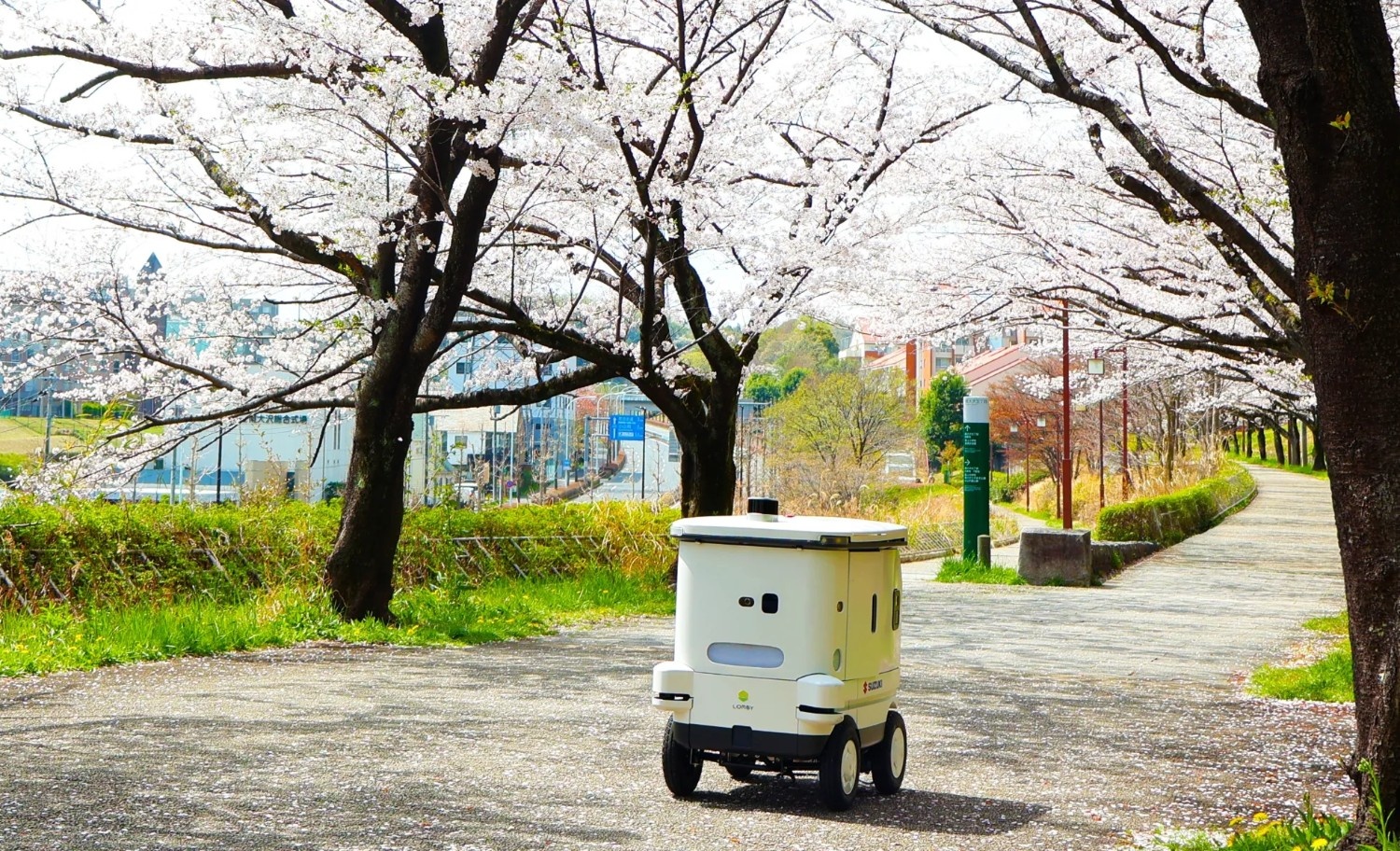
LOMBY develops autonomous delivery robots designed to address labor shortages in logistics. Its service relies on real-time monitoring, remote fleet management, and low-latency communication, making 5G a key enabler for large-scale deployment in urban environments.

Holoeyes provides XR solutions for healthcare, enabling surgeons and medical professionals to visualize and share 3D medical imaging data. High-capacity 5G connectivity significantly improves remote collaboration and future telemedicine applications.

Telexistence develops remotely operated robotic systems for retail environments. Its technology allows human operators to control robots from distant locations, making low-latency 5G communication essential to operational performance.
Preferred Networks is Japan's most prominent AI startup. Its work in edge AI, robotics, and industrial automation positions it at the intersection of artificial intelligence and next-generation communication networks, including 5G and future 6G ecosystems.

LocationMind provides geospatial analytics and mobility intelligence platforms. By analyzing large-scale movement and location data, the company contributes to smart city development, where 5G networks play an important role in data collection and connectivity.
The opportunity is real, but so are the obstacles. Any honest assessment of the 5G startup landscape in Japan must acknowledge the headwinds alongside the tailwinds.
User and enterprise adoption takes time. Many of the B2B customers that 5G startups are targeting—hospitals, logistics operators, manufacturers—have long procurement and integration cycles. Converting a successful proof-of-concept into a commercial contract can take years.
Regulatory compliance adds complexity, particularly in sensitive sectors like healthcare, autonomous vehicles, and public infrastructure. Japan's regulatory environment is famously byzantine, and navigating it requires time and expertise that early-stage startups may lack.
In addition, international competition is intensifying. South Korea, China, and the United States have all invested heavily in 5G infrastructure and startup ecosystems. Japanese startups will need to compete not only domestically but on a global stage where well-funded rivals are moving quickly.
None of these challenges make the market unattractive. They do mean that success in the 5G space requires more than a compelling technology: it requires a credible path from proof-of-concept to commercial scale.
The current 5G rollout is only the beginning. Research and development on 5G+ and early 6G technologies is already underway in Japan, with the government targeting 6G commercialisation in the 2030s. Each generation of connectivity will expand what is technically possible, extending the business opportunity for startups building in this space.
Tokyo's role as a testing ground is unlikely to diminish. Its combination of population density, advanced infrastructure, and institutional support makes it an ideal environment for trialling communication-dependent technologies before global deployment.
5G is not merely a communications technology. It is one of the foundations on which next-generation industries will be built. Tokyo is working to make itself the place where that building happens — and is actively seeking the startups willing to do it.


%20(1).png)



.png)