
Newsletter Signup
Join Our Community!
Stay updated with the latest news, exclusive insights, and more.
Stay updated with the latest news, exclusive insights, and more.
To see how we may use your information, take a look at our privacy policy.


Kyoto is best known as Japan's cultural capital. Being famous for temples, shrines, gardens, and centuries-old crafts, millions of travelers visit every year for exactly that reason.
But that same city is also home to one of Asia's fastest-growing deeptech ecosystems, with hundreds of startups working on everything from quantum optics to next-generation batteries.
Walking through this year's IVS 2026, one of Japan's largest startup conferences, made that shift impossible to ignore. IVS 2026 attracts startups, investors, and corporations from around the world, planting a flag impossible to ignore: Kyoto is no longer just a city of history and tourism, it is rapidly becoming one of Japan's most important deeptech ecosystems.
Tokyo remains, without question, Japan's largest startup city. But in tech fields that require years, sometimes decades, of sustained research and development, Kyoto has developed a distinct and increasingly visible edge. Add in a creative industry built on gaming and traditional performing arts, and a city long associated with names like Nintendo and Omron starts to look less like a historical curiosity and more like a serious technology hub.
To better understand why Kyoto's deeptech ecosystem is gaining global attention, we spoke with two people who experienced IVS 2026 from an international perspective: investor Don Stalter, Managing Partner at Sunshine Lake, and entrepreneur Hide Morita, CEO of Queri. Their insights help explain why Kyoto is increasingly attracting founders, researchers, and international capital.
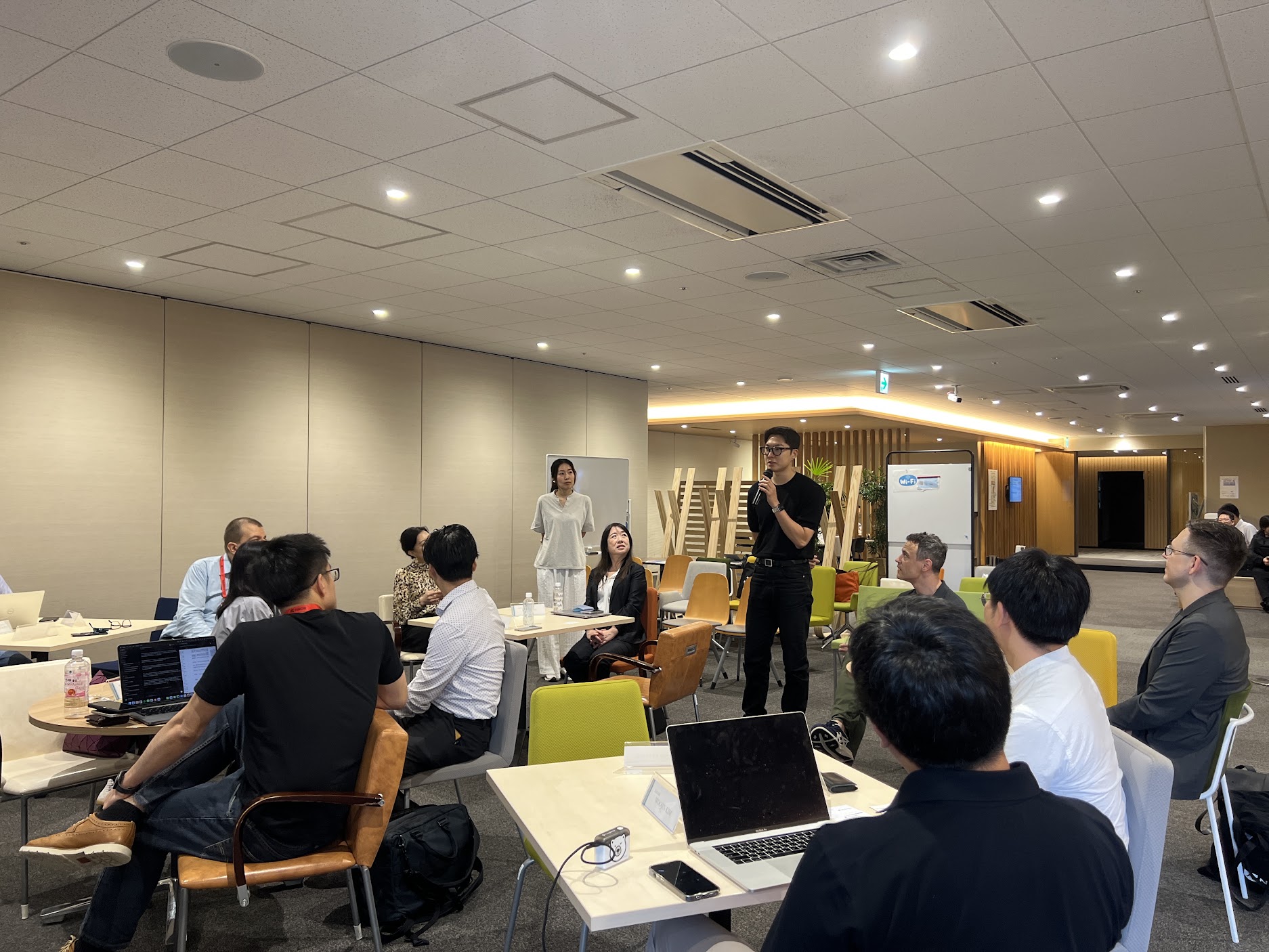
Kyoto is, by Japanese standards, a compact city. Visitors who have walked from temple to temple often notice that most of the city's key districts are within walking or cycling distance of each other. That physical closeness matters more than it might seem. It shortens the distance between universities, research institutes, and corporations make chance encounters and collaborative research easier.
Within that compact footprint, according to Kyoto City, the ecosystem now includes:
(Source: Kyoto Startup Ecosystem)
World-class universities, research institutes, global corporations, venture capital, local government, and manufacturers all operate within the same ecosystem. As a result, ideas can move quickly from laboratory research to commercialization, funding, manufacturing, and international markets without leaving the region.
Kyoto's global reputation provides another advantage. Around the world, the city's name is already associated with Japanese craftsmanship, innovation, and culture, giving startups an internationally recognizable identity from day one.
Tokyo and Kyoto aren't competing for the same territory. They specialize in different things.
Tokyo tends to lead in:
Kyoto tends to lead in:
Rather than optimizing for rapid growth, Kyoto has built an ecosystem around technologies that require years of research, engineering, and commercialization. Its combination of world-class universities, advanced manufacturers, and patient, long-term collaboration creates an environment where deep-tech companies can mature over decades rather than quarters.
We spoke with Don Stalter, Managing Partner at Sunshine Lake, at IVS2026. Stalter's relationship with Japan dates back to 2011. He first worked on Groupon's international expansion before joining Airbnb's early growth, operations, and business development team. He later became an early investor in companies including Deel and Canva.
What brought you to IVS this year? Are there any particular founders or investment opportunities you're hoping to discover?
Japan has been part of my life since 2011, when I first had the privilege of working here while helping build companies like Airbnb and Groupon internationally. That experience taught me something I've carried through my whole career as an investor: the world's most important companies are often built far from the places everyone is watching.
What brought me to IVS this year, above all, is a person: Hide Morita. Backing Hide at Queri has been one of the highlights of my investing life. His grandfather, Akio Morita, co-founded Sony and showed the world what Japanese ambition and craftsmanship could achieve on a global stage—and in Hide I see that same spirit, renewed for the AI generation. Working alongside him has only deepened my conviction that Japan's founders combine world-class ambition with a devotion to craft —ものづくり—that exists nowhere else.
At IVS, I'm hoping to meet founders building for the world from day one; especially in AI and deep tech, where Japan's engineering depth gives its founders an unfair advantage. If you're building something global, please come say hello. I'd be honored to be your first believer.
Compared with Tokyo, what unique strengths do you see in Kyoto and the Kansai region?
Tokyo is one of the world's great business capitals, but Kyoto has something money can't buy and speed can't replicate: a thousand years of compounding craft. This is the city that produced Nintendo, Kyocera, Murata, Omron, Shimadzu, and Horiba - companies that chose depth over fashion, stayed fiercely independent, and became irreplaceable in global supply chains. In Silicon Valley we talk about "moats"; Kyoto has been building them for centuries.
For deeptech specifically, three things stand out to me as an investor. First, the research density is extraordinary. Kyoto University has produced a remarkable share of Japan's Nobel laureates, and breakthroughs like Professor Yamanaka's iPS cells were born here. Second, Kyoto is a city of students—roughly one in ten residents is a student—which means an annual renewal of young talent in a place steeped in long-term thinking. Third, and most underrated: the culture. Deep tech requires patience, decades-long conviction, and obsessive attention to detail. Those aren't qualities you can inject into an ecosystem with capital alone, but they’re Kyoto's native language.
Having helped companies expand across dozens of countries, I've seen many governments try to manufacture startup ecosystems from scratch. Kansai doesn't need to manufacture anything. The raw materials—world-class science, manufacturing depth from Osaka and Kobe, and a craftsman's culture—are already here. What's new is that the ambition is now pointed globally.
What do you think will be the most important factor in Kyoto building a globally competitive startup ecosystem?
One word: bridges. Kyoto already has the science, the talent, and the craft. What turns those ingredients into a globally competitive ecosystem is connection to the world. Global capital at the earliest stage, global customers from day one, and global networks that treat a founder in Kyoto exactly like a founder in San Francisco.
The second factor is success stories that recycle. Every great ecosystem was ignited by a handful of wins whose founders and early employees reinvested their capital and knowledge into the next generation.
That's precisely why we built Sunshine Lake the way we did: to be the first believer, at the very first check, bringing Silicon Valley's networks to founders the world hasn't yet noticed. Some of the first checks I've written have grown into companies now worth tens of billions of dollars—and I'm convinced the next names on that list will be Japanese.
We also spoke with Hide Morita, CEO of Queri, a fan engagement platform connecting Japanese and Asian entertainment companies with their global audiences. Morita is the grandson of Sony co-founder Akio Morita and built his early career in Japan's entertainment and talent industry, including projects tied to AKB48 and Nogizaka46.
What brought you to IVS this year? Are there any particular founders or investment opportunities you're hoping to discover?
IVS is one of the few places where you can meet people from across Japan's startup world in just a couple of days. I came to represent Queri, but also to meet other founders who are building for audiences outside Japan. Japanese music, anime, idols and creators already have huge audiences overseas, but the tools to actually understand and serve those fans mostly don't exist yet. That gap is the whole reason Queri exists. We help Japanese and Asian entertainment companies see where their global demand is coming from, connect directly with those fans, and turn that interest into real communities rather than just view counts. Around 40% of our own users are already outside Japan, so we see every day that the demand shows up long before the infrastructure does.
The founders I'm most curious about are the ones working in AI, entertainment, IP, data and languages. I'm less focused on finding a specific deal than on finding people whose work fits with ours. Some of the best relationships start as two teams realizing they're pointed at the same problem from different sides.
Compared with Tokyo, what unique strengths do you see in Kyoto and the Kansai region?
Tokyo has easier access to capital, customers and big companies. Kyoto and Kansai have something else: a real depth of research, engineering and manufacturing knowledge in one place.
Kyoto has more than 40 universities and around 37,000 researchers, and it's home to companies like Kyocera, Murata, and Nintendo. What those companies have in common is that they became world-class by going very deep on one kind of technology rather than chasing whatever was popular.
That matters a lot for deeptech. These businesses usually take years to build, and they depend on universities, engineers, manufacturers, and investors actually working together over a long period. I feel some of this at Queri too, as building real infrastructure for global fandom is slow, unglamorous work, and Kansai's patience for that kind of thing is something I respect. From the outside that can look slow, but it's often how you end up with a company nobody can easily copy.
What do you think will be the most important factor in Kyoto building a globally competitive startup ecosystem?
For me, it comes down to connecting Kyoto's researchers and engineers with people who know how to build international businesses.
Kyoto already has more than 650 startups, including over 250 that came out of universities. The ideas and the technology aren't the problem. The harder part is helping those companies find the right partners, investors, customers and management to grow beyond Japan. A researcher might have technology with real global potential but still need help with things like sales, hiring or expanding overseas, and that's exactly where good investors and experienced operators earn their place.
I also don't think Kyoto should try to become another Tokyo or another Silicon Valley. Its strength is that it's different. The goal should be to keep Kyoto's long-term mindset and technical depth, while giving its founders much better access to the rest of the world.
Kyoto's research strength is translating into real companies across a handful of clear categories:



For founders and investors looking beyond Tokyo, Kyoto offers a specific and differentiated proposition:
Kyoto's bet isn't that it can out-speed Tokyo. It's that a thousand years of patience, finally connected to global capital, might turn out to be worth more than speed ever was.



.png)


.png)