
What AI and data startups must know before betting on Japan


Japan's AI market is growing fast. It is valued at approximately $8.9 billion in 2024 and is projected to nearly triple to $27.9 billion by 2029, making it one of the most compelling AI opportunities in Asia. An aging population drives demand for automation. Strong manufacturing and healthcare infrastructure support adoption. Aggressive government investment reinforces the trend. Everything points in the same direction: Japan is open for AI business.
But foreign startups that expect a smooth ride often hit a wall. Not a technology wall, but a cultural, organizational, and structural one. Here is what you need to understand before landing your first deal.
Global AI Talent Is Already Here

Before diving into the challenges, it is worth acknowledging why Japan has become a serious destination for world-class AI talent, as the same logic should inform your market-entry thesis.
Sakana AI offers the clearest example. David Ha and Llion Jones, both former Google researchers (with Jones co-authoring the landmark "Attention Is All You Need" paper), founded the company in Tokyo in 2023. It reached unicorn status in under a year and has raised over $479 million. Backers include NVIDIA, Japan's three megabanks, and IN-Q-Tel (IQT), the venture arm backed by the CIA. Two-thirds of its applicants come from overseas.
Ha has been direct about the motivation. In an NHK interview, he stated: "I don't want the future of an important technology like AI to be dominated by a few companies in the Bay Area or by the government in Beijing. Sitting right between the US and China, Japan should play a key role."
The reasons are practical. Japan combines deep enterprise demand with substantial government support, including national GPU infrastructure grants through METI's GENIAC program. Sakana AI was selected as one of seven institutions to receive supercomputing resources for foundation model development. The country also has strong academic research institutions and a culture that is unusually open to AI adoption compared to its stance on other disruptive technologies. For researchers and founders who want to work at the frontier but outside Silicon Valley, Tokyo is increasingly the answer.
AI and Data: Higher Bar Than Most

This is where things get more demanding.
If you sell enterprise SaaS or a B2C app, the dynamics described later in this article apply. But if your product touches AI models or data pipelines, expect an additional layer of scrutiny that does not apply to most other verticals.
Japanese enterprises are highly sensitive to what happens to their data once it leaves their premises. This reflects a genuine and historically grounded concern about data sovereignty.
You will face concrete questions: Where does model training happen? Does your model use our proprietary data to improve results for other customers? If something goes wrong with an AI-generated output, who takes legal responsibility?
Japan's Act on the Protection of Personal Information (APPI) is stricter than many foreign operators expect. Anonymization alone is not enough. Companies must declare the purpose of use upfront. Regulations restrict third-party data transfers. Cross-border data flows require specific legal safeguards.
For AI companies, APPI principles now extend beyond storage to how companies use personal data in model training and inference. Sector-specific rules also apply. Healthcare AI must comply with pharmaceutical and medical device regulations. Financial AI must follow Financial Services Agency guidelines, including explainability requirements, meaning your model must show its reasoning, not just its output.
The implication is simple: arrive in Japan with a clear, documented data governance story. Companies that treat this as a compliance checkbox lose to competitors who turn it into a selling point.
PoC Trap, First Reference, and How to Escape Both

Japan's AI pilot adoption rate is not unusually low by global standards. The real problem is what happens next. According to BCG's 2024 research, 74% of companies globally have yet to generate tangible value from AI. In Japan, this pattern is especially entrenched. Projects get stuck at the Proof of Concept (PoC) stage and never move to full deployment.
Three root causes drive this. First, teams often launch PoCs without clear success criteria. When no one defines what success looks like, nothing triggers the next step. Second, teams run pilots within a single department without involving the executives who control budget. Third, teams struggle to quantify ROI upfront.
Japan's corporate landscape is dominated by JTCs, or Japanese Traditional Companies. These are large, established enterprises characterized by lifetime employment, seniority-based promotion, consensus-driven decision-making (ringi), and a preference for incremental improvement over disruption. JTCs rarely approve the next phase of any initiative without concrete numbers.
To move forward, design the PoC differently from the start. Define clear success metrics upfront. "Let's try it and see" gets you stuck. "Here is how we measure success and what happens next" moves things forward.
Another structural challenge compounds this issue. JTCs place enormous weight on existing domestic case studies. Buyers often ask a single decisive question: "Is this already in use at a comparable Japanese company?" Without a local reference, you are not starting from zero. You are working against an invisible headwind.
This makes landing your first customer disproportionately important. It is often worth pursuing even at below-market terms. Government-backed programs like JETRO and METI's J-Startup, along with platforms like KDDI MUGEN LABO, help create these early partnerships. Enter small, execute well, and document the outcome. That case study will carry more weight than any marketing material.
Trust, Rotation, and Why Global Products Stall
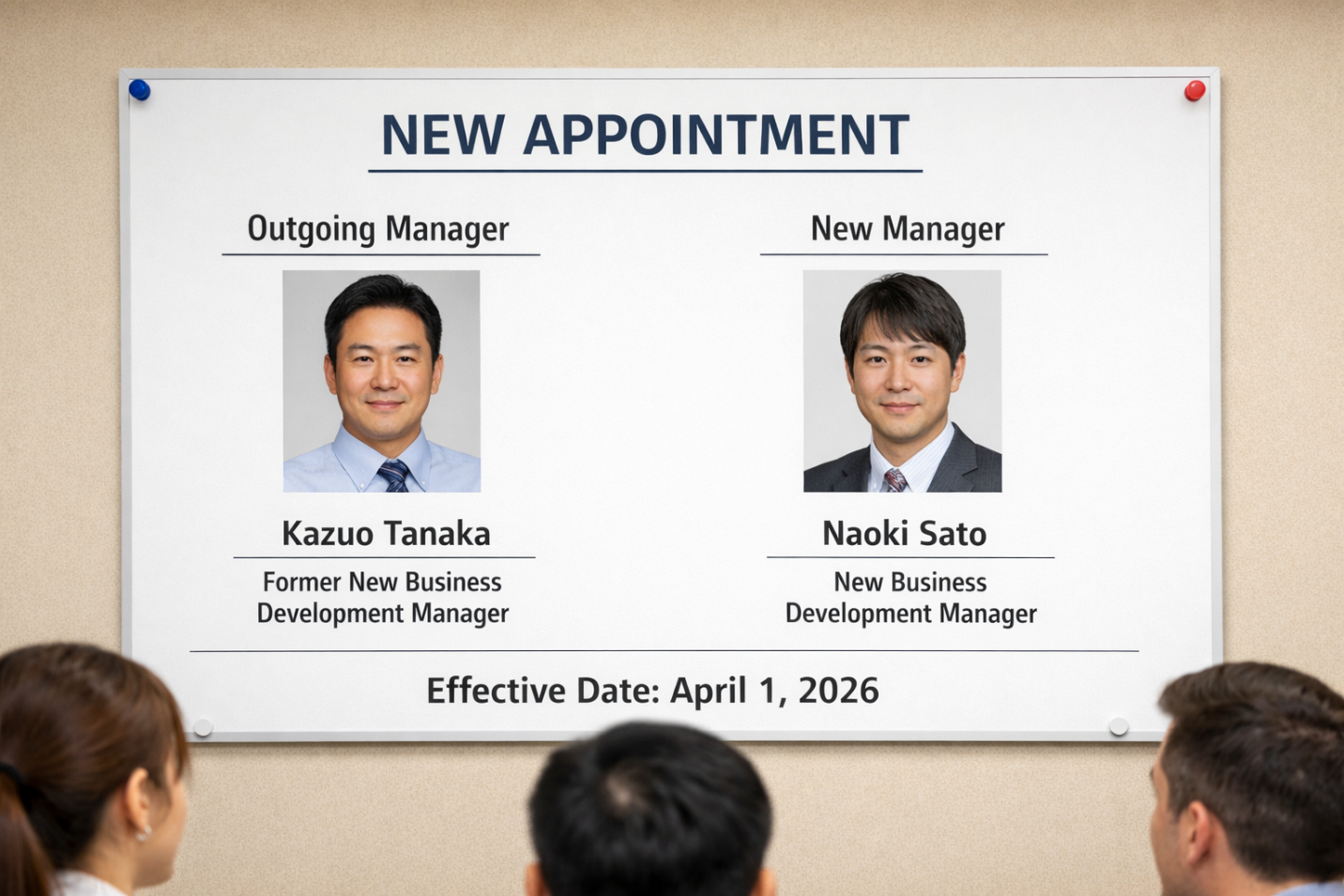
Most market-entry guides miss this structural challenge: employees in large Japanese corporations rotate between departments every two to three years.
Your internal champion can disappear overnight. Someone new replaces them, someone who has never heard of you and has no reason to continue the relationship.
You cannot rely on one person. You must build relationships at the organizational level. From the start, involve multiple stakeholders: the business unit owner, legal and compliance, information security, and at least one executive sponsor. If only one person understands your value, one rotation can reset your progress.
Finding the right people is also difficult. Companies rarely publish org charts. LinkedIn penetration among JTC middle management remains lower than in Western markets.
This ties into a broader pattern. Products that succeed in the US or Europe based on technology alone often stall in Japan. The issue is not product quality. It is a trust infrastructure.
Japanese organizations evaluate factors beyond the product itself. Who else uses this? What local support exists? Who takes responsibility if something goes wrong?
Japanese language support and localized documentation are not differentiators. They are basic requirements. Companies must answer data governance questions clearly: where data is stored, who can access it, and what happens during an incident. Companies that treat these concerns as friction lose deals they should have won.
What's Coming Next

Japan is accelerating its national AI strategy. In December 2025, the Cabinet approved its first Basic Plan on Artificial Intelligence. The plan acknowledges Japan's lag in AI investment and commits to coordinated national action. Infrastructure, talent development, and regulatory refinement are advancing simultaneously.
The sectors most likely to see rapid AI adoption are those where Japan's industrial strengths meet labor shortages: manufacturing, logistics, healthcare, and agriculture.
The barrier to entry in Japan is real. But so is the reward.
Companies that move fast and loose rarely succeed here. Companies that invest in relationships, build a credible first reference, and understand how JTCs operate find something rare: a stable, loyal, long-term customer base.
In a market built on trust, that is the real prize.
Guest Author:
Masaru Ikeda
Editor-in-Chief, Growthstock Pulse (CCO, Cohh); CEO, SOCIA; Executive Editor, StartPass Window; Recommendation Committee Member, METI's J-Startup program