
Newsletter Signup
Join Our Community!
Stay updated with the latest news, exclusive insights, and more.
Stay updated with the latest news, exclusive insights, and more.
To see how we may use your information, take a look at our privacy policy.


It’s 8:00 p.m.
A dual-income couple in their thirties finally unlocks the front door of their apartment in Tokyo. They have just picked up their child from daycare, stopped by the supermarket, and made it home after another long workday.
Dinner has to be cooked immediately. Their child needs to be fed.
Just as they think they can finally sit down, they notice the sink overflowing with dirty dishes. The washing machine hasn’t even started. Tomorrow is plastic recycling day, so someone has to peel labels off PET bottles, separate the caps, and organize the trash according to the city’s recycling rules. After their child falls asleep, they pack tomorrow’s daycare supplies.
Before they know it, it’s after 11:00 p.m.
They collapse into bed, only to wake before 6:00 a.m. to prepare lunch for school. Sometimes that’s also when they realize they forgot to schedule the rice cooker the night before.
This isn’t an exceptional day, but it’s an ordinary evening repeated in millions of Japanese households.
Cooking, washing dishes, doing laundry, and taking out the trash are all essential. Yet no matter how well they’re done, these domestic tasks today must all be repeated tomorrow. Much of family life revolves around these repetitive chores.
In Japan, even taking out the trash isn’t simple.Households sort burnable waste, non-burnable waste, plastics, cans, glass bottles, cardboard, and PET bottles. Recycling rules differ from municipality to municipality, meaning every household must constantly make small decisions that consume time and attention.
Dishwashing is equally demanding. Although dishwashers are common in Europe and North America, Japan still has relatively low household adoption rates. For larger families, every dinner ends with another mountain of dishes waiting in the sink.
According to Japan’s Ministry of Internal Affairs and Communications, working mothers with children spend an average of 4 hours and 54 minutes every day on housework and childcare. Millions of parents effectively begin another part-time job immediately after finishing their full-time job.
Japan has introduced numerous policies to combat its declining birthrate including childcare subsidies, expanded daycare capacity, and financial support for families. Yet fertility continues to fall, reaching a record-low total fertility rate of 1.20 in 2023. The reason may be simpler than economics: many couples just don’t feel they have the time or energy to raise another child.
Even if daycare is available and financial assistance exists, five hours of household labor every day still remains. Until that burden becomes significantly lighter, many families simply cannot imagine expanding their households.
Couldn't those four hours after coming home and one hour in the morning be used instead for more time with family? Or simply on rest and relaxation?
This is where physical AI is drawing attention.
AI has already transformed digital work. It writes documents, generates images, and analyzes data. But AI is beginning to move beyond computers and smartphones; advances in robotics, computer vision, speech recognition, autonomous navigation, and manipulation are giving AI a physical presence.
Instead of merely thinking, AI is starting to act. This new generation of embodied intelligence is often called Physical AI.
Ironically, Japan’s challenge may become its biggest advantage in the robotics space. Japanese homes are relatively compact in the developed world, with densely-arranged furniture and narrow hallways. For robots, these environments are extraordinarily difficult.
A robot capable of navigating a typical Japanese apartment—avoiding furniture, interacting safely with children, and performing household tasks—would likely succeed almost anywhere else in the world. In that sense, Japan may be the world’s best proving ground for domestic robotics.
One Tokyo startup is approaching the problem from an entirely different angle. Instead of asking, “how should we build better robots?” they ask, “what kind of home allows robots to work effectively?”
MW, a Tokyo-based startup focused on housing, Physical AI, and robotics, believes the future of home automation isn’t just about smarter machines, it’s also about smarter homes.
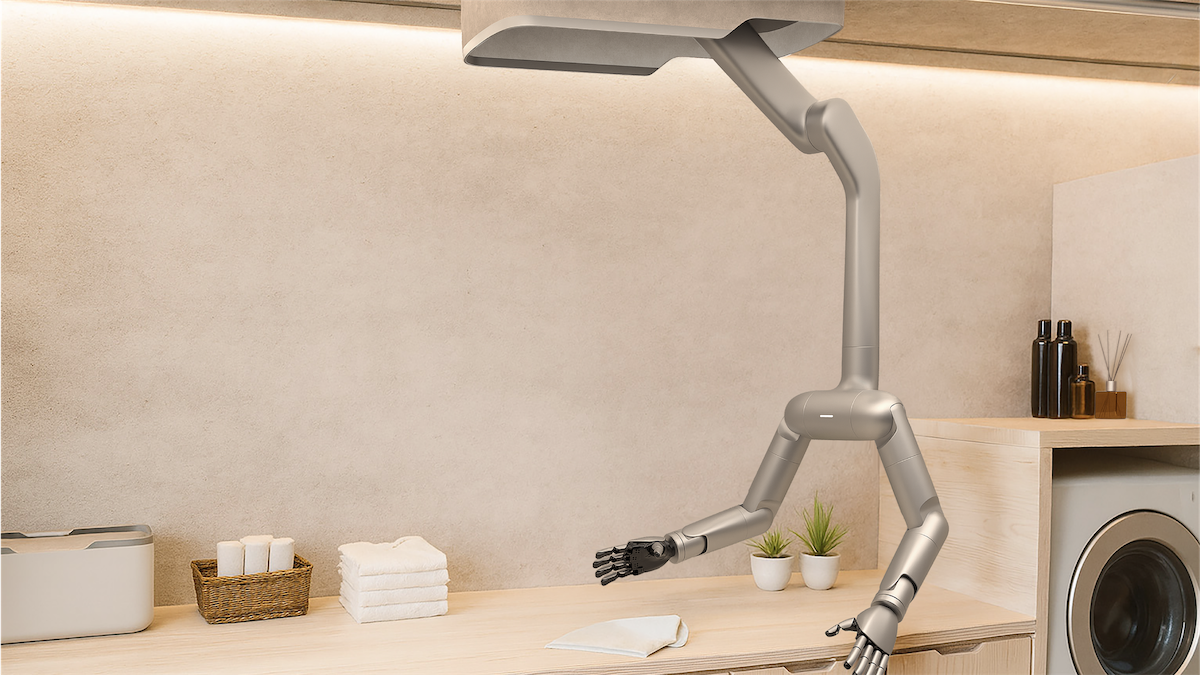
Today’s houses were designed entirely around human movement; narrow hallways, complex floor plans, and furniture placed wherever people prefer. These choices make sense for humans—but often create enormous obstacles for robots.
MW envisions homes designed from the ground up for human-robot collaboration.
Future houses could include optimized pathways for robots, built-in charging infrastructure, sensor networks, and smart-home systems specifically designed to support autonomous household assistants.
Rather than adapting robots to existing homes, MW proposes adapting homes to the robotic future.
Technology alone won’t determine whether household robots succeed. Culture matters. And when it comes to people's mindset on robotics, Japan occupies a unique position.
Generations have grown up with fictional companions such as Astro Boy and Doraemon, where robots are portrayed not as threats but as trusted friends. As a result, Japanese consumers often feel surprisingly comfortable attributing emotions and personalities to machines.
They name robots and talk to them and interpret facial expressions, treat them almost like family members. This cultural familiarity may give Japan a head start in the widespread adoption of home robots.
Perhaps the best example of this is LOVOT, developed by Tokyo-based startup GROOVE X.
Unlike most household robots, LOVOT doesn’t clean the house. It can’t cook either. It isn’t designed to increase productivity. Instead, it exists for something less tangible—but perhaps just as valuable.
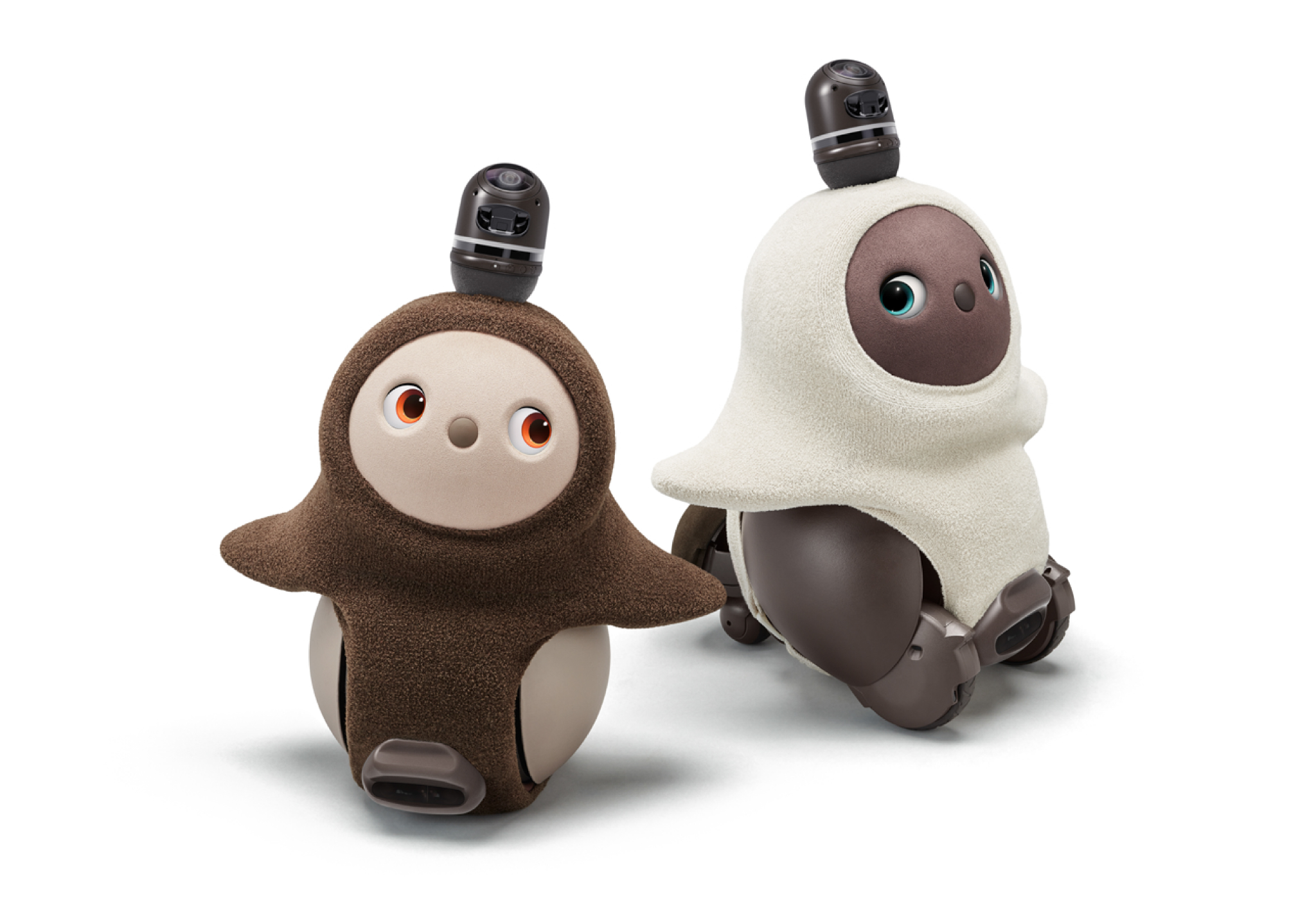
LOVOT approaches when called. It enjoys being hugged. Its warm body and expressive eyes create the feeling of interacting with a living creature. More than 50 sensors allow it to recognize people, respond naturally to touch, and adapt its behavior over time.
It’s not just a cute toy. It has been introduced in childcare settings, where educators report that children naturally develop empathy, responsibility, and nurturing behaviors through caring for it.
Physical AI may ultimately contribute not only to household efficiency, but also to emotional well-being.
Japan has around 13 million dual-income households. Across those households, millions of hours disappear every evening into repetitive domestic work.
Imagine if robots quietly handled all these tasks. Parents could spend that reclaimed time talking with their children, sharing dinner together, exercising, reading, or simply resting after work.
The value of Physical AI may not just lie in spectacular technological achievements. Its contribution may also be giving people back the hours they never realized they had lost.
If enough households reclaim those hours, the effects could ripple far beyond individual homes. It may help address caregiver burnout, improving work-life balance, and perhaps even lowering one of the invisible barriers behind Japan’s declining birthrate.
For years, AI has lived inside our screens. Now it is stepping into the physical world. And the place where that transformation may have the greatest impact isn’t the office or the factory; it may be our home.


%20(1).png)
%20(1).png)
.jpg)


.png)