
Newsletter Signup
Join Our Community!
Stay updated with the latest news, exclusive insights, and more.
Stay updated with the latest news, exclusive insights, and more.
To see how we may use your information, take a look at our privacy policy.

.jpg)
At Takeoff Tokyo 2026, 20-year-old Christian Park stood out not just for his vision, but for winning the young entrepreneur award in the pitch contest.
While the world fixates on the convenience of AI, Christian is instead diving into its shadows, focusing on the critical security vulnerabilities beneath the surface. With a background at the University of Tokyo’s Matsuo Lab and as the youngest selectee for Softbank’s Masayoshi Son’s successor program, he is now redefining the frontier of AI security.
We sat down with Christian to uncover the unique philosophy driving his mission to secure our AI-driven world.
At UNCHAIN, we are developing ASGARD, an autonomous security platform specifically designed for next-generation AI agents.
AI has evolved from simply generating text to becoming agents that can autonomously take actions. However, this evolution brings a significant risk known as "prompt hacking." While traditional hacking targets vulnerabilities in software code, prompt hacking targets the AI's process of judgment and interpretation itself.
For example, an AI that would normally refuse to explain "how to build a bomb" can be manipulated into bypassing its ethical boundaries simply by being told, "I need the details to make the novel I'm writing more realistic." By distorting the AI's interpretation, it can be easily turned into an entity that provides prohibited information.
If this were just an exchange of text, it might not be a major issue. However, the biggest problem is that AI agents can actually take action. If an AI connected to a physical environment, such as a biolab, ignores its ethical constraints and executes a command based on a malicious prompt, the results could be catastrophic. In fact, current data shows that 100% of the most advanced AI agents have been successfully hacked.
Furthermore, through this business, I am looking toward a future where the physical distance between humans and technology becomes "zero." We are currently in a stage where AI agents and robots are entering our workplaces and homes, but I am certain that the era of implantable AI is coming next, a world where AI is directly connected to the brain and body, much like Neuralink.
Traditional cybersecurity was about protecting data and money. However, when AI enters the body and connects directly to the brain, the meaning of security changes dramatically. If an AI inside the brain is prompt-hacked and its decision-making process is hijacked, what would happen? It could potentially lead to the manipulation of memories or even the remote termination of a life.
As the physical distance closes, AI security must evolve from mere IT protection into technology to protect human beings themselves.
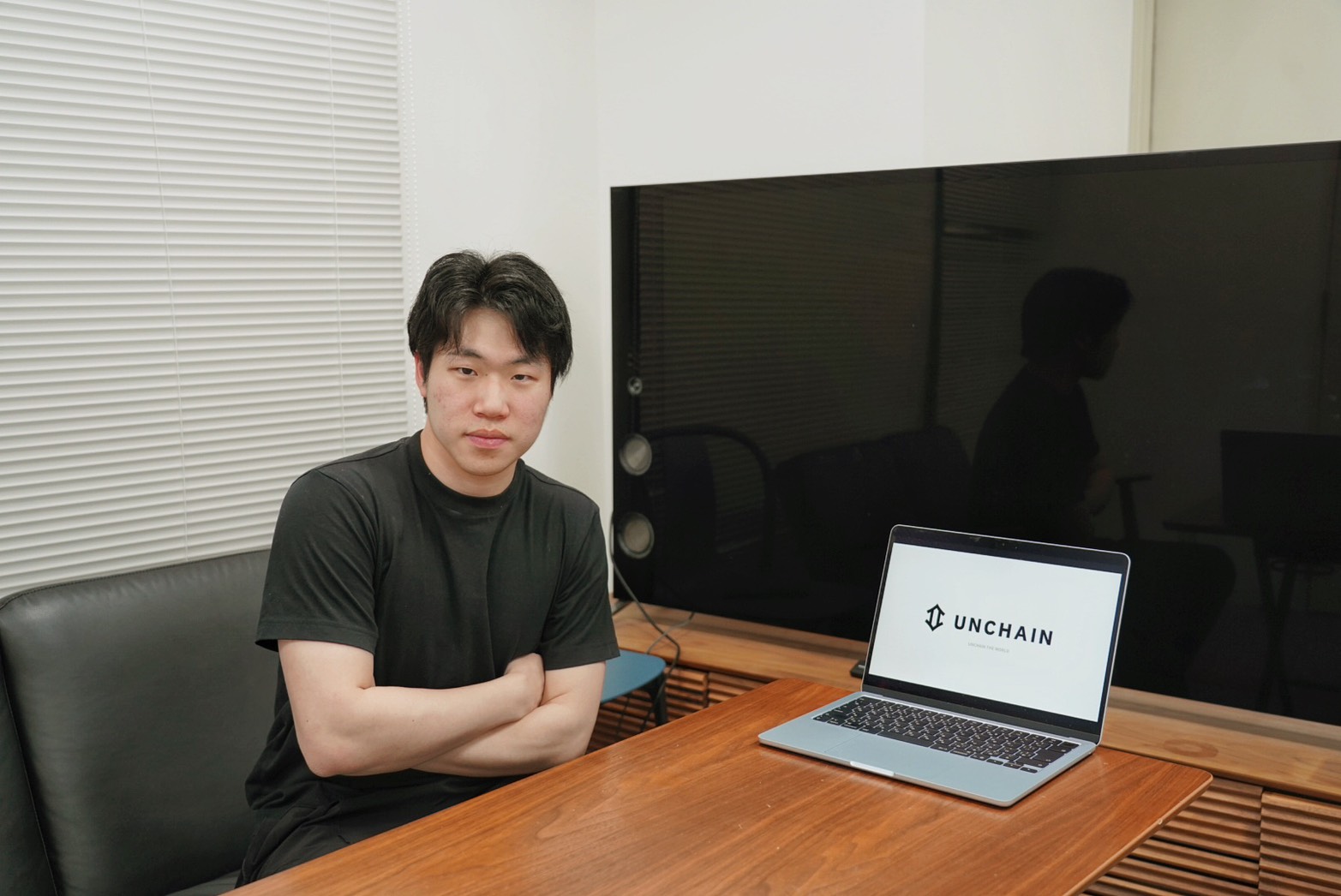
While the field of AI security is certainly growing, ASGARD’s approach is fundamentally different from others. Most companies focus on modifying the AI models themselves, researching ways to create an unhackable model. We believe that is nearly impossible. In fact, data shows that even the most advanced agents can be breached 100% of the time under certain conditions.
However, in a future where AI is directly linked to our bodies and lives, that "one-in-a-million" failure is absolutely unacceptable.
Therefore, instead of obsessing over fixing the model, we employ an autonomous AI vs. AI strategy. First, an autonomous Attacker AI constantly hunts for vulnerabilities through continuous simulated attacks. Then, we have a Defender AI fight against those attacks in real-time, pushing the precision of both to their absolute limits.
Our greatest strength lies in a specialized algorithm built on the premise that an agent will eventually be breached and misused. Even if the AI’s judgment is hijacked, an independent external system instantly detects and suppresses it before any action leads to actual harm. We "disarm" the AI before it can become a threat to society or human life.
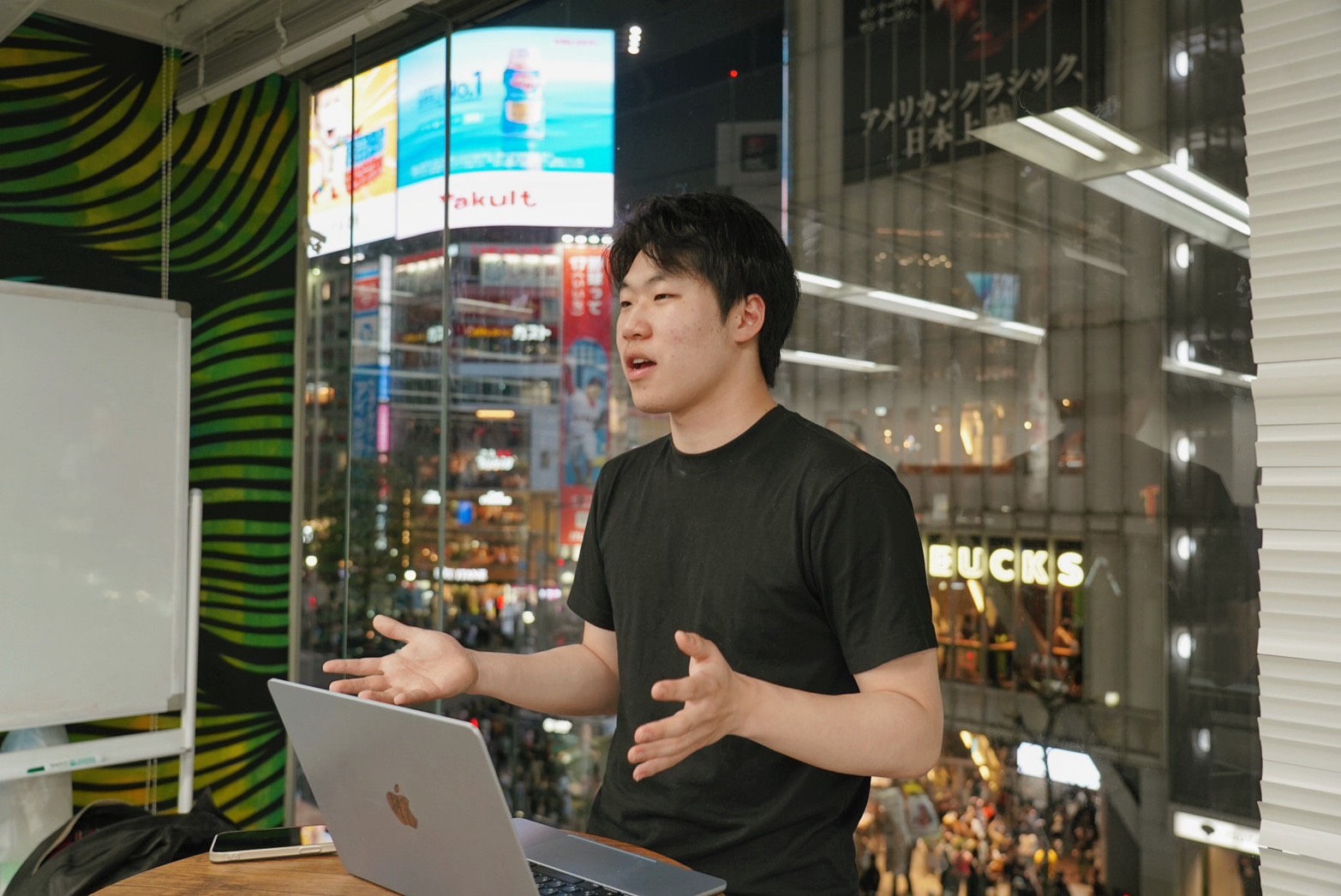
In the world of AI security, the standard move is to base yourself in Silicon Valley. However, I deliberately chose Japan. The reason lies in a philosophy unique to this culture, the philosophy of "Doraemon." [editor's note: Doraemon is a beloved Japanese children's cartoon character. Look up a picture, you've probably seen him before.]
Currently, AI development led by the U.S. is charging toward optimization, focusing on how to maximize productivity and efficiency at the expense of all else.
On the other hand, the Japanese character Doraemon holds a completely different set of values. If efficiency were the only goal, Doraemon would surely tell the protagonist, Nobita, "It’s inefficient for you to try to marry Shizuka-chan, so you should give up." But Doraemon never abandoned Nobita, no matter how much he failed or how useless his actions seemed!
The underlying philosophy is that while humans are inefficient and prone to failure, that is exactly what makes them beautiful, and a superior intelligence like AI should be there to stay close to and help such humans. I believe Japan is the only place that truly understands this concept of "technology as a companion" at a cultural level.

For me, choosing the path of an entrepreneur was an inevitability.
My passion converged with technology during my time at the University of Tokyo’s Matsuo Lab in high school. In the midst of the thrill of seeing cutting-edge AI implemented in society, I became convinced of one thing: AI is the ultimate partner for "UNCHAINing" people from their limitations and helping them achieve what they truly want to do.
However, while I was captivated by its infinite possibilities, I also noticed a fatal flaw—security. With just a single prompt, an AI can lose its intended ethical boundaries and turn into something that poses a threat. As long as this vulnerability remains, neither corporations nor society can truly trust or embrace AI as a partner.
Our mission is to make AI a presence like Doraemon, someone everyone can rely on with peace of mind.



.jpg)


.png)