
News
Japan's Climate Change Impact Assessment Report Released
The “Third Climate Change Impact Assessment Report,” published on February 16, 2026 under Japan’s Climate Change Adaptation Act, presents the latest scientific understanding of how climate change is affecting the country. Updated roughly every five years, the report draws on recent research to evaluate a wide range of impacts already being observed and those projected for the future. Climate change in Japan is no longer limited to rising temperatures or unusual weather patterns; it is increasingly linked to landslides, health risks such as heatstroke, and disruptions to economic activity, including supply chains. Spanning more than 600 pages, the report organizes its findings across seven major sectors and dozens of subcategories, reflecting the breadth and complexity of the issue.
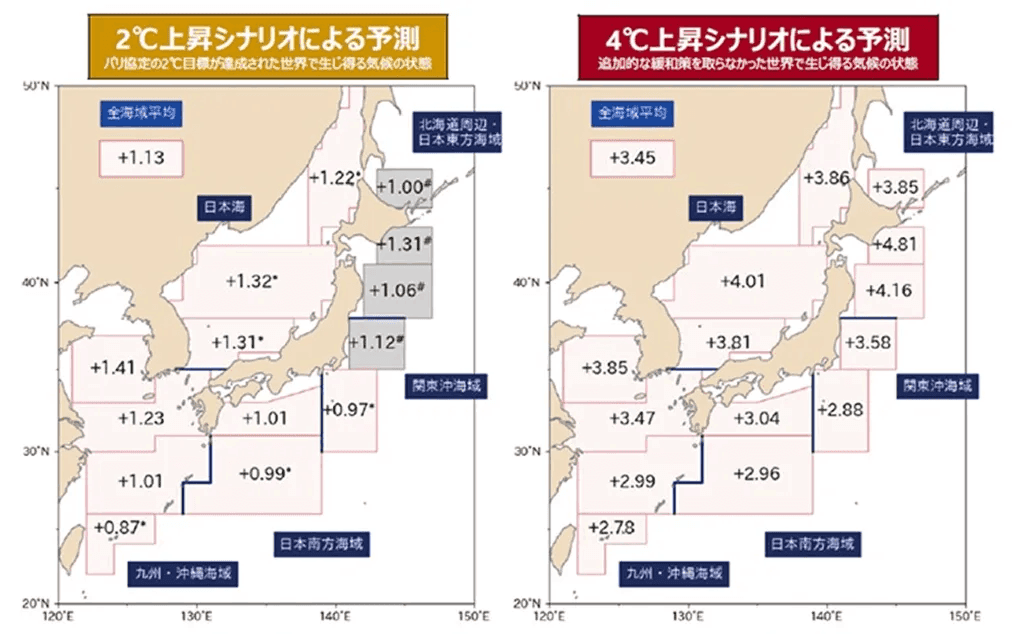
One of the report’s key findings is that Japan is warming faster than the global average, with temperatures rising about 1.4°C per century over the past 100 years. This warming is accompanied by more frequent extreme heat days, fewer cold days, and an increase in intense rainfall events. Future impacts will depend heavily on global mitigation efforts: a world that limits warming to around 2°C will experience significantly fewer extreme events than one that reaches 4°C. The report also highlights growing risks from stronger typhoons, rising sea surface temperatures, and associated changes such as sea-level rise, ocean acidification, and declining oxygen levels in marine environments.
These environmental changes are expected to have serious consequences for food production. In agriculture, rice quality has already declined due to heat, and without adaptation measures such as heat-resistant crop varieties, yields could fall by about 20% by the end of the century under high-warming scenarios. Livestock production is also under strain, with heat stress reducing productivity, particularly in dairy farming. Fisheries face equally severe challenges: warming oceans are shifting the distribution of key species like tuna and salmon, reducing stock levels, and disrupting fishing practices and processing industries. Globally, marine resources could decline significantly, while aquaculture faces higher mortality rates and disease risks.
The natural environment across Japan is undergoing profound transformation as well. Alpine ecosystems are shrinking as temperatures rise, with some projections suggesting they could decline to a fraction of their current extent or disappear entirely in certain areas. Plant and animal life are being affected by shifts in seasonal timing, habitat loss, and changing species distributions. At the same time, some species—such as bamboo and deer—are expanding their range, creating new ecological imbalances and increasing agricultural damage. Freshwater and coastal ecosystems are also at risk, with warming waters, flooding, and habitat loss threatening fish populations and coral reefs, as well as reducing the availability of important seaweeds and kelp.
Finally, the report underscores the growing risks to human health, infrastructure, and the economy. Heat-related illnesses are expected to rise sharply, potentially increasing heatstroke cases several-fold by mid-century under high-emission scenarios. Infectious diseases may spread as vectors expand their range, while extreme weather events such as floods are projected to cause escalating economic damage. These impacts could ripple through supply chains and reduce economic output, with coastal infrastructure particularly vulnerable to sea-level rise. While the report paints a stark picture, it also emphasizes that these outcomes are not inevitable: stronger climate policies, including emissions reductions and adaptation measures, could significantly limit the scale of future damage and help safeguard both natural and human systems in Japan.